
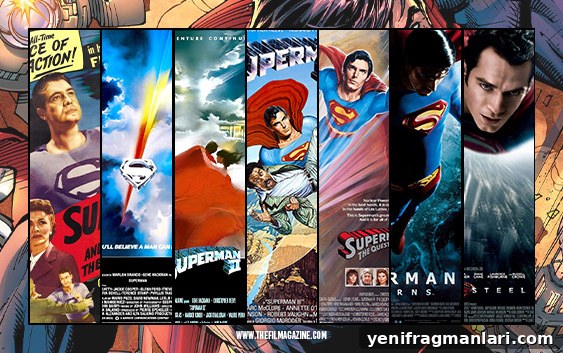
First appearing in Action Comics in 1938, Superman helped define the modern superhero. The blue suit, red cape and the Man of Steel’s powerful physique have become instantly recognizable symbols, and his moral clarity and heroic adventures have captivated audiences across comics, television and film for more than eight decades.
Superman first reached screens through animated shorts and live-action serials in the 1940s, and he starred in his first feature film with 1951’s Superman and the Mole-Men. The character became a major cinematic presence with Richard Donner’s 1978 Superman, a landmark blockbuster that demonstrated how successful comic-book films could be and inspired generations of filmmakers. Since then, Superman has returned to the big screen many times, most recently appearing in ensemble and universe-crossing films through the 2010s and beyond.
In this edition of Ranked, the editors at The Film Magazine examine seven major theatrical appearances of the Man of Steel, from Superman and the Mole-Men (1951) through Man of Steel (2013). Each film is evaluated for quality, longevity and cultural importance to determine which adventures endure and which miss the mark.
Follow The Film Magazine on social media to stay updated on similar lists and features.
7. Superman IV: The Quest for Peace (1987)
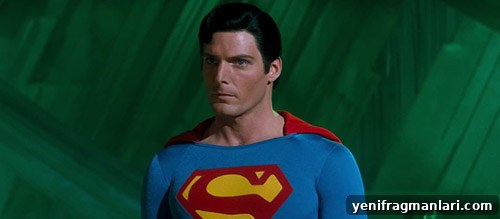
Ranked last on this list, Superman IV: The Quest for Peace still captures a core truth about Superman cinema: even the weakest entries can be oddly entertaining. That said, Christopher Reeve’s fourth outing is widely regarded as the franchise’s low point. The film attempts to tackle the nuclear anxieties of the 1980s, but its clumsy tone, dated visual effects and rushed production under Cannon Films leave it feeling unintentionally comedic.
The heart of the series—its charm and character dynamics—largely disappears here. Lois Lane is depicted in a way that undermines her earlier warmth, and the script reduces key relationships to shallow beats. Reeve’s deeper involvement as a writer and second-unit director attests to his affection for the role, but even his passion couldn’t rescue the film’s troubled production.
For viewers who enjoy “so-bad-it’s-good” cinema, The Quest for Peace offers campy pleasures: poor effects, an anticlimactic slow-motion space fight, and an over-the-top villain who screams 1980s excess. Yet when measured against the best Superman films, it simply doesn’t hold up.
Recommended for readers: Live-Action Batman Movies Ranked
6. Superman III (1983)
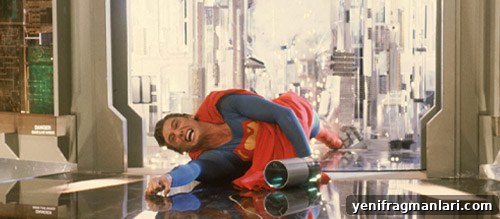
Superman III often feels like a mismatch: part superhero picture, part Richard Pryor comedy vehicle. Director Richard Lester and the film’s comic set pieces shift the movie away from the tone established by the earlier Reeve films.
Still, it contains memorable moments—the chemical plant sequence and the climactic “Evil Superman vs. Superman” confrontation rank among the series’ most talked-about scenes. Introducing Lana as a romantic foil for Clark provides a different dynamic that, for a time, refreshes the familiar Lois-and-Clark formula.
Unfortunately, the film’s second half collapses into broad slapstick and awkward gags. The Evil Superman’s petty, cartoonish misdeeds undercut any dramatic momentum. Despite its flaws and a weak villain, Superman III has elements worth revisiting, and it remains a curious, sometimes enjoyable detour in the franchise.
5. Man of Steel (2013)
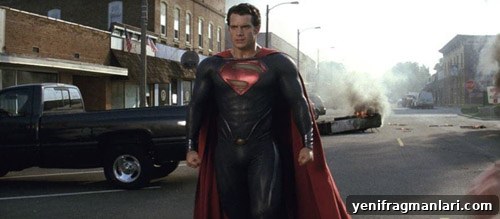
Zack Snyder’s Man of Steel challenged expectations by offering a darker, more visceral take on Superman. The film divides audiences: some applaud its fresh vision and grand set pieces, while others criticize its tone, character choices and at times incoherent moral perspective.
Despite questionable decisions and controversial character moments, the movie delivers blockbuster-scale action with extended, ambitious fight sequences. Snyder introduces intriguing story ideas and modernizes the mythology, even if several narrative threads are left underdeveloped.
As a reinvention aimed at launching a new shared universe, Man of Steel is imperfect but bold. It’s a big, loud popcorn movie that can be appreciated for its energy and ambition even if it doesn’t align with every fan’s expectations of the character.
Recommended for readers: Zack Snyder Movies Ranked
4. Superman and the Mole-Men (1951)
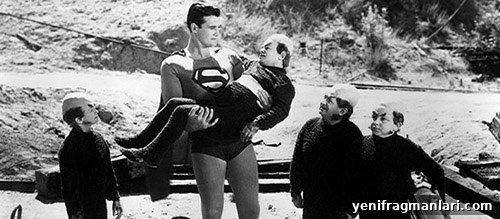
The feature that launched Superman on the big screen is often overlooked but historically significant. Superman and the Mole-Men differs sharply from later comic-book cinema; it plays like a paranoia-tinged B-movie or an extended episode of The Twilight Zone.
Produced with the constraints of early 1950s filmmaking, the film focuses on mood and implication rather than spectacle. Because screen time with Superman was limited, each demonstration of his abilities carries weight. The result is a distinctly atmospheric and surprisingly restrained portrait of the character’s cinematic debut.
While its pacing and production values reflect its era and may seem repetitive to modern viewers, the film remains an important piece of Superman history and an engaging curiosity for fans interested in the roots of superhero cinema.
3. Superman Returns (2006)

Divisive and nostalgic, Superman Returns functions largely as a love letter to the Christopher Reeve era. It pays careful homage to the original films’ tone and style, while aiming for a more contemplative, post-9/11 seriousness.
Set in the Reeve-era continuity, the film struggles to expand the mythology in a meaningful way, which limits how much it can distinguish itself. Yet for fans of the classic films, the homages and tonal echoes generate genuine excitement. Brandon Routh channels Reeve’s mannerisms effectively, delivering a performance that honors the original while offering his own quieter interpretation.
Though it doesn’t revolutionize the character’s cinematic legacy, Superman Returns succeeds as a heartfelt, well-crafted homage that reminds audiences why the character resonated so strongly in the first place.
2. Superman II (1980)
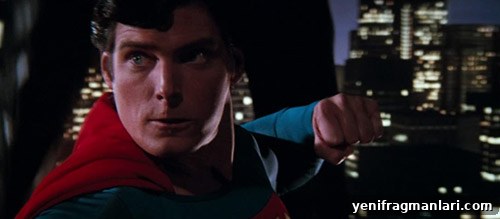
Picking up the momentum of Richard Donner’s original, Superman II expands the scale and stakes. Having established the hero and his world, the sequel elevates the action and introduces formidable adversaries: General Zod and his companions, Non and Ursa.
Outnumbered and outmatched, Superman faces a trio of Kryptonian foes who bring new challenges to the franchise. At the same time, the film explores Clark Kent’s struggle to protect his secret identity and maintain his relationship with Lois Lane. With interweaving plots and strong pacing, the movie builds to a memorable Kryptonian showdown over Metropolis.
The film’s ending—particularly the memory-erasing kiss—remains controversial, as it undercuts much of the film’s emotional stakes. Despite that, Superman II stands as a nearly flawless sequel: larger, bolder and delightfully entertaining.
1. Superman (1978)
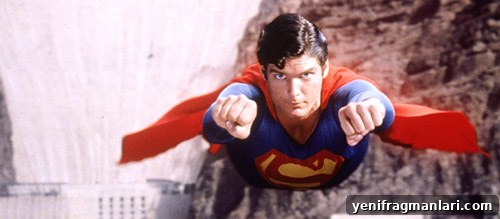
Although an earlier feature introduced Superman to cinemas, Richard Donner’s 1978 Superman is the film that truly launched the modern superhero movie. A commercial and critical success, it showed that comic-book adaptations could be both popular and artistically ambitious.
With a distinguished creative team and star-studded cast, the film treats the material with care. Donner takes his time telling Clark Kent’s origins and letting Christopher Reeve emerge as a fully realized dual character: bumbling, warm-hearted Clark Kent and noble, reassuring Superman.
Reeve’s performance remains the definitive screen portrayal. His physical and vocal transformations between Kent and Superman are subtle and convincing, making the disguise feel believable and the emotional core genuine. The film’s restrained tone, strong performances and sense of wonder set a standard that many later adaptations have referenced but rarely surpassed.
More than four decades later, Donner’s Superman endures as the most iconic cinematic version of the character, and Christopher Reeve’s commitment to both roles helped cement Superman’s place in popular culture.
Recommended for readers: DCEU Movies Ranked
Which Superman film is your favorite? Would you order these movies differently? Share your thoughts and memories of Christopher Reeve’s portrayal—his performances remain central to why Superman is beloved worldwide.