
The Grand Budapest Hotel (2014)
Director: Wes Anderson
Screenwriter: Wes Anderson
Starring: Ralph Fiennes, Tony Revolori, Adrien Brody, Willem Dafoe, Tilda Swinton, Bill Murray, Edward Norton, Saoirse Ronan, Harvey Keitel, Jeff Goldblum, Mathieu Amalric, Owen Wilson, Léa Seydoux, Jude Law, Tom Wilkinson, F. Murray Abraham
Following the warm reception to Wes Anderson’s Moonrise Kingdom in 2012, Anderson returned in 2014 with what many consider one of the defining films of the decade: The Grand Budapest Hotel. The film quickly became a standout in Anderson’s filmography, receiving significant critical attention and earning nine Academy Award nominations in 2015—tied for the most that year—and later appearing on the BBC’s list of the Best Films of the 21st Century in 2016. It stands alongside other Anderson favorites such as The Royal Tenenbaums and Moonrise Kingdom as a highlight of his distinctive career.
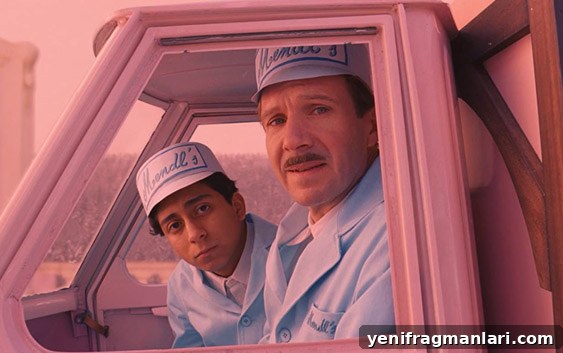
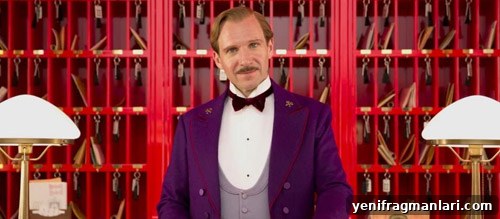
Set largely in the fictional Central European country of Zubrowka, the film centers on Zero Moustafa (Tony Revolori), a lobby boy who becomes the protégé of the flamboyant and meticulous concierge Monsieur M. Gustave (Ralph Fiennes). The narrative unfolds through nested flashbacks, with most of the story taking place between the two World Wars. At the heart of the plot are Gustave’s complicated relationships with wealthy patrons—most notably the eccentric Madame D (Tilda Swinton)—and the chain of events that follow her death: a disputed will, family grievances, and escalating run-ins with local authorities. These episodes allow Anderson to blend caper elements, dark comedy, and historical reflection.
One of the film’s greatest strengths is its tonal control. Anderson fully commits to his trademark voice—precise, whimsical dialogue and a relentless sense of stylized humor—while also acknowledging the darker political undercurrents of the era it evokes. The movie balances slapstick, verbal wit and melancholy in a manner that highlights both its comedic instincts and thematic depth. Ralph Fiennes, in particular, delivers a performance that is equal parts comic virtuosity and emotional nuance, earning broad acclaim for his work as the hotel’s temperamental concierge. Tony Revolori’s earnest and observant Zero provides a steady counterpart, and the chemistry between the two anchors the film’s emotional core.
Visually, The Grand Budapest Hotel is unmistakably Andreasen—excuse me, Anderson: a precise, candy-colored palette, meticulous framing and playful use of aspect ratios that underscore the film’s theatricality. The production design and costume work create a fully realized, timeless world; the hotel itself functions as a character, its corridors and dining rooms reflecting the vanishing elegance of a Europe on the brink of upheaval. The pacing and visual rhythm help the film maintain momentum through its episodic structure, turning what could be a scattershot tale into a cohesive and vivid experience.
Alexandre Desplat’s original score—infused with Eastern European and folk-inflected motifs—won the Academy Award for Original Score, and it is easy to see why. The music complements the film’s period atmosphere while offering melodic hooks that enhance key moments, from hurried escapes to quieter, reflective beats. Desplat’s work here is a model of how a soundtrack can both support and elevate a director’s vision without overwhelming it.
The ensemble cast is another highlight. While the story primarily follows Gustave and Zero, the film’s supporting players—including Willem Dafoe, Jeff Goldblum, Adrien Brody, Edward Norton and Saoirse Ronan—each contribute memorable turns. Anderson’s ability to use a large, talented cast and give many actors moments to shine adds texture and unpredictability to the narrative, turning brief encounters into unforgettable set pieces.
What has kept audiences returning to The Grand Budapest Hotel is its successful melding of style and substance. The film captures the best of Wes Anderson’s cinematic signature—meticulous visuals, rapid-fire dialogue and quirky humor—while allowing moments of genuine feeling and historical melancholy to surface. Its absurdity never feels empty; instead, it frequently refracts deeper themes about memory, loyalty and the decline of a particular cultural world. Anchored by Ralph Fiennes’ energetic lead and backed by strong design, music and ensemble work, the film remains one of Anderson’s most fully realized and beloved works.
23/24