
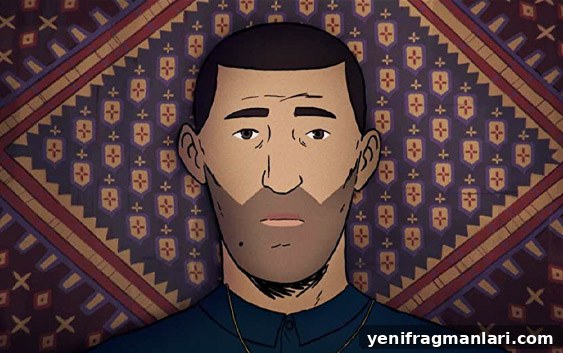

Flee (2022)
Director: Jonas Poher Rasmussen
There is a war raging in Eastern Europe: Russia’s invasion of Ukraine has displaced millions and cost countless lives. The devastation feels immediate and catastrophic, yet it is also part of a long history of conflicts that have reshaped lives across the globe over the last thirty years. Kosovo, Iraq, Afghanistan, Egypt, and Syria are only a few examples of crises that have driven people from their homes and into uncertain futures. Too often these tragedies are relegated to headlines; we see the statistics but do not always pause to consider the human stories behind them.
Jonas Poher Rasmussen’s Danish animated docudrama Flee brings one such human story into vivid, personal focus. Presented as a first-person account, the film recounts the experience of Amin Nawabi (a pseudonym), an Afghan man who was forced to flee his homeland with his family during the civil war of the early 1990s. Through intimate interviews and evocative animation, Amin shares memories of a childhood marked by both warmth and fear, the gradual disintegration of safety, and the long, dangerous journey toward asylum.
The film follows Amin’s recollections with a clear, compassionate eye. He speaks candidly about growing up free-spirited yet different, the admiration he felt for certain family members, and the complicated ties he had to his culture. Interwoven with these recollections are harrowing scenes of displacement: leaving home under threat, living in limbo, and trying to build a future while the past continues to haunt him. A crucial and deeply affecting element of Amin’s narrative is his identity as a gay man. The tension between his private life and the public realities of his background adds layers of emotional strain—particularly as he contemplates marriage and family reunification while grappling with the obstacles imposed by migration and asylum systems.

The film’s international reach benefited from high-profile executive producers, including actor-producer Riz Ahmed and actor Nikolaj Coster-Waldau, helping ensure that Amin’s story found a wider audience. Their involvement underscores the film’s cultural importance: Flee is a timely portrait of an LGBTQIA+ asylum seeker whose life is reshaped by war, prejudice, and the search for safety. In an era when some governments are tightening borders and complicating refuge, stories like Amin’s remind viewers of the moral stakes involved in asylum policy.
As a hybrid of animation and documentary, Flee prompts questions about genre and method. The decision to use animation serves a practical and ethical purpose: it protects Amin’s identity while allowing filmmakers to visually render memories that lack archival footage. The hand-drawn, realism-adjacent aesthetic gives the film an intimate, personal tone. While some viewers might wish for more striking or technically ambitious animation, the style chosen is unobtrusive and focused on conveying emotional truth rather than dazzling spectacle. At its best, the animation heightens the recollections, transforming memory into a cinematic space where past trauma and present reflection coexist.
Yet it is ultimately Amin’s narration—the documentary core of the film—that anchors the experience. His open, unflinching testimony provides insight into the lived reality of displacement: fear, loss, resilience, and the small, fragile hopes that sustain people through migration. The film’s power derives less from artistic bravura than from the authenticity of its subject. Amin’s story is specific and deeply personal, but it also stands for millions of displaced people whose voices are rarely heard in full human dimension.
Flee succeeds because it insists on telling an ordinary person’s extraordinary life with respect and clarity. It does not need to overwhelm with stylistic excess; its goal is to foster empathy and understanding. The film asks viewers to imagine what it means to lose home, to navigate hostile systems, and to reconcile identity across cultures. For those open to reassessing views on immigration and asylum, Flee is an accessible, humane argument: a reminder that policies affect real people and that compassion matters.
16/24