
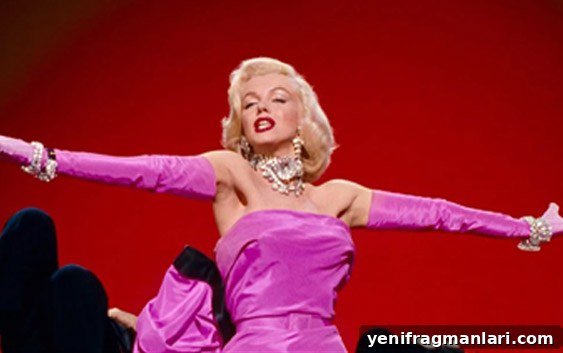
Marilyn Monroe remains more than a Hollywood icon of the past; she is a timeless cultural figure. Since her sudden death in 1962, her life has often been reduced to myth: the tragic blonde bombshell undone by the studio system and relentless gossip. While many remember her only as an image—a white dress billowing over a subway grate, a sultry “Happy Birthday” to a president, or an Andy Warhol canvas—those snapshots obscure the full person behind the persona.
Behind the familiar images was a determined, intelligent, and compassionate woman who worked relentlessly to become a consummate performer while struggling to find peace under constant scrutiny. Despite unrelenting attention and criticism, Monroe’s performances radiate a confident, unpretentious grace that connects with audiences and gives complexity to the women she portrayed. What endures—and explains much of her lasting popularity—is the humanity beneath the Hollywood glamour. As her life and career continue to be revisited, it’s worth looking again at the woman behind the image.
Below are Marilyn Monroe’s three career-defining performances that cemented her legacy, showcased her voice, and helped shape popular culture.
Follow @thefilmagazine on Twitter.
1. Gentlemen Prefer Blondes (1953)
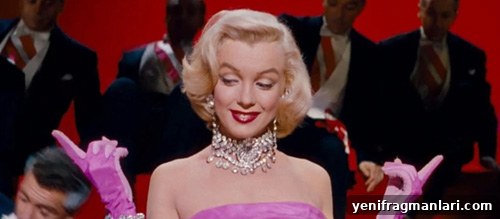
This musical comedy follows best friends and showgirls Lorelei (Marilyn Monroe) and Dorothy (Jane Russell) as they voyage to France, where Lorelei plans to marry her wealthy fiancé, Gus. The film sets the two women up as foils: Lorelei the stereotypical “dumb blonde” who courts men with money, and Dorothy the sensible brunette who prizes love. Along the way they face mishaps—being tailed by a private detective hired by Gus’s father and even being mistakenly arrested for a stolen tiara—before each ultimately achieves her romantic goal.
On the surface, Gentlemen Prefer Blondes appears to endorse a conservative ideal in which a woman’s happy ending is secured by marriage. But Monroe’s performance complicates that reading. Near the film’s end, Lorelei reveals that her “dumb blonde” persona is itself a deliberate performance. In a revealing conversation with Gus’s father, she explains she can be “smart when it’s important,” but that most men “don’t like it,” and implies that marrying for financial security is a practical choice in a world with limited options for women. Monroe is widely believed to have suggested that line.
That self-aware performance is the film’s true genius. Monroe uses Lorelei to speak directly to viewers, implying that the public image known as “Marilyn Monroe” is also a strategy—one that offers a measure of power. When Lorelei performs “Diamonds Are a Girl’s Best Friend,” the number reads not merely as a playful celebration of luxury but as a sharp, ironic statement about women’s limited economic choices. That nuance helped transform Monroe’s image into a modern touchstone for female agency.
2. The Seven Year Itch (1955)
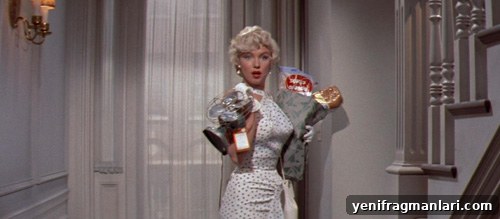
By the time she starred in Billy Wilder’s The Seven Year Itch, Monroe’s sex-symbol status was secure. She plays a fresh-faced actress who moves into the apartment above a married publishing executive, Richard (Tom Ewell). While Richard’s family is away for the summer, he becomes obsessed with the idea that men lose interest in their wives after seven years of marriage and begins to fantasize about his upstairs neighbor. A string of comic misunderstandings culminates in the famous scene where Monroe’s skirt is blown up by a subway grate; ultimately, Richard recognizes his love for his wife and returns to his family.
The film gives Monroe fewer opportunities to assert herself than Gentlemen Prefer Blondes. Her character is credited simply as The Girl and largely embodies a male fantasy within the story. Yet Monroe injects the role with a knowing charm and subtle camp. Director Wilder juxtaposes Richard’s eroticized fantasy version of The Girl—glamorous, exotic, swooning—with the real woman, who appears in unassuming pink pajamas. The contrast makes us laugh at Richard’s delusion while also underscoring Monroe’s self-awareness about her public image.
Although The Seven Year Itch can leave audiences wanting more of Monroe’s intelligence and wit, it crystallizes her screen persona at its height and preserves the iconic visual of her standing over the grate. The performance remains a crucial piece in understanding how Hollywood framed and commodified glamour—and how Monroe navigated and subverted that framing from within.
3. Some Like It Hot (1959)
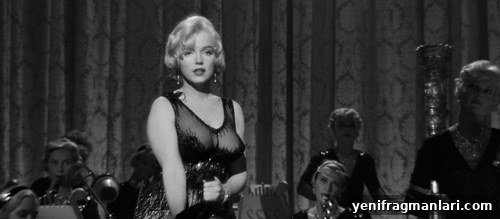
In one of her most celebrated final roles, Marilyn Monroe plays Sugar, a savvy singer who befriends two male jazz musicians, Joe (Tony Curtis) and Jerry (Jack Lemmon), who disguise themselves as women to escape Chicago after witnessing a mob hit. Both men fall for Sugar, but their attempts to woo her are complicated by the secrecy of their identities. Joe pretends to be a millionaire to win her, and the farce escalates when the mob tracks them to Miami. In the end, Sugar accepts Joe despite his deception, while Jerry finds an unexpected match with a true millionaire who accepts him regardless of gender—a subplot notable for its forward-looking hints at gender and identity.
Sugar shares traits with Monroe’s earlier characters—she navigates men’s fantasies and the transactional side of relationships—but she also feels more mature and candid. We first meet her on the train to Miami, taking a furtive drink from a flask hidden in her stocking. She confesses to Joe and Jerry that she’s run from past relationships and that she could stop drinking if she wanted to, yet chooses not to. That frankness echoes elements of Monroe’s own struggles with relationships and substance use, lending the role an emotional depth beneath the comedy.
Despite the darker undertones, Sugar’s vitality and humor dominate the film. Monroe brings warmth, vulnerability, and comic timing to the part, resulting in a performance that is both human and enduring. Some Like It Hot is widely regarded as one of the greatest American comedies, and Monroe’s work in it remains central to her artistic legacy.
For decades, Marilyn Monroe was dismissed by some critics as merely a manufactured screen persona: a sexualized blonde who died tragically young. In recent years, however, public discourse has shifted. Contemporary audiences and scholars increasingly interpret Monroe’s confidence and use of sexuality as forms of agency and, in many cases, feminist empowerment.
Yet neither the glamorous myth nor the iconography fully captures the complexity of the woman behind the name. The three careers-defining roles examined here—Gentlemen Prefer Blondes, The Seven Year Itch, and Some Like It Hot—did more than build a brand; they created moments in which Monroe could speak to audiences, reveal layers of self-awareness, and assert a constrained but palpable power.
Artistic reinterpretations of her life continue to appear in music, film, and visual art. By revisiting Marilyn Monroe’s most significant performances and the subtle power she brought to them, we can gain a clearer appreciation of the person who lived behind the public image.
Recommended for you: Audrey Hepburn: 3 Career-Defining Performances
Written by Emily Nighman