

The Wachowski siblings, Lilly and Lana, have built a reputation for defying cinematic conventions and creating imaginative English-language films and television series. Their strength lies in crafting immersive, visually striking worlds while embracing technological innovation and championing inclusive stories that reflect diverse ages, genders, races and sexualities. Despite their bold contributions within a conservative studio system, opinions remain mixed about whether all their films reach the artistic heights their ambitions suggest.
This article ranks all seven feature films the Wachowskis co-directed, ordered from least to most successful. The point at which a film moves from disappointing to compelling will ultimately depend on your perspective—feel free to decide for yourself.
“This is your last chance. After this, there is no turning back. You take the blue pill – the story ends, you wake up in your bed and believe whatever you want to believe. You take the red pill – you stay in Wonderland and I show you how deep the rabbit-hole goes.” – Morpheus (The Matrix, 1999)
7. The Matrix Revolutions (2003)
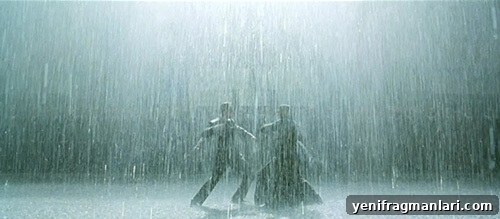
The Matrix Revolutions is the concluding chapter of the original Matrix trilogy, and it lands last on this list largely because it failed to satisfy expectations. The film attempts to close the arc of Neo (Keanu Reeves) and the human rebellion but does so in a way that left many viewers frustrated and disappointed.
Part of the issue was the film’s reliance on external media and transmedia elements that were intended to fill narrative gaps. At the time, some plot threads required engagement with tie-in games and other content to be fully understood—an approach that was expensive and impractical for many viewers, and which now reads as cumbersome. Even with background knowledge, the movie contains unresolved plot threads and visual effects that have not aged well. In several respects, the film undermined the legacy of the original rather than enhancing it, leaving an aftertaste of squandered potential.
6. Jupiter Ascending (2015)

Jupiter Ascending attempted to build an expansive original sci-fi universe but faltered in execution. The film presents a complex, lavish setting without consistently delivering clear exposition, leaving audiences to piece together the rules of its cosmos. Unlike the Wachowskis’ stronger thematic projects, this film places far greater emphasis on spectacle than on coherent ideas.
Although the cast included high-profile names such as Channing Tatum, Mila Kunis and Eddie Redmayne, stellar performances could not fully compensate for a story that often felt indulgent and overbuilt. Jupiter Ascending reads like an attempt to create a blockbuster franchise—a sprawling interstellar soap opera—rather than the more focused, philosophically driven works that defined the Wachowskis’ earlier reputation.
5. Speed Racer (2008)

Speed Racer is a bold, colorful adaptation of a beloved animated series that proved polarizing. The film’s kinetic visual language—bright palettes, rapid edits and heavy use of stylized CGI—was deliberately extreme, but those choices also distracted from character and story. Many viewers found the effects felt artificial, and the emotional core of the film struggled to emerge from the sensory avalanche.
Despite these problems, Speed Racer contains moments of genuine inventiveness and a playful commitment to its source material. The movie’s length and tonal excess limited its mainstream appeal, and it underperformed commercially, but it remains notable for its ambition and visual daring.
4. The Matrix Reloaded (2003)

The Matrix Reloaded sits above several entries because it achieves high points, even if it never matches the original film’s originality. Reloaded expands the trilogy’s mythology with big set pieces and ambitious concepts, producing some truly memorable sequences alongside moments that feel overcomplicated.
Reloaded is best remembered for two contrasting elements: a visually thrilling, practical-effects-driven freeway chase that remains impressive, and a much-criticized CGI-heavy confrontation between Neo and multiple Agent Smiths whose look has aged poorly. The highway sequence—staged with extensive practical stunt work—continues to stand out as one of the series’ finest achievements. Overall, Reloaded is an uneven but often entertaining middle chapter that intensified expectations for the trilogy’s finale.
3. Bound (1996)

Bound is the Wachowskis’ directorial debut and remains their most underrated film. This tight, stylish thriller follows two women who plan to steal mafia money, and it foregrounds strong performances, lean storytelling and a confident visual style. While modest in scale, Bound hints at the themes and sensibilities the siblings would develop later—an insistence on gender and sexual identity, and a willingness to center marginalized characters.
The film earned praise from critics for its craftsmanship and its candid depiction of a same-sex relationship, which made it notable within independent cinema of the era. Though not a blockbuster, Bound is a compact, effective thriller that showcases the early promise of two filmmakers who would soon take on much larger canvases.
2. Cloud Atlas (2012)

Cloud Atlas is a collaborative adaptation co-directed by the Wachowskis and Tom Tykwer. Tackling a sprawling, multi-era novel many called “unfilmable,” the filmmakers assembled an ensemble cast including Tom Hanks, Halle Berry, Hugh Grant and Jim Broadbent to weave interconnected stories across centuries.
The film’s ambition is its chief strength: it explores recurring themes of love, oppression and moral choice, and it rewards attentive viewers with emotional and intellectual payoff. The narrative structure deliberately interlocks disparate time periods to underscore how actions reverberate across history. Cloud Atlas is not without flaws, and some viewers find its tonal and stylistic shifts challenging, but it stands as one of the Wachowskis’ most daring and thought-provoking works.
1. The Matrix (1999)
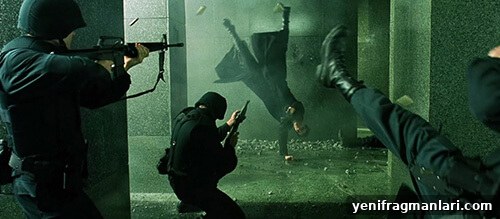
The Matrix is the Wachowskis’ defining achievement and a landmark of late-20th-century sci-fi cinema. Combining philosophical inquiry, cyberpunk aesthetics and groundbreaking technical innovation, the film captured the cultural moment in a way few others did. Its premise—a hidden simulated reality controlled by machines and the human rebels who fight to liberate minds—was executed with clarity, style and visceral action.
Technically, The Matrix introduced iconic visual techniques and set-piece choreography; the “bullet time” effect became an instant cultural reference point. The movie also resonated thematically, raising questions about free will, identity and the nature of reality. While later sequels complicated the franchise’s legacy, the original film remains an influential, landmark picture that defined the Wachowskis’ public identity as filmmakers.
Recommended reading: 10 Best The Matrix Moments
Do you agree with this ranking? What would your order be? Share your thoughts in the comments. Follow The Film Magazine on social platforms to stay updated on similar articles and film discussions.