Doctor Strange in the Multiverse of Madness (2022)
Director: Sam Raimi
Screenwriter: Michael Waldron
Starring: Benedict Cumberbatch, Elizabeth Olsen, Xochitl Gomez, Rachel McAdams, Benedict Wong, Chiwetel Ejiofor, Michael Stuhlbarg
A throwaway joke in Sam Raimi’s Spider-Man 2 once had J. Jonah Jameson quip that the name “Doctor Strange” was already taken. Eighteen years later, Raimi actually directs a movie with that title. The result is an MCU entry that wears its director’s personality on its sleeve: a blend of dark humour, unsettling imagery, and kinetic action that registers as distinctly Raimi while still functioning within the demands of a sprawling franchise.
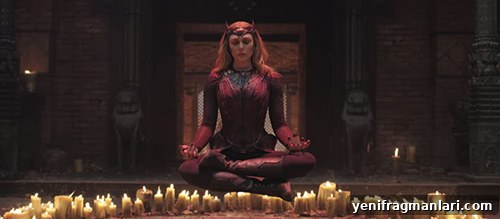
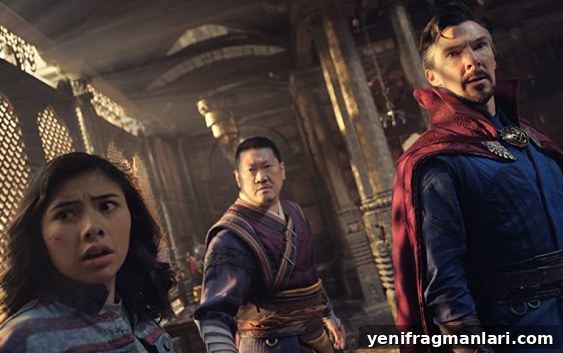
Picking up after the events of other recent Marvel entries, Doctor Stephen Strange (Benedict Cumberbatch) faces the fallout of a spell gone wrong that ruptured reality and opened the multiverse. At the same time, the story continues Wanda Maximoff’s arc from the television series that preceded this film, establishing her emotional state and motivations that feed into the movie’s central conflict. Strange must protect America Chavez (Xochitl Gomez), a teenager who can travel between dimensions and who is being pursued by a malevolent force intent on stealing her power.
Raimi’s approach gives the film an unsettling, occasionally gory edge: jump-scares, sudden violence, and grotesque transformations sit beside the more familiar superhero set pieces. Those who know Raimi’s earlier work will recognize the tonal shifts—moments that feel like they belong in Evil Dead or Drag Me to Hell appear unexpectedly within the superhero template, producing an odd but compelling contrast that keeps the film from feeling like just another franchise installment.
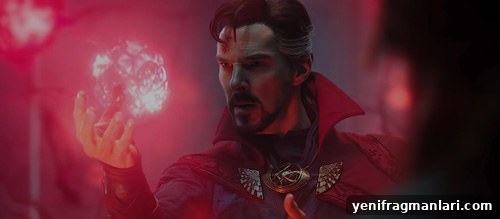
The action sequences are among the film’s strongest assets. Raimi’s skill at staging clear, dynamic action is on display in a New York street battle against a tentacled cyclops, an inventive and surprisingly musical magical duel, and a tense sequence in the sanctum of Kamar-Taj where Strange and Wong (Benedict Wong) attempt to shield America by trapping pursuers in the Mirror Dimension. These set pieces are carefully blocked and maintain spatial clarity even amid the chaos, a reminder that Raimi remains highly adept at visual storytelling.
As a multiverse movie, the film could have indulged in endless divergent realities. Instead it uses the multiverse mainly to propel the plot and deliver spectacle. Several alternate universes are shown—some colorful, some animated, some visually stylized—but many of them feel like minor variations of familiar settings rather than fully realized new worlds. A brief montage offers dazzling glimpses of stylistic possibilities, yet those images pass too quickly to leave a lasting impression.
There is a major fan-service sequence featuring the Illuminati, the secretive group of powerful heroes, which delivers a rush of recognition and surprise. That sequence is brief and self-aware; the film acknowledges the payoff and moves on rather than letting that beat dominate the narrative. This restraint keeps the story focused on the immediate stakes for Strange, America, and Wanda.
The film does demand some familiarity with recent Marvel television and film entries to fully appreciate character motivations. The screenplay, written by Michael Waldron, continues threads established in earlier projects and builds on Wanda’s character arc from the television series. Elizabeth Olsen gives a strong, emotionally charged performance that anchors Wanda’s journey, even when specific revelations risk dividing fans. Benedict Cumberbatch brings a muted melancholy to Strange, a man who finally has time to consider the emptiness that can accompany saving the world. He also plays multiple iterations of the character, each with distinct histories and personality shades.
Xochitl Gomez is a standout new addition, bringing warmth and spirited chemistry to her interactions with Cumberbatch. Rachel McAdams has a larger role than in the first film and contributes meaningfully to the action. The supporting cast delivers steady performances, keeping the emotional through-line intact amid the visual spectacle.
The film has rough patches. Expository dialogue sometimes tells rather than shows, and the middle section slows and loses focus before the story regains momentum for a decisive final act. Some structural choices may reflect the convoluted scheduling and shifting plans of the wider franchise, resulting in moments where the film feels obliged to clarify connections for viewers who have followed the broader cinematic and television universe.
Ultimately, Raimi’s film is a work about obsession and love, delivered with a director’s distinct visual voice. It is not a deep philosophical exploration but a memorable, often jolting spectacle that benefits from a clear point of view. The movie’s strengths lie in its confident direction, imaginative set pieces, and committed performances—qualities that make it exciting in the moment even if some elements may not persist in the franchise’s long-term status quo.
Highlights: inventive action choreography; strong central performances; Raimi’s distinctive mix of horror-tinged visuals and humour.
Score: 17/24
Recommended for you: Marvel Cinematic Universe Villains Ranked
For viewers who enjoy a director-driven take on blockbuster material—one that blends scares, comedy, and emotional stakes—Doctor Strange in the Multiverse of Madness delivers a bold and singular entry in the Marvel canon. It is visually striking, occasionally jarring, and anchored by performances that make its more extravagant moments feel grounded in character.