
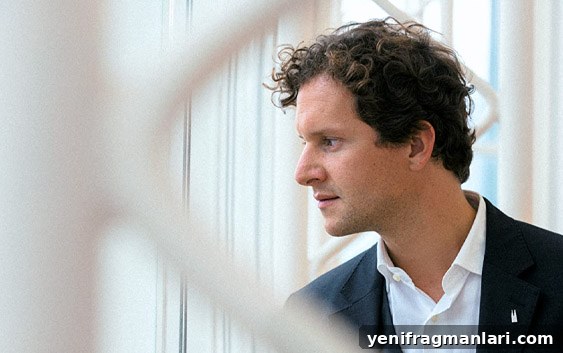

Axiom (2022)
Director: Jöns Jönsson
Screenwriter: Jöns Jönsson
Starring: Moritz von Treuenfels, Thomas Schubert
Axiom, the compelling new feature by Swedish filmmaker Jöns Jönsson, follows Julius, a charming and articulate museum attendant who invites colleagues on a sailing trip. The premise is deceptively simple, but Jönsson steadily turns it into a subtle study of deception, personality, and the fragile nature of trust.
The film begins with Julius (Moritz von Treuenfels) on duty during an exhibition, calmly guiding his new coworker Erik (Thomas Schubert) through the routines of the job. The opening scenes are grounded, modest exchanges that feel lived-in and authentic. Jönsson’s screenplay is economical but precise: small details and tonal shifts in the dialogue reveal character and set the film’s steady rhythm. The director’s patient staging invites the audience to observe, listen, and become invested in these people and their interpersonal dynamics.
The narrative soon moves from the museum to Julius’s family sailboat, where an ostensibly relaxed outing gradually grows uneasy. Julius recounts stories — some familiar, others surprisingly personal — and listeners begin to notice inconsistencies. He repeats a tale Erik told him the day before as if it were his own. He insists everyone was told to bring life jackets, though his companions deny it. He misidentifies a port building as a members’ club when it is clearly a shop. At first, these slips could be shrugged off as human error, forgetfulness, or the casual liberties people take with memory. But the accumulation of such moments pushes the film into sharper territory: Julius appears to be a compulsive liar.
Jönsson reveals this character trait with great subtlety. Instead of dramatic confrontations or expositional speeches, the film uses small shifts in phrasing, repeated motifs, and altered details to undermine the protagonist’s credibility. Dialogue becomes the primary tool for building suspicion—lines echo and diverge, earlier statements are contradicted later, and each contradiction deepens the viewer’s unease. The screenplay’s meticulous structure creates a mounting sense of doubt without ever feeling forced.
The dialogue throughout Axiom is one of its strongest assets. Jönsson captures conversational rhythms and the subtext that lies beneath ordinary speech, giving each exchange a layered quality. The conversations are realistic yet energized, carrying emotional weight and revealing more than their surface meaning. As Julius’s fabrications accumulate, the subtext sharpens and the audience is left to parse truth from performance.

Visually, the film is composed with calm precision. Jönsson and his cinematographer favor lingering frames and restrained camera movement, often holding on long takes that allow actors to inhabit scenes fully. Those sustained shots create a quiet intensity, reminiscent of contemplative cinema, where the camera’s patience mirrors the audience’s need to observe details. Editing choices become meaningful: when Julius is confident, scenes breathe in long uninterrupted takes; as his lies begin to fracture his control, cuts grow more frequent, reflecting his unraveling grip on the group dynamic.
Moritz von Treuenfels anchors the film with a magnetic performance. He infuses Julius with charisma and an easy social charm that explains why others are drawn to him despite increasingly troubling behavior. Treuenfels finds subtlety in isolation scenes—moments with no dialogue where Julius’s private interiority flickers and the viewer is invited to imagine the motives behind his falsehoods. Those quiet interludes carry an almost suspenseful charge, as Jönsson hints at what might be simmering beneath Julius’s composed exterior.
Axiom is deliberately paced and quietly focused. It won’t satisfy viewers looking for overt thrills or melodrama, but its strengths lie in careful characterization, precise writing, and deliberate filmmaking choices. Jönsson demonstrates strong control over tone and tempo, proving himself to be a director who values nuance and observation. The film’s measured approach rewards attentive viewing: small moments accumulate, shifting the emotional landscape until the final impression lingers.
For audiences who appreciate intimate, character-driven drama and smartly constructed dialogue, Axiom is a rewarding watch. It highlights a filmmaker with a clear voice and a willingness to explore the gray areas of human behavior. The film’s combination of strong performances, thoughtful direction, and disciplined writing makes it a notable entry from Jöns Jönsson and a title worth seeking out.
Score: 20/24