
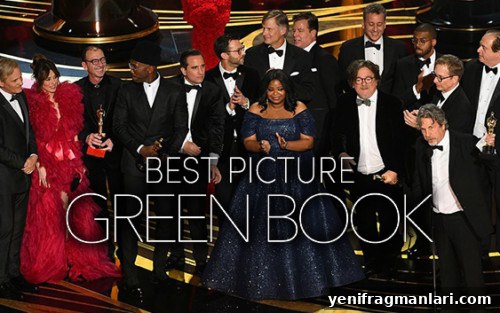
I’ve been explicit about my views on Green Book. It is a well-crafted film that fits the mold of what the Academy has tended to reward in recent years: polished performances, crowd-pleasing sentiment, and a narrative that seeks reconciliation rather than provocation. There is nothing technically wrong with those qualities. Yet the film’s thematic choices raise questions about how much the Oscars reflect meaningful social change, especially when measured against the broader cultural debates of the late 2010s.
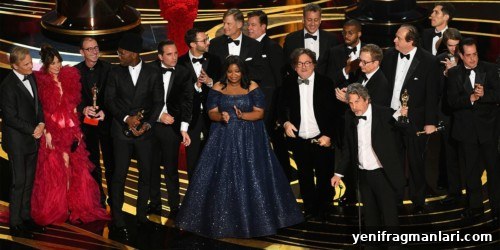
The filmmakers behind Green Book accepting the Best Picture award at the 2019 Oscars.
Social change has accelerated in the era of social media, but the Academy appears to lag behind the pace of public discourse. At times it has appeared to respond — the surprise and joy surrounding Moonlight felt like a moment of progress — and other choices, such as awarding The Shape of Water, felt like a compromise between artistry and safety: a beautiful, well-made film that was not necessarily the boldest or most politically urgent option among that year’s contenders.
Some observers have suggested that voting mechanics, including ranked choice systems, may produce winners who represent safe second- or third-place consensus picks rather than the most daring voices of a given year. Whether or not that mechanism explains the success of certain films, it is clear that the Oscars are not only about craft; they function as a cultural statement. When the Academy elevates a film, it speaks about what sorts of stories and perspectives the industry is prepared to celebrate.
So what does an award for Green Book communicate? The film tells a story of reconciliation between two men across racial and class lines, and it does so with warmth and strong performances. But it also recasts complex history through a gentle, individual-focused lens. In a moment when public debate was marked by heated polarization, racial tension, and demands for systemic accountability, that kind of narrative can feel like a retreat from the harder questions. Rather than confronting institutions, structural inequality, and the sharper edges of contemporary politics, the film opts for a message of personal friendship and mutual understanding.
This is not to dismiss the film’s craftsmanship or the importance of stories about human connection. But when the Academy repeatedly rewards films that prioritize reconciliation without substantial structural critique, it can suggest a preference for comfort over confrontation. Other high-profile films from the same period took a much more pointed stance toward current issues: some engaged directly with political extremism, others with systemic racism and historical injustice. Those films felt urgent in a way that highlighted a contrast between cinematic ambition and the Academy’s choices.
To many viewers, the repeated success of familiar narrative frames—especially those that center white protagonists in stories about racial uplift, sometimes labeled “white savior” films—represents a missed opportunity. Cinema can both entertain and interrogate; it can reward technical excellence while also challenging audiences to grapple with difficult truths. When award recognition leans consistently toward the safe and consoling, it risks signaling that the industry prefers palatable rather than disruptive stories.
Whether the Oscars will shift in response to mounting cultural pressure remains an open question. The awards have shown moments of change and moments of retrenchment. For those hoping the Academy will embrace more politically daring, structurally critical films, the pattern of recent years offers both hope and skepticism. A single ceremony rarely transforms an institution; true change typically requires sustained cultural movements and continued insistence on representation, complexity, and accountability in storytelling.
In short, Green Book is a competently made film that connects with many viewers, but its rise to Best Picture also reflects broader tendencies within Hollywood and the Academy: a preference for narratives that reconcile rather than quarrel with the status quo. That dynamic is worth watching closely as the industry continues to respond to evolving social conversations and demands for more expansive, challenging cinema.