
The Adventures of Robin Hood (1937)
Directors: Michael Curtiz, William Keighley
Screenwriters: Norman Reilly Raine, Seton I. Miller, Rowland Leigh
Starring: Errol Flynn, Olivia de Havilland, Basil Rathbone, Claude Rains, Una O’Connor, Patric Knowles, Eugene Pallette, Alan Hale Sr., Melville Cooper, Ian Hunter, Herbert Mundin, Montagu Love
Released in 1937, The Adventures of Robin Hood remains one of the most vibrant and enduring retellings of the Robin Hood legend. At a time when later adaptations would move toward darker or more politically driven interpretations, this film captures the exuberant spirit of classic swashbuckling cinema. Its blend of romance, humor, spectacle, and clear moral purpose helped define what movie audiences expected from a big studio adventure picture.
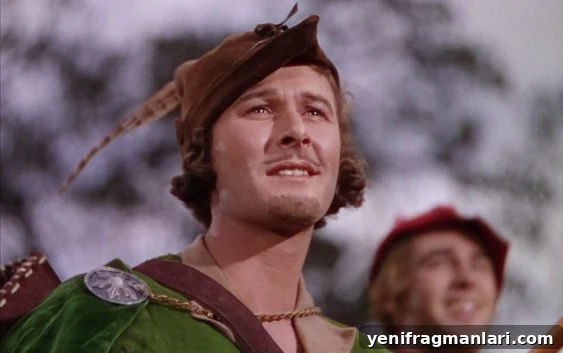
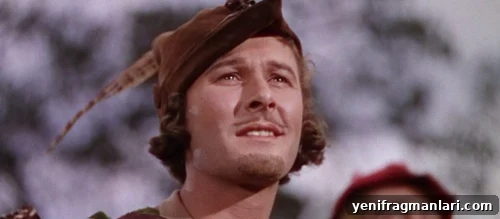
Errol Flynn stars as Sir Robin of Locksley, a charismatic outlaw who takes up arms to defend the Saxons against the encroaching Norman aristocracy. The film frames its central conflict around the absent King Richard the Lionheart, captured on his return from the Crusades, and his power-hungry brother Prince John, portrayed with sly menace by Claude Rains. Alongside Prince John stands the ruthless Sir Guy of Gisbourne, played by a cool and calculating Basil Rathbone. Together they threaten the liberties of ordinary Englishmen, and only Robin and his band of Merrie Men—based in Sherwood Forest and led by Robin’s moral clarity—stand between tyranny and freedom.
One of the movie’s most striking achievements is its use of three-strip Technicolor, a relatively new process at the time. The film’s rich, saturated palette makes the costumes and sets pop, giving the medieval world a tactile, theatrical presence. Compared to contemporary black-and-white swashbucklers, The Adventures of Robin Hood feels immediately more alive; location designs, full-scale set constructions, and detailed period costumes all contribute to a sense of immersive spectacle. The filmmakers went to great lengths to build an imposing Nottingham Castle and to stage large-scale battle sequences that still impress today.
Flynn’s performance combines athletic bravado with an old-fashioned stage presence that suits the material. His energetic charisma, despite off-screen reputation for unpredictability, makes him an ideal Robin—gallant, quick-witted, and physically commanding. Opposite him, Olivia de Havilland brings warmth and poise as Maid Marian, creating a satisfying romantic center. Their chemistry is effortless and keeps the film’s emotional stakes grounded amid the action.
The supporting cast is uniformly strong. Una O’Connor provides delightful scene-stealing moments as Marian’s loyal companion, adding both comic relief and heart. The antagonists offer potent counterpoints: Claude Rains’ conniving Prince John brings a sleazy, persuasive cruelty, while Basil Rathbone’s Guy is the archetypal polished villain—dangerous, precise, and endlessly watchable. Secondary characters like the corrupt Sheriff of Nottingham and various clergy deepen the sense of a society riddled with greed and cowardice.
Although this Robin Hood contains spectacular action, it also surprises with its consistent sense of humor. The film balances tense duels and daring escapes with witty banter and playful beats, preventing the narrative from becoming monotonous. A memorable example is Robin’s comic decision-making when he must leap from Marian’s tower and chooses his landing spot by human calculus—a small, character-driven moment that underscores the film’s warmth.
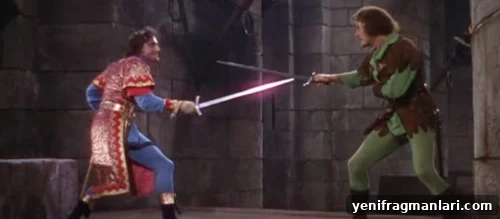
The archery contest, culminating in the famous split-arrow shot, and the climactic duel between Robin and Guy remain among cinema’s most iconic action scenes. The arrow-splitting trick was achieved in-camera, and the final sword fight—choreographed to emphasize personality and rhythm over pure technical display—has influenced generations of action filmmaking. Their staging, use of light and shadow, and the emotional stakes sewn into the choreography set benchmarks that later films would emulate.
Beyond spectacle, the film’s themes resonate: resistance to oppression, loyalty among the downtrodden, and the idea that honor persists despite corrupt authority. These themes, presented through accessible and entertaining storytelling, helped the movie secure a lasting reputation. The Adventures of Robin Hood is often recognized as the definitive cinematic interpretation of the Robin Hood myth, in part because it balances mythic grandeur with human charm.
Technically ambitious for its era, the production relied on hundreds of costumed extras and practical effects to stage large battles, a commitment to realism that modern audiences accustomed to digital effects can still appreciate. The film’s production values, coupled with its performances and confident direction, produced a box-office success that justified its sizeable budget and cemented its place in Hollywood history.
Score: 22/24
Decades after its release, The Adventures of Robin Hood continues to delight viewers with its color, courage, and charisma. It stands as a prime example of classic studio-era filmmaking: grand in ambition, generous in spirit, and expertly crafted to entertain. For anyone seeking the definitive, old-school Robin Hood experience, this 1937 classic remains essential viewing.