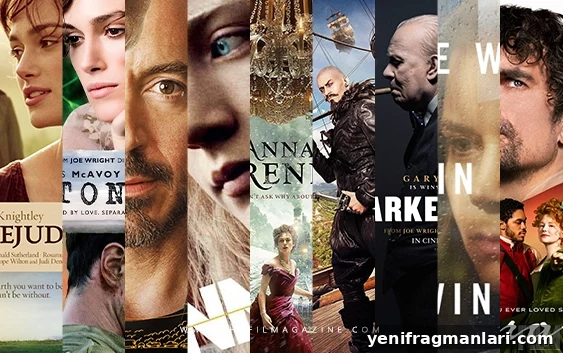
English film director Joe Wright grew up surrounded by marionettes at his parents’ puppet theater, Little Angel Theatre, in Islington. There he absorbed the fairy tales, magic, and romance that have profoundly shaped his work and continue to influence his filmmaking style.
Born in 1972 in London, Wright began his career at Oil Factory, a music video production company. After directing a handful of shorts and serials, he made the BBC miniseries Charles II: The Power and the Passion in 2003, which brought him critical attention. In 2005 Wright directed an acclaimed adaptation of Jane Austen’s Pride and Prejudice, starring Keira Knightley and Matthew Macfadyen. The film was both a critical and commercial success, earning numerous Academy Award and BAFTA nominations and winning Wright a BAFTA for Most Promising Newcomer at age 33.
Wright has often found his greatest success in romantic costume dramas and historical fiction, though he has worked across genres including action, thriller, and fantasy. A recurring stylistic feature of his films is long tracking shots, most famously the continuous five-minute evacuation sequence at Dunkirk in Atonement (2007). He frequently collaborates with cinematographer Seamus McGarvey and has worked repeatedly with actors such as Keira Knightley, Ben Mendelsohn, Tom Hollander, and Saoirse Ronan.
Across nine feature films, Wright’s work ranges from Oscar-winning period pieces to expensive box-office failures. While many of his films are both critically and commercially successful, others miss the mark. Below is a ranking of Joe Wright’s films based on critical reaction, writing, performances, and directorial choices, from weakest to strongest.
Follow @thefilmagazine on Twitter.
9. Pan (2015)
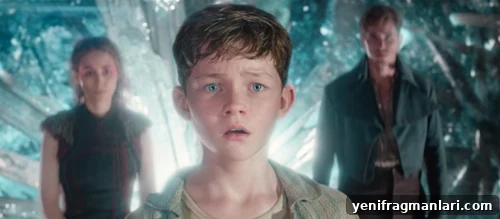
Pan was a major financial failure that nearly sidelined Wright’s career. Set in London during World War II, it positions itself as an origin story for Peter Pan but takes an approach so far removed from familiar versions of the tale that it feels disorienting rather than inventive. Jason Fuchs’s screenplay avoids meaningful explanations for key character relationships and events—Captain Hook’s backstory, for example, is reduced to a trivial detail—leaving large gaps that make the narrative feel incomplete and underdeveloped.
Visually, the film leans into a steampunk aesthetic that often reads as grimy rather than whimsical, a surprising outcome given Wright’s previous visual successes with Seamus McGarvey. Humor and tone are uneven; the film flirts with absurdist comedy without committing, producing performances that sometimes feel tonally misplaced. Rooney Mara is a welcome bright spot, and some moments with Levi Miller’s Peter show glimpses of charm, but overall Pan lacks the cohesion and imagination required for a compelling reimagining of such an iconic character.
8. Darkest Hour (2017)
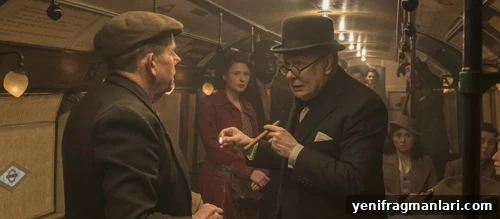
After Pan, Wright turned to a more contained historical drama about Winston Churchill. Darkest Hour chronicles Churchill’s early days as Prime Minister and the tense debates around whether to seek peace or fight following the fall of Europe. The film is competently made but avoids confronting the more problematic elements of Churchill’s legacy, ultimately favoring an inspirational, pro-war narrative that sacrifices nuance for emotional uplift.
Gary Oldman’s transformative performance anchors the film and won him an Academy Award for Best Actor. Beyond his work, however, the film feels conventional and leaves little to ponder once it ends. Moments meant to resonate—such as a scene set in a London tube station—can come across as hollow. Darkest Hour is solidly acted and crafted but lacks the moral and historical complexity the subject invites.
7. The Soloist (2009)
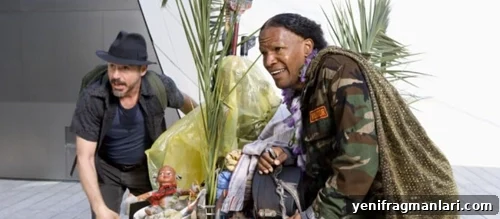
The Soloist stars Jamie Foxx and Robert Downey Jr. in a true-story drama about Nathaniel Ayers, a gifted musician who becomes homeless after a mental health crisis, and the journalist who befriends him. Wright’s direction is restrained compared with his more stylized films, allowing the performances to drive the emotional core.
Downey offers a raw, introspective turn as the journalist seeking redemption, while Foxx delivers consistently compelling, scene-stealing performances. The film’s main weakness is narrative focus: it sometimes feels emotionally distant from its characters and misses opportunities to explore Ayers’s backstory more fully. The most affecting moments—scenes of childhood, musical promise, and the decline into homelessness—suggest a richer film than the final product provides. Still, The Soloist is worth watching for its performances and humane intentions.
6. Cyrano (2021)
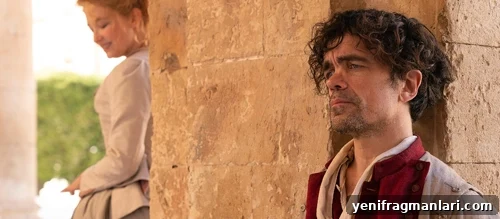
Cyrano, adapted from Erica Schmidt’s stage musical and based on Edmond Rostand’s Cyrano de Bergerac, is a lush romantic tragedy that struggles to find a confident musical voice. Peter Dinklage gives a magnetic performance as Cyrano and proves he can carry a romantic lead, but the chemistry between the principal trio—Dinklage, Haley Bennett, and Kelvin Harrison Jr.—is inconsistent, detracting from the film’s emotional stakes.
Vocally, the cast is uneven, and musical numbers often feel flat, undermined by slow pacing and uninspired arrangements. Visually, however, Cyrano is frequently lovely: the costumes and production design showcase Wright’s strength with stylized, theatrical worlds. The film’s decision to shift the setting to an ambiguous later period dilutes the specificity that might have grounded the story more effectively. Cyrano offers moments of real beauty but ultimately doesn’t fully cohere.
5. The Woman in the Window (2021)
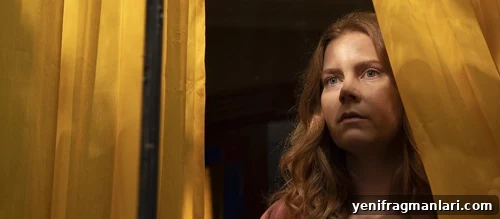
The Woman in the Window arrived to mixed reactions: some found it clumsy and derivative, others appreciated its dark intrigue. Amy Adams stars as Anna Fox, an agoraphobic child psychologist numbed by alcohol and medication, who believes she witnesses a crime across the street. The film oscillates between gritty psychological thriller and campy melodrama without fully committing to either tone, which undermines its suspense and emotional clarity.
Strong performances—including a memorable brief appearance by Julianne Moore—help sustain the film, and faithful adherence to its source material provides a recognizable throughline. While the movie doesn’t entirely succeed, it remains an engaging, if flawed, exercise in suspense driven by Adams’s central performance.
4. Anna Karenina (2012)
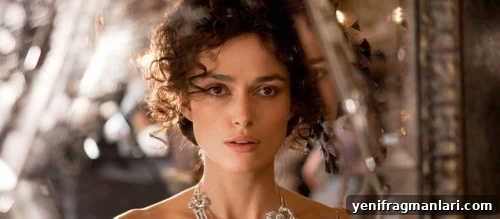
Wright’s adaptation of Leo Tolstoy’s Anna Karenina is a boldly stylized reinvention of the classic novel. Staged largely on a theatrical soundstage, the film prioritizes visual invention: Jacqueline Durran’s Oscar-winning costume design and Sarah Greenwood’s production work create a sumptuous, theatrical world. The approach divided critics—some found the device distracting, while others praised its daring.
Keira Knightley gives a compelling central performance supported by a strong ensemble including Matthew Macfadyen and Jude Law. Wright’s visual language—his use of movement, color, and constructed spaces—lends the story an operatic grandeur that complements the tragic romance at its core. While not universally embraced, Anna Karenina stands as a vivid, arresting piece of cinematic adaptation that demonstrates Wright’s commitment to formal risk-taking.
3. Hanna (2011)
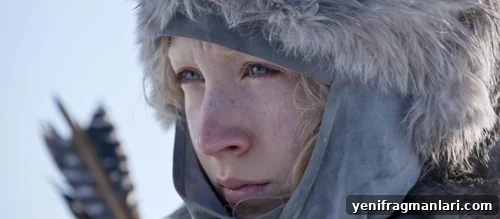
Hanna is a sleek, energetic action-thriller that pairs Wright’s visual sensibilities with a coming-of-age story. Saoirse Ronan stars as a young girl raised in the wilderness by her ex-CIA father, trained to survive and fight. When she sets out to confront those who pursue her, the film balances kinetic action with a tender exploration of identity.
The Chemical Brothers’ propulsive score complements Wright’s brisk pacing, and Ronan’s performance anchors the film emotionally. Cate Blanchett provides a chilling antagonist, and the supporting cast, including Eric Bana and Tom Hollander, add depth. Hanna may leave some questions unresolved, but it remains an engaging and stylish ride that showcases Wright’s ability to handle genre material without losing emotional core.
2. Pride and Prejudice (2005)
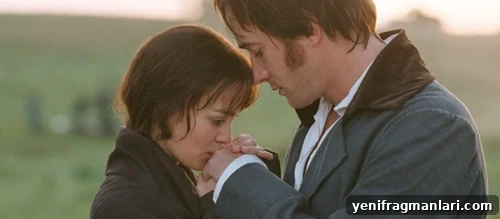
Joe Wright’s debut feature remains one of his finest films and one of the most beloved adaptations of Jane Austen’s novel. Romantic, visually elegant, and emotionally resonant, Pride and Prejudice captures the spirit of Austen’s writing while making bold directorial choices. Keira Knightley and Matthew Macfadyen generate intense chemistry, and a supporting cast led by Donald Sutherland and Rosamund Pike rounds out a richly textured ensemble.
Wright’s trademark long takes are used here to great effect, particularly in the ballroom sequence, where camera movement enhances rather than distracts from the performances. The film takes liberties with structure and tone compared to longer television adaptations, but it preserves the novel’s emotional truth. Pride and Prejudice launched Wright into the international spotlight for good reason: it’s a romantic, refined, and enduring achievement.
1. Atonement (2007)
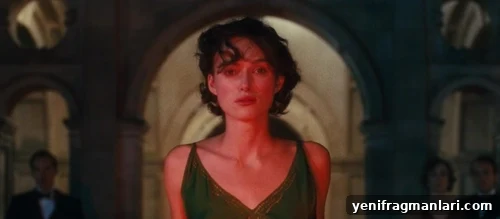
Atonement stands as Joe Wright’s masterpiece: a sweeping, ambitious tragedy that examines love, guilt, war, and the power of storytelling. Adapted from Ian McEwan’s novel, it follows Briony Tallis (Saoirse Ronan) whose youthful lie irrevocably damages the lives of her sister Cecilia (Keira Knightley) and Robbie (James McAvoy).
Wright orchestrates a film of grand scope while maintaining meticulous control of detail. The narrative spans decades with precise pacing and emotionally charged performances. Wright’s long tracking shots, most notably the Dunkirk sequence, and his visual boldness enhance the operatic quality of the story. Keira Knightley and James McAvoy deliver deeply affecting performances, and Ronan’s early portrayal is remarkable in its maturity and intensity.
Atonement balances spectacle and intimacy, making every formal flourish serve the story’s emotional logic. Its devastating finale cements the film’s lasting impact: a cinematic achievement that combines storytelling, performance, and design into a powerful whole.
Joe Wright is an inconsistent but daring filmmaker who can produce both award-winning masterpieces and costly misfires. His distinct visual style and appetite for formal risks don’t appeal to everyone, but when his instincts align with strong material and performances, he can create films of deep emotional and aesthetic resonance. Wright’s body of work is uneven yet compelling, and his successes hint at continued promise for future projects.