
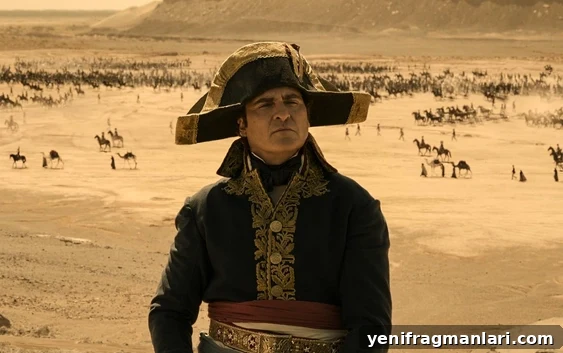
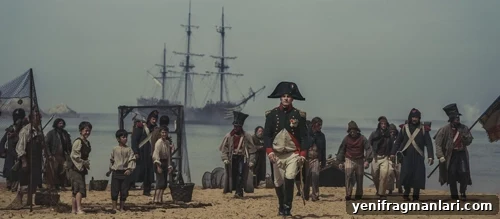
Napoleon (2023)
Director: Ridley Scott
Screenwriter: David Scarpa
Starring: Joaquin Phoenix, Vanessa Kirby, Tahar Rahim, Rupert Everett, Paul Rhys
Nearly twenty-five years after Ridley Scott’s Gladiator re-established his reputation for epic historical filmmaking, he teams again with Joaquin Phoenix to dramatize the life of Napoleon Bonaparte. With lavish production design, meticulous costumes, and a sprawling timeline that stretches across decades, Napoleon aims to be both a sweeping biopic and an intimate portrait of obsession. It achieves many visual and technical triumphs, but it often stumbles narratively, delivering an episodic recounting of events rather than a probing investigation of the man behind them.
Napoleon Bonaparte remains one of history’s most compelling figures: a brilliant and ruthless strategist, a reformer who reshaped European institutions, and a conqueror whose campaigns caused immense human cost. The film covers a long arc—from the revolutionary chaos of France to military triumphs, political maneuvering, and eventual exile—yet the script tends to compress these dramatic milestones into a checklist of famous moments. Instead of using those moments to build a deeper psychological or thematic throughline, the movie often moves from one set piece to the next without allowing scenes to resonate fully.
Joaquin Phoenix delivers a commanding performance. His Napoleon is intense, restless, and animalistic—every gesture and stare suggesting a man driven by ambition and haunted by insecurity. Phoenix dominates the screen in nearly every scene, imbuing the role with magnetism that invites close scrutiny. Yet the film rarely gives him sustained, quiet stretches in which to reveal vulnerability or contradiction; the result is a performance that hints at profound insights but is constrained by the screenplay’s breadth.
The emotional center of the film is Napoleon’s relationship with Josephine, played by Vanessa Kirby. Kirby brings a beguiling and enigmatic presence to the role, creating chemistry and tension in her scenes with Phoenix. Their partnership is presented as the one true human anchor in Napoleon’s life—his passion, regret, and one great personal loss—but the film struggles to examine that bond in depth. Moments that should illuminate how love, desire, or betrayal shaped Napoleon’s decisions are too often summarized rather than dramatized, so the relationship reads as parallel to the historical narrative rather than an integrated, motivating force.
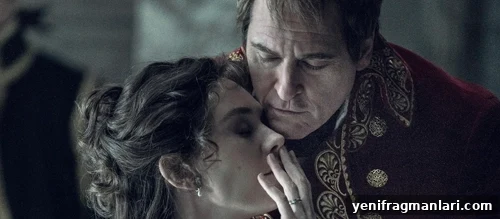
Where the film shines most reliably is in its craftsmanship. Costume designers David Crossman and Janty Yates deliver extraordinary period work: uniforms, gowns and the smallest accessories have been rendered with care, lending authenticity and texture to every scene. Production designer Arthur Max and cinematographer Dariusz Wolski collaborate to create powerful frames—banquets and governmental rooms feel almost like paintings brought to life, and some battle sequences evoke a tangible sense of cold, fog and the physical toll of winter campaigning.
Director Ridley Scott’s visual instincts remain formidable. He stages large scenes with cinematic bravado, finding striking compositions and moments that recall the best of his earlier career. Certain sequences—Napoleon’s entrance into cities, confrontations in dimly lit rooms, and expansive battlefield images—stand out as examples of Scott’s continued mastery of cinematic spectacle. Those moments underline what the film can be at its best: epic, textured and immersive.
That said, the film also exposes recurring limitations in Scott’s recent work. Some digital effects feel unconvincing, crowds occasionally resemble uniform CGI, and a pallid color palette flattens parts of the picture. The editing’s brisk pace attempts to cover more than two decades of turmoil, but that compression sacrifices nuance. Scenes that might have offered personal insight or thematic weight are often truncated to make room for the next headline event, leaving the audience with a solid sense of the timeline but only occasional clarity about the man’s inner life.
Scott has long asserted that historical films need not be strictly factual to reveal a larger truth. When that approach works, it sacrifices strict accuracy for emotional clarity; Gladiator succeeded by mining the myth to reveal human truths. Napoleon, however, tilts the other way: it presents a sequence of historical moments with cinematic flourish but without consistently excavating the deeper meanings those moments might hold. The result is a film of striking fragments—a number of exceptional scenes and technical achievements—assembled into a whole that never quite attains the emotional or intellectual heft it promises.
Despite its shortcomings, Napoleon is worth watching for its performances and production values. Joaquin Phoenix and Vanessa Kirby provide compelling central turns, and the period detail and visual ambition reward viewers who appreciate well-crafted historical cinema. The film’s ambition is clear even when its execution is uneven: individual elements rise to greatness, even if the sum falls short of the epic masterpiece it aspires to be.
Score: 15/24
Rating: 3 out of 5.