The Color Purple (2023)
Director: Blitz Bazawule
Screenwriter: Marcus Gardley
Starring: Fantasia Barrino, Danielle Brooks, Taraji P. Henson, Colman Domingo, Corey Hawkins
The Color Purple has been adapted to the screen more than once since Alice Walker published her novel in 1982. The 1985 film version remains a well-known adaptation; this 2023 production, directed by Blitz Bazawule, offers a fresh and more musical interpretation, drawing directly from the Broadway stage musical that transformed Walker’s novel into a song-and-dance narrative. This newer version brings a more celebratory, immersive tone to the story while remaining faithful to the novel’s emotional core.
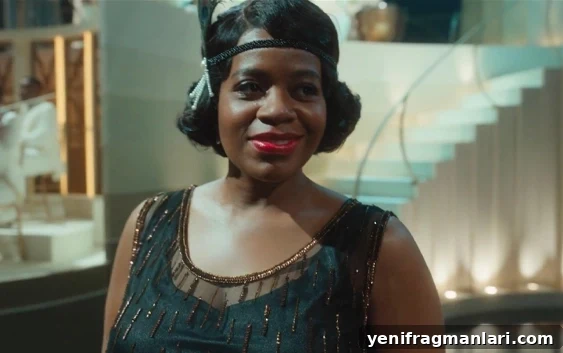
The film follows Celie, an African American woman living in the American Deep South in the early twentieth century. Set initially on the Georgia coast in 1909, the story charts Celie’s painful journey from abuse and silence toward self-discovery and connection. Celie, played by Fantasia Barrino, is forced into marriage with Albert “Mister” Johnson and must raise his children while enduring his cruelty. Over time, Mister’s control and Celie’s separation from the sister she loves most strain her identity and hope. Yet the film also maps the relationships that sustain and transform her: Sofia, Harpo’s proud and resilient wife, and Shug Avery, an independent singer whose presence opens Celie to new possibilities.
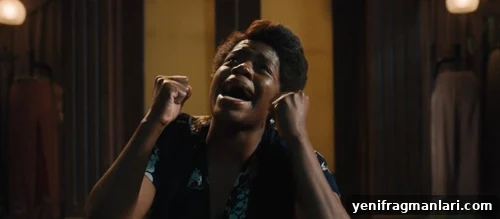
In this adaptation the musical elements are not incidental; they are central to how the story is told. Songs give Celie a voice in a world that often denies her one. Musical sequences serve as windows into her imagination — showing her dreams, fears and longings in ways that simple dialogue could not. This aligns with the classical purpose of the musical form: to use music and choreography to reveal interior life and emotions. Here, the numbers help the audience understand Celie’s inner world and follow her emotional growth.
Cinematically, the film leans into expressive camera work to translate stage choreography into film language. During musical set pieces the camera often tracks and pans in rhythm with the performers, allowing viewers to appreciate full choreography while remaining immersed in the moment. Costume design and production values further anchor the film in its period, while bright, carefully chosen colors emphasize the theatrical origins of the material and enhance the emotional texture of each scene.
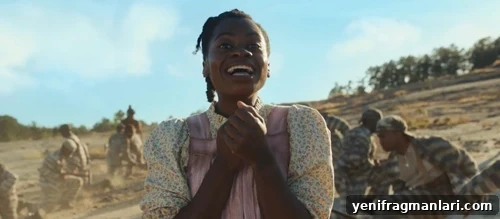
Musically, the soundtrack draws on gospel and blues traditions that are integral both to the film’s setting and to the characters’ lived experiences. Gospel influences appear strongly at the film’s opening, while blues elements root the soundtrack in the southern cultural landscape where the story unfolds. This grounding in African American musical forms adds authenticity and emotional resonance, and the arrangements allow performers to inhabit their roles fully, giving the music narrative weight rather than mere decoration.
The film balances moments of harrowing trauma with sequences of warmth and defiant joy. Many of the performances radiate energy, humor and tenderness; this creates a contrast with the menacing presence of certain male characters—Mister and Celie’s father—whose power is underlined by dim lighting, low-angle framing and unsettling musical cues. These visual and auditory choices emphasize the threats these men pose, while musical set pieces celebrate community, resilience and personal transformation. The interplay between light and shadow, between dance and silence, builds a textured emotional rhythm that helps the film move between pain and uplift without diminishing either.
Blitz Bazawule’s direction marks a notable change from previous adaptations: a Black director interpreting a Black author’s story for the screen, working in collaboration with producers and a cast who bring lived cultural perspective to the material. This production is not simply a retread of familiar ground; it reimagines Walker’s narrative through a contemporary musical lens, making the Broadway roots cinematic without erasing the novel’s grit and depth. The result is a film that honors its source material while offering a renewed sense of possibility and presence for its characters.
Overall, The Color Purple (2023) offers a moving and vibrant adaptation that successfully translates stage elements into cinematic form, using music and choreography to deepen character and theme. Its strengths lie in performance, musical storytelling and cinematography that supports the choreography and emotional arcs. The film serves as both an homage to the long life of Walker’s story and a distinct creative statement that highlights the importance of representation behind and in front of the camera.
Score: 20/24
Rating: 4 out of 5.
Written by Clotilde Chinnici
Support Clotilde Chinnici:
Portfolio: Clotilde Chinnici
Twitter: @filmswithcloe