
Society of the Snow / La Sociedad de la Nieve (2023)
Director: J.A. Bayona
Screenwriters: J.A. Bayona, Bernat Vilaplana, Jaime Marques, Nicolás Casariego
Starring: Enzo Vogrincic, Agustín Pardella, Matías Recalt, Esteban Bigliardi, Diego Vigezzi, Fernando Contingiani
“This is a place where life is impossible. Out here, we are an anomaly.”
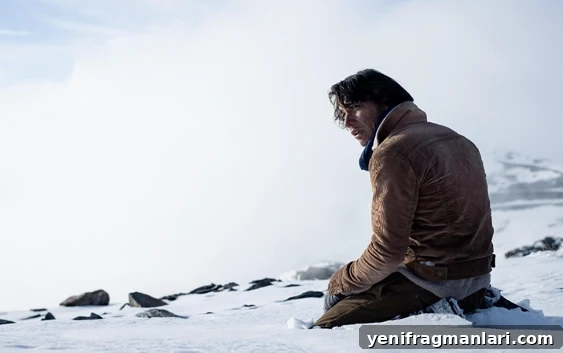
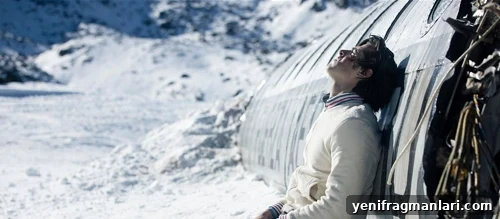
On October 13, 1972, a charter plane carrying 45 people crashed into the Andes. After 72 brutal, nearly unimaginable days, a small number survived. Nominated for Best International Feature Film at the 2024 Academy Awards, Society of the Snow recounts that harrowing ordeal with care, asking difficult moral questions while honoring the resilience of the victims and survivors.
Flight 571’s disaster has been retold before—most famously in Frank Marshall’s 1993 Hollywood adaptation Alive and in later fictionalized works inspired by the incident. J.A. Bayona’s Society of the Snow distinguishes itself by its restrained, humane approach. This film confronts the horror without lingering on spectacle. Its aim is not provocation but understanding: to show how a group of young men redefined their identity and ethics in order to survive, forming a fragile, improvised society atop a frozen mountain.
Although the film does not shy away from the grim realities the survivors faced—cannibalism, frostbite, and the ravages of a catastrophic crash—it remains grounded as a human drama. Makeup and practical effects convey injuries with realism and urgency, but they stop short of exploitation. Bayona and his team, who interviewed survivors and families extensively, treat the story with respect. The camera lingers more on faces, reactions, and relationships than on gruesome detail, and the narrative resists assigning heroes or villains. Instead, it stresses that survival required a radical shift in how these men lived and cared for one another.
The film is narrated by Numa Turcatti (Enzo Vogrincic), one of the longest-surviving members of the group. His voiceover provides a measured perspective, helping the audience track the group’s inner conflicts as well as the physical terrors. That narration also opens space for the film’s quieter questions—about faith, guilt, responsibility, and human dignity. Numa’s admission that he wants to cry, laugh, and dance but must hold himself together for others becomes a powerful refrain: emotion shared becomes a tool for endurance.
The survivors referred to themselves as a “society” on the mountain, a phrase the film adopts as its title. Survival depended on treating each other as equals; cooperation was essential. The movie shows how differing personalities and strategies—practical, moral, and spiritual—clashed and then, often painfully, reconciled. A pivotal sequence centers on the group’s debate over how to proceed when food runs out. Decisions made in that moment expose the characters’ convictions and force them to negotiate personal morals, religious beliefs, and the raw necessity of staying alive.
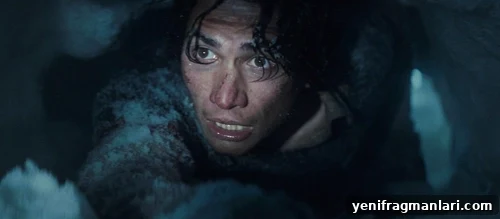
At 144 minutes, the film is not short, and some viewers have questioned its length. Yet the deliberate pace is part of its power: it forces the audience to sit with the men in cold, endless days and nights, to feel the boredom and terror that become routine. The opening fifteen minutes show the passengers’ ordinary lives in warm, golden tones, creating an elegiac contrast with the harsh white landscape that follows. Bayona balances anguish with fleeting, genuine moments of joy—young men making snow angels after a storm, sharing laughter and music despite exhaustion—so the film never becomes simply bleak.
Bayona is deeply attached to the source material. The film is based on the book “Society of the Snow: The Definitive Account of the World’s Greatest Survival Story” by Uruguayan journalist Pablo Vierci, who knew many of the passengers. Bayona, the cast, and crew conducted extensive interviews with survivors and families to capture tone, detail, and memory. For the first time in a cinematic retelling, survivors and victims’ families consented to the use of real names; notably, survivor Carlitos Páez appears in the film as his own father in a brief, haunting scene.
Rather than narrowing the narrative to one or two protagonists, Bayona opts to portray the group dynamic and the shifting roles within it. This broader focus means some character arcs are sketched through conversation, exposition, or voiceover more than by long individual screen time, and at moments character development can feel fragmented. Still, the ensemble cast—largely unknown Spanish-speaking actors—imbues the film with authenticity. Their layered performances make the group feel real, messy, and human.
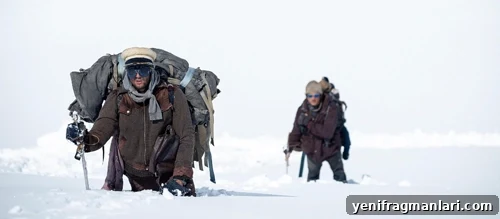
Technically, the film is strong. Bayona handles the few intense action moments—most notably the crash sequence less than twenty minutes in—with visceral clarity. The crash itself is executed as a concise, terrifying event that sets the tone for the survival story rather than lingering for spectacle’s sake. Sound design and visual framing place the viewer inside the chaos and the silence that follows, and these elements remain consistent throughout the film’s long stretches of quiet suffering and conversation.
Faith, guilt, and the search for meaning are woven through the narrative. Characters debate whether God will forgive them for acts they felt forced to commit, and whether dying might ever be an acceptable surrender. One character articulates a central theme: the emergence of a new kind of faith that exists only among the people on the mountain—a faith in one another that becomes necessary for survival. This communal belief, rooted in mutual responsibility and sacrifice, becomes one of the film’s most affecting messages.
Society of the Snow is a compelling awards-season film: quiet where it must be quiet, urgent when events demand it, and humane at every turn. It avoids sensationalism without softening the truth, honoring the memory of those who suffered while offering a profound meditation on solidarity, ethics, and the will to live. This is a powerful portrait of how people can find light in catastrophic darkness by trusting and protecting each other.
Score: 20/24
Rating: ⭐ ⭐ ⭐ ⭐
Rating: 4 out of 5.
By Kyra Lieberman
You can support Kyra Lieberman in the following places:
Portfolio: Kyra Lieberman
Blog: & More
X (Twitter): @kyralieberman
Instagram: @kyralieb