
In Rob Reiner’s 1987 fantasy comedy The Princess Bride, we meet Buttercup (Robin Wright), a young woman on a small farm in the kingdom of Florin. According to the Narrator (Peter Falk), her two favorite pastimes are riding her horse and teasing the farmboy Wesley (Cary Elwes). Every time Buttercup gives Wesley an order, he answers, “As you wish.” Over time, she realizes that what Wesley is really saying is, “I love you.”
Grand declarations of love on screen are thrilling: you likely remember where you were when Princess Leia finally told Han she loved him in The Empire Strikes Back, or when Harry read aloud the reasons he loved Sally in When Harry Met Sally. But sometimes saying “I love you” means something else entirely — sometimes it means nothing at all. In this 10 Best list from The Film Magazine, we explore the heartbreaking, breathtaking, and hilarious ways films say “I love you,” from mistakes and mishaps to some of cinema’s most quoted lines.
Follow @thefilmagazine on X (Twitter).
10. The Awful Truth (1937)
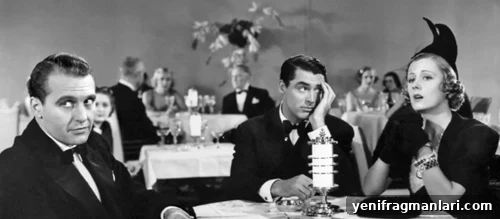
When screwball comedy emerged in the early 1930s, it declared that love needn’t be purely sentimental — it could be absurd, rapid-fire, and very funny. These films often tossed logic aside, making them oddly relatable: who among us hasn’t been foolish in love?
In The Awful Truth, Irene Dunne and Cary Grant play Lucy and Jerry Warriner, a couple heading toward divorce amid mutual suspicions of infidelity. Although their divorce is set to finalize in 90 days, jealousy and misunderstanding persist. When Jerry bursts into Lucy’s apartment, convinced she’s with another man, he instead interrupts her vocal lesson. Rather than react with outrage or embarrassment, Lucy laughs — a small, knowing laugh that makes clear she’s still in love. Jerry’s clumsy attempt to hide his feelings, from flipping a chair to staging slapstick escapes, reveals his lingering affection. In screwball fashion, humor becomes the vehicle for a sincere admission of love.
Recommended for you: Where to Start with Cary Grant
9. It Happened One Night (1934)
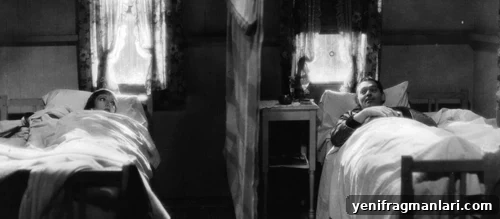
In It Happened One Night, Clark Gable plays Peter Warne, a down-on-his-luck reporter who meets Ellie Andrews (Claudette Colbert), an heiress on the run. In exchange for helping her stay hidden from her father, Peter expects a story that will revive his career. Along the way they fall in love, and one of the film’s most memorable physical metaphors is the “Walls of Jericho” Peter hangs between their beds in a motel to preserve modesty. That literal wall mirrors their emotional distance. When the trumpet sounds and the wall falls in the film’s final scene, it signals the couple’s consummation of marriage and the end of any barrier between them — a playful, clever way to say “we belong together.”
8. Pride and Prejudice (2005)
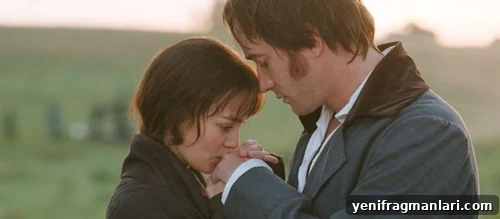
Jane Austen is synonymous with eloquent, aching declarations of love, yet her novels also warn against blind sentiment. In Joe Wright’s 2005 adaptation of Pride and Prejudice, Mr. Darcy (Matthew Macfadyen) tells Elizabeth Bennet (Keira Knightley) he loves her, but his clumsy proposal exposes pride and prejudice on both sides. Rather than merely profess love, Darcy must change and prove himself. He writes Elizabeth a letter explaining his past behavior and then quietly works to correct the harms he caused — reuniting Bingley and Jane, and finding Lydia and Wickham to avert scandal. Darcy’s transformation shows the harder, nobler side of love: it’s not only feeling, but action. He learns to shed arrogance and act selflessly, showing that true love requires growth and empathy.
Recommended for you: 100 Unmissable BBC Films
7. Pretty Woman (1990)
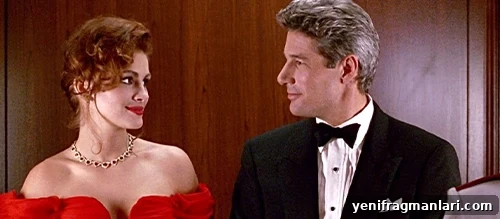
Edward Lewis (Richard Gere) is wealthy but emotionally shut off; Vivian Ward (Julia Roberts) is full of life and humor. Their relationship evolves from a transactional arrangement into genuine affection. Edward offers her a comfortable life on his terms, but Vivian has discovered her own worth and refuses to be anyone’s accessory. Having already whispered “I love you” in what she thought was his sleep, Vivian turns down his proposal to be a subordinate in his life. Edward, changed by her, races to her apartment in a showy, cinematic gesture: he climbs her fire escape despite his fear of heights, flowers in hand, as music and pigeons herald his arrival. When he asks, “So what happens after he climbs up the tower and rescues her?” she replies, “She rescues him right back.” The film frames love as mutual transformation rather than a one-sided rescue.
6. Ever After (1998)
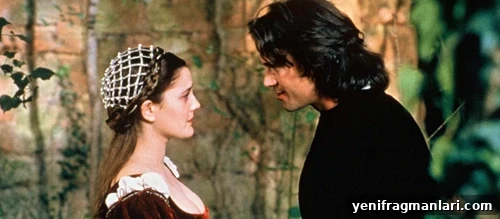
Love can reveal who we truly are, stripping away masks and allowing us to be seen. In Ever After, a Renaissance retelling of Cinderella, Danielle De Barbarac (Drew Barrymore) hides her true identity to reclaim a servant sold by her stepmother. When the prince Henry (Dougray Scott) falls for her while she poses as a noblewoman, she panics and gives a false name. After discovering the deception, Henry seeks her out and finds she has been sold to a cruel man. He rushes to save her, but she has already saved herself. The moment that truly moves Danielle is when Henry uses her real name — acknowledging who she really is and proving he loves her for her true self, not an invented title.
5. Brokeback Mountain (2005)

Not all love stories end happily. Ang Lee’s Brokeback Mountain, adapted from Annie Proulx’s short story, follows Jack (Jake Gyllenhaal) and Ennis (Heath Ledger), two cowboys whose intense bond begins on Brokeback Mountain in 1963. Their love is forbidden by the social expectations of their time, and both men repeatedly turn away from opportunities to be together. When they meet for the last time, raw pain and regret boil over. Jack’s simple, anguished line, “I wish I knew how to quit you,” conveys the impossible truth of loving someone you cannot leave behind. The line is devastating in its simplicity: love, even when dangerous, can be inescapable.
4. Bones and All (2022)

Luca Guadagnino’s Bones and All frames love through a darker lens. Maren (Taylor Russell) and Lee (Timothée Chalamet) are “eaters” with a compulsion to cannibalize, cast as outsiders in a society that rejects them. On a cross-country journey they try to build a life together, but when Lee is mortally wounded, his final request is for Maren to eat him “bones and all.” Her agreement to fulfill that request becomes a grim, literal expression of loving someone completely — accepting every part of them. In this context, the act is less about gore and more about absolute acceptance: loving someone in their entirety, flaws and all.
3. Dirty Dancing (1987)
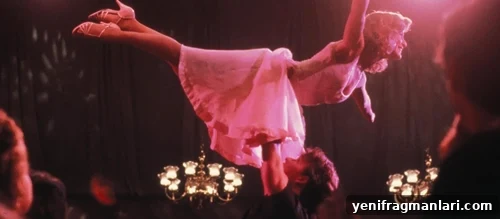
For Baby (Jennifer Grey) and Johnny (Patrick Swayze), dance is the language of love. During a summer at a Catskills resort in 1963, Baby grows from an awkward teenager into a confident woman through her partnership with Johnny. Their chemistry and trust culminate in the film’s iconic final lift — a daring moment that symbolizes Baby’s transformation and the mutual trust that defines their relationship. The lift becomes a declaration: they move as one, and that unity is love made visible.
Recommended for you: 10 Best Films of All Time – Margaret Roarty
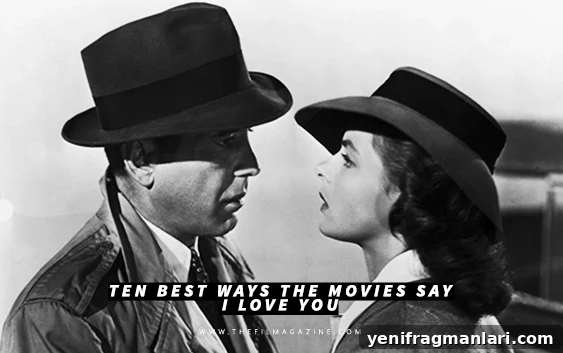
2. Casablanca (1942)
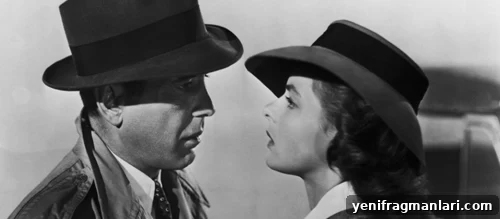
Sometimes the truest way to show love is to let someone go. In Michael Curtiz’s Casablanca, Rick Blaine (Humphrey Bogart) rekindles a past romance with Ilsa Lund (Ingrid Bergman), now married to Resistance leader Victor Laszlo (Paul Henreid). Torn between personal desire and the greater good, Rick ultimately sends Ilsa away with her husband so she can continue the fight for liberty. His sacrifice — a quiet act of profound love — is summed up in his final, bittersweet remark, “Here’s looking at you, kid.” Letting her go becomes the film’s most eloquent expression of devotion.
1. Titanic (1997)
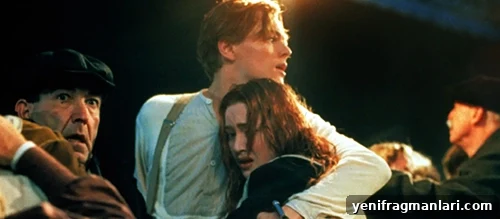
No list of cinematic love moments would be complete without James Cameron’s Titanic. The doomed romance of Jack (Leonardo DiCaprio) and Rose (Kate Winslet) captured global attention in 1997 and remains emotionally powerful. When Rose tells Jack, “You jump, I jump, right?” she is declaring trust, devotion, and a willingness to follow him no matter the consequences. Their relationship forces Rose to reject a stifling, arranged life and choose her own path. As the ship sinks, Rose repeatedly risks everything to stay with Jack. In the end, the film argues that true love often defies logic; when you love someone deeply, you may choose to share danger rather than save yourself alone.
Recommended for you: Top 10 Contemporary Rom-Com Ensembles
Love comes in many forms, and the movies reflect that variety: gestures big and small, words spoken and left unsaid, sacrifices made silently. Which film moment do you think says “I love you” best? Share your favorite way to express love and consider how cinema captures the many faces of devotion.