

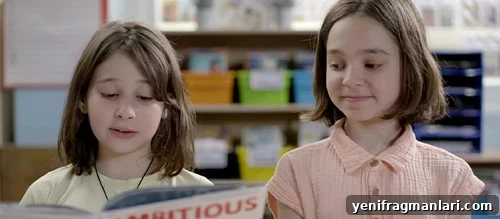
The ABCs of Book Banning (2023)
Director: Sheila Nevins, Trish Adlesic, Nazenet Habtezghi
Children possess an unfiltered wisdom that often escapes adults: they approach complex topics with directness, empathy, and simple moral logic. They do not weigh political advantage or economic cost; they ask what is kind, what is fair, and what helps people understand one another. That clarity gives the documentary short The ABCs of Book Banning its moral force and emotional resonance.
The ABCs of Book Banning was nominated in the Documentary Short Subject category at the 96th Academy Awards. It opens with a stark statistic: more than 2,000 books have been removed from school districts across the United States, listed as restricted, challenged, or banned, and consequently unavailable to millions of students in dozens of states. Titles on that list range widely, from classics to contemporary works: The Kite Runner, The Hobbit, The Handmaid’s Tale, and Anne Frank’s diary are among those affected. The film insists that while proponents of banning have made their voices heard, those who have been largely silenced by these decisions—the children themselves—must also be listened to.
The film’s premise reveals how troubling and absurd the phenomenon of school book bans is in the modern United States. Watching children respond to these restrictions is both breathtaking and heartbreaking. Their confusion and disbelief are genuine: one nine-year-old, Yeye, asks plainly, “Why? Just why? Like, do you feel like Rosa Parks is a bad person?” The fact that a book centered on Nikki Giovanni’s poem “Rosa” can be removed suggests how distorted the debate has become.
A central sequence frames the documentary: a speech delivered by 100-year-old Floridian Grace Linn at a Martin County school board meeting. She walks up a long flight of stairs and reveals a quilt she made, embroidered with banned-book covers. She recounts her husband’s death in World War II and ties that loss to a defense of constitutional freedoms. She compares contemporary book banning to historical acts of censorship: “One of the freedoms that the Nazis crushed was the freedom to read. They stopped the free press, banned and burned books. The freedom to read, protected by the First Amendment, is our essential right and duty in a democracy. Banned books and burning books are the same. Both are done for the same reason: fear of knowledge. Fear is not freedom. Fear is not liberty. Fear is control. My husband died for freedom. I am a mother of liberty. Banned books should be proudly displayed and protected from school boards like this.” Her words anchor the film and make its stakes unmistakable.
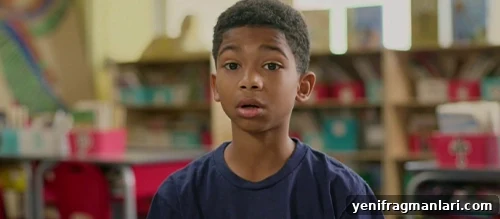
The documentary interweaves Grace Linn’s testimony with the candid reactions of children. Their responses are sharp, humane, and, at times, disarmingly funny. One child discusses identity and empathy in a matter-of-fact way; another calmly explains a story about two male penguins caring for an egg: “They’re still human beings—it’s not like they turned into werewolves or something.” Those lines, free of adult guile, cut to the heart of why these books matter: they allow young readers to understand themselves and others.
Children in the film speak plainly about curiosity and learning. “I like learning about stuff so I can get smarter for every time I need to know stuff,” one child says. That sentiment—learning to become more informed, more understanding, more capable of engaging with the world—is exactly what libraries and school curricula are supposed to encourage. Yet many books addressing race, gender, sexuality, religious identity, and historical oppression are being limited or removed.
What’s striking is the pattern among the censored titles. Many banned books are those that examine oppression from the perspective of the oppressed: stories of Black girls asserting themselves, Muslim girls navigating social discrimination, Jewish experiences during the Holocaust, books about families with gay parents, narratives about trans teens, or picture books that include drag performers. As the film displays each title and stamps it with a “banned” label, the viewer experiences a mounting sense of shock. Meena Harris’s picture book Ambitious Girl is classified “restricted” in some districts—available only with parental consent—yet a nine-year-old named Nuli recognizes its message immediately: “It isn’t telling anybody to do anything bad, it’s just telling you to be who you are.” Another child, ten-year-old Taylor, points out the obvious: “If you read this book, and after you read it you still think it needs to be banned, then something is not clicking in your brain.”
Those observations are the film’s moral backbone. They expose how far some adults have moved from basic empathy and common sense, and how children often show more moral clarity than the officials who restrict their reading. The documentary makes a convincing argument that book banning is a form of social and intellectual impoverishment: it deprives young people of the materials they need to reflect, learn, and develop compassion.
Technically, the film is lean and effective. It relies on simple interviews, archival images, and the emotional power of direct testimony rather than rhetoric-heavy argument. That restraint amplifies its message: the injustice of book banning is evident in the plain statements of children, the committed testimony of elders like Grace Linn, and the list of well-known titles now restricted in classrooms.
The ABCs of Book Banning is an essential short documentary—clear, urgent, and deeply moving. It asks the audience to consider how democratic freedoms are lived and taught, and how censorship shapes the next generation’s view of itself and others. The film’s combination of moral clarity and humane storytelling makes it a potent and necessary viewing experience.
Score: 24/24
Rating: 5 out of 5.