
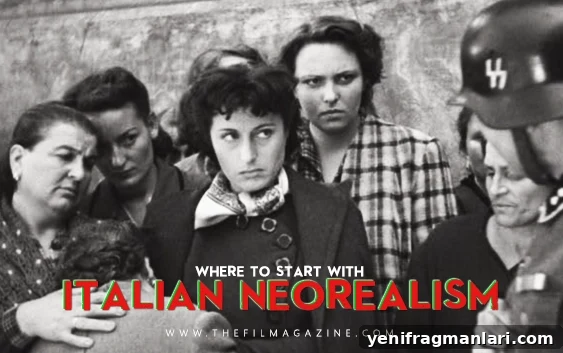
One of the most debated subjects in film studies and criticism is: what exactly is Italian Neorealism? Although it stands among the most influential movements in cinema history, its boundaries are often fluid and its definition remains elusive.
Unlike genre classifications that group films by shared textual elements, film movements tend to cluster works around historical, cultural, and political contexts. Italian Neorealism emerged in a very specific moment: the aftermath of World War II and the fall of Mussolini’s dictatorship. It arose as a reaction to years of censorship and state control over the arts and developed into a politically engaged cinematic language. Neorealist films frequently focus on poverty, injustice, and the daily struggles of ordinary people, while also displaying a distinct visual and narrative approach.
French critic André Bazin described Neorealism as “an aesthetic of reality.” That phrase captures the movement’s intent: to render life as it is, with an emphasis on the lives of working-class Italians in the post-war period. Technically, Neorealist films are known for using non-professional actors, shooting on real locations instead of studio sets, and adopting a documentary-adjacent style—long, unintrusive takes, minimal camera flourish, and an observational gaze that lingers on characters and environments rather than resorting to rapid cutting.
Scholars continue to debate the precise requirements for a film to be labeled neorealist—must it be produced in post-war Italy, or must it use wholly non-professional casts?—but those debates do not diminish the movement’s cultural power. The clearest way to understand Italian Neorealism is to watch some of the key films that define it. Below are three essential entries that illustrate the movement’s range and lasting influence.
1. Rome, Open City (1945)
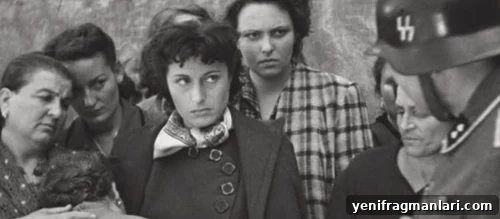
Roberto Rossellini’s Rome, Open City is one of the most iconic films associated with Neorealism. Its powerful depiction of daily life during the Nazi occupation of Rome made a lasting cultural impression and led to its recognition by Italian cultural institutions for shaping the country’s post-war memory.
The film follows several characters involved in the Italian Resistance, including Giorgio Manfredi and the priest Don Pietro Pellegrini, whose moral courage and acts of compassion anchor the story. Rossellini interweaves political resistance with personal sacrifice, creating a portrait of a city under occupation and the ordinary people who resist oppression.
Children play an especially important role in Rome, Open City: their involvement in the struggle and their presence among ordinary Romans symbolize both the immediate human cost of occupation and the hope for Italy’s moral and civic rebirth. The film also explores the relationship between religion and politics, portraying the Church not only as an institution but as a site of ethical action and forgiveness—an important theme in Italy’s post-war conscience.
2. Bicycle Thieves (1946)
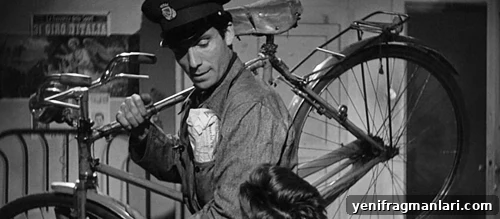
Vittorio De Sica’s Bicycle Thieves is perhaps the most widely recognized Neorealist film. It tells a simple but devastating story of economic desperation: Antonio Ricci, a poor father in post-war Rome, must recover the bicycle essential for his new job after it is stolen on his first day of work.
The film’s raw emotional power comes in part from its casting choices and production methods. De Sica used untrained actors—Lamberto Maggiorani, who plays Antonio, was a factory worker in real life—and shot on location in the streets of Rome. This documentary-like authenticity makes the characters’ struggles immediate and relatable.
Bicycle Thieves also foregrounds the father-son relationship, with Antonio’s son Bruno serving as both companion and moral mirror. Like many Neorealist films, the presence of children offers a vision of hope and continuity, even as the narrative confronts social and economic systems that leave people vulnerable and ashamed.
3. Bitter Rice (1949)
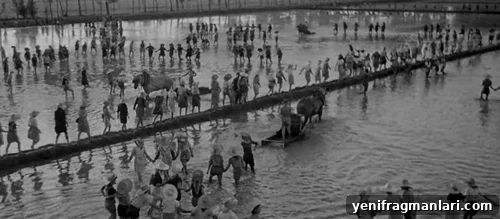
Giuseppe De Santis’s Bitter Rice occupies an interesting position within Neorealism. While it incorporates several Neorealist themes—attention to the working poor, location shooting, and social critique—it also includes more melodramatic elements and a more expressive camera style than many of its peers.
Set among rice workers in Piedmont, the film centers on Francesca and Silvana, two women whose lives intersect with small-time criminality and social survival. Though Bitter Rice occasionally adopts Hollywood-inflected visuals—dynamic close-ups and choreographed group sequences—its focus on labor, class struggle, and the exploitative conditions facing rural workers aligns it with Neorealist concerns.
De Santis also uses the story to critique broader economic forces. While many Neorealist films concentrate on the lingering effects of Fascism and wartime trauma, Bitter Rice extends its critique to the influence of post-war capitalism, reflecting anxieties about changing economic systems and external cultural forces.
These three films—Rossellini’s Rome, Open City, De Sica’s Bicycle Thieves, and De Santis’s Bitter Rice—demonstrate how Neorealism varied in style and emphasis while remaining committed to representing the conditions and dignity of ordinary people. The movement’s aesthetic and moral concerns influenced cinema beyond Italy, shaping filmmakers who sought to blend social conscience with cinematic realism.
Italian Neorealism introduced global audiences to a cinema that prioritizes human experience over polished spectacle. Its legacy persists in contemporary films that focus on marginalized lives and social realities. As director Bong Joon-ho has remarked about international cinema, once viewers move beyond the small barrier of subtitles, they discover a wealth of powerful films; Neorealism is an enduring example of how national cinema can speak to universal human concerns.