
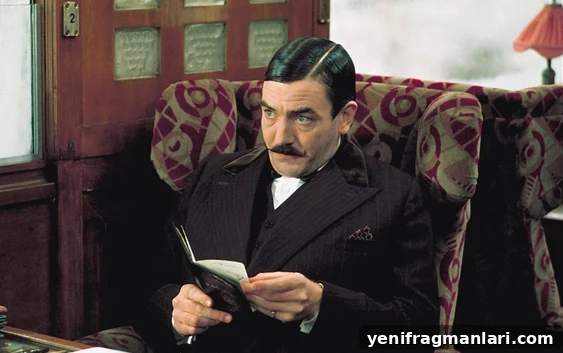
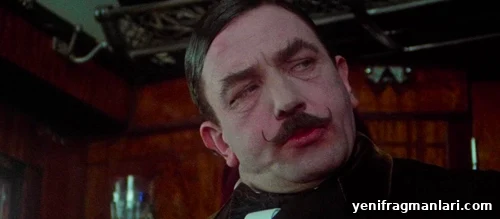
Murder on the Orient Express (1974)
Director: Sidney Lumet
Screenwriter: Paul Dehn
Starring: Albert Finney, Lauren Bacall, Ingrid Bergman, Anthony Perkins, Sean Connery, Vanessa Redgrave, Martin Balsam, Jacqueline Bisset, Jean-Pierre Cassel, Wendy Hiller, Rachel Roberts, John Gielgud
Following the cultural success that reinforced Agatha Christie’s standing as the Queen of Crime, filmmakers took on the challenge of bringing Hercule Poirot, her most famous detective, to the big screen. Translating Poirot’s eccentricities and exacting mannerisms from page to film is no small feat. The 1974 adaptation of Murder on the Orient Express assembled a distinguished production team and an exceptional ensemble cast, and the result was widely acclaimed: the film received multiple Academy Award nominations, and Ingrid Bergman won the Oscar for Best Supporting Actress.
The film largely remains faithful to Christie’s 1934 novel. Hercule Poirot, played by Albert Finney, boards the famed Orient Express as it travels west across Europe. Aboard the train are a host of colourful and secretive passengers. One of them, Mr. Ratchett, portrayed by Richard Widmark, hires Poirot to act as his bodyguard, claiming to have many enemies. Poirot refuses the assignment. When the train becomes stranded in heavy snow and Ratchett is discovered murdered the next morning, Poirot must use his renowned “little grey cells” to determine whether the killer fled into the night or is still hidden among the passengers.
Albert Finney’s interpretation of Poirot predates later portrayals by David Suchet on television and Kenneth Branagh’s more recent film version. Finney’s Poirot is gruffer, less polished and sometimes irritable, a performance that initially divides opinion. He grumbles and rasps through the early scenes, but as the investigation proceeds and the story deepens, Finney’s energy and commitment become more compelling. While some fans might have hoped for a more flamboyant moustache in line with Christie’s original description, Finney’s portrayal ultimately establishes a distinctive take on the detective rather than an impersonation.
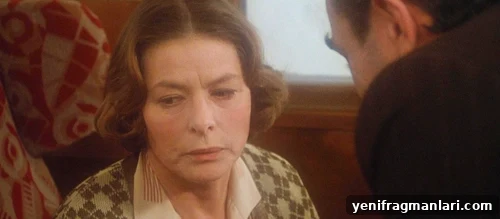
The supporting cast is one of the film’s greatest strengths. The production wisely gathered many prominent names of the era, each bringing nuance and personality to their roles. Sean Connery, Anthony Perkins, Vanessa Redgrave, and others contribute memorable performances, even when their screen time is brief. Anthony Perkins brings nervous intensity, Vanessa Redgrave offers a poised counterpoint, and Ingrid Bergman’s extended interview sequence is captured in a single, powerful take that highlights her dramatic range and helped secure her Academy Award.
Technically, the film is handsomely constructed. Geoffrey Unsworth’s cinematography captures the claustrophobic elegance of the train, while Richard Rodney Bennett’s score complements the mood with restraint and atmosphere. Production design and costuming evoke the period with lavish attention to detail. One stylistic choice that divides viewers is the use of a particular swivelling wipe to introduce flashbacks; some find it visually jarring against otherwise smooth transitions. That remains a minor complaint amid generally strong craft throughout the picture.
The pacing is uneven at times. The film opens with striking, almost silent-film-style imagery and a taut, suspenseful tone, but then lingers in a slower, more descriptive register for roughly the next thirty minutes as it assembles the cast and sets up the mystery. During this stretch, Poirot can feel less sympathetic, intentionally portrayed in a way that accentuates his irritating traits. Those early scenes are necessary to lay out motives and relationships, but their execution occasionally feels functional rather than engrossing.
When the investigation properly begins, however, the film comes alive. Poirot’s methodical questioning, the gradual accumulation of clues, and the subtle tension among the passengers are filmed and performed with intelligence. The climactic revelation—one of Christie’s most famous twists—translates to the screen with emotional and moral weight. The film’s ending differs slightly in tone from the novel’s more reflective finish and chooses a different musical cue, a decision that not every viewer will prefer, but it does not substantially diminish the impact of the story.
Overall, Murder on the Orient Express (1974) remains an elegant, well-acted detective thriller. It may not adhere to every expectation of Christie purists, but it offers a lavish period atmosphere, a strong ensemble, and a satisfying rendition of a classic mystery. It is particularly rewarding as a winter viewing—an atmospheric, suspenseful film ideally suited to a cold evening.
Score: 19/24
Rating: 3 out of 5.
Recommended for you: More Retrospective Film Reviews (collection of retrospective reviews)