
Black Narcissus (1947)
Directors: Michael Powell, Emeric Pressburger
Screenwriters: Michael Powell, Emeric Pressburger
Starring: Deborah Kerr, David Farrar, Kathleen Byron, Sabu, Flora Robson, Jenny Laird, Judith Furse, Esmond Knight, Jean Simmons, May Hallatt, Eddie Whaley Jr
A technical triumph for its era and an enduring influence on filmmakers, Michael Powell and Emeric Pressburger’s Black Narcissus remains potent nearly eight decades after its release. Its blend of psychological drama, visual invention and operatic tension informed later directors and continues to be studied for its daring approach to mood, colour and composition.
The story follows an order of Anglican nuns who set out to establish a convent, school and dispensary in a disused palace perched above a remote Himalayan town. Sister Superior Clodagh (Deborah Kerr) leads the mission. Though determined and devout, Clodagh is repeatedly reminded of her comfortable life in Ireland before she joined the sisterhood. The convent’s five women, and especially the fragile Sister Ruth (Kathleen Byron), confront emotional and spiritual crises as they try to win the trust of the local community while coping with isolation, culture clash and escalating tensions.
As a 1947 film, Black Narcissus hints at erotic and psychological themes rather than depicting them explicitly. The tension between chastity and desire is central: the nuns are surrounded by sensual reminders of the palace’s past, including erotic imagery and decorative motifs that provoke forbidden thoughts. Because the film relies on suggestion and atmosphere, much of its power comes from what is implied rather than shown, creating an unsettling, dreamlike quality that lingers.
David Farrar’s Mr Dean functions as a deliberately charged presence: the worldly English agent for the local ruler and an object of temptation for the sisters. Farrar’s confident, flirtatious performance underlines the film’s exploration of repressed desire and rivalry. The narrative uses his character to test Clodagh’s resolve and to expose the vulnerability that can lie beneath strict discipline and duty.
Rumer Godden’s 1939 novel provided the perfect premise for Powell and Pressburger’s cinematic vision. A convent in a princely palace, surrounded by erotic art and exotic trappings, creates a pressure-cooker environment where piety and passion collide. Even devout observers of a vow of chastity would struggle in such provocative surroundings, and the film makes that moral and psychological strain its central tension.
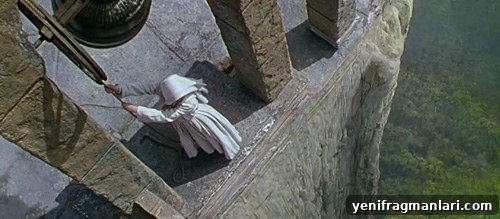
Jack Cardiff’s sumptuous cinematography earned him an Academy Award and remains one of the film’s greatest strengths. The production design by Alfred Junge and the matte paintings by W. Percy Day contribute to a striking visual world: sweeping cliff-side shots, the secluded bell tower and the palace interiors are composed with painterly care. These elements combine to create a vivid sense of place that heightens the psychological drama.
Clodagh and Ruth function as foils and shadowed mirrors. Clodagh is composed, pragmatic and committed to service—she believes in the mission’s practical goals: worship, education and medical care. Ruth is emotionally volatile, vulnerable and increasingly consumed by inner turmoil. Deborah Kerr and Kathleen Byron give contrasting, finely wrought performances: one controlled and duty-bound, the other dangerously impulsive. Their dynamic is the film’s emotional engine, embodying themes of order versus chaos, faith versus desire.

Some elements feel dated to contemporary viewers. The film’s theatrical style and period attitudes toward the East can read as orientalist, and certain performances or costuming choices—viewed through a modern lens—are awkward. These aspects remind us that Black Narcissus is a product of its time. Nonetheless, when approached on its own terms, the film’s imaginative staging and psychological insight remain compelling.
Powell and Pressburger were mindful of the changing geopolitical context when adapting Godden’s novel: the film was made in a post-war period when the British Empire and the relationship with India were shifting. While the film occasionally lapses into condescension in its portrayal of cultural misunderstanding, the filmmakers’ broader interest in moral ambiguity and the costs of imperial arrogance is evident.
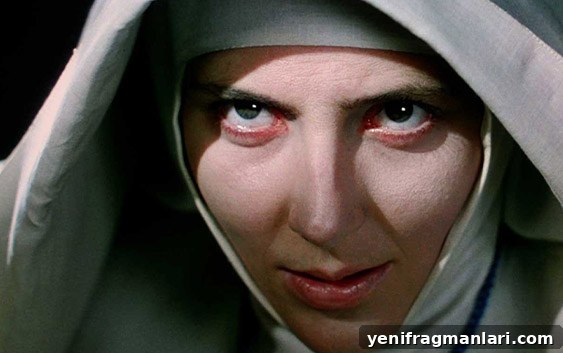
The film’s final, horror-tinged sequences, amplified by Brian Easdale’s unsettling score, are especially effective. Kathleen Byron’s performance as Ruth unravels into a terrifying, operatic climax—her expression and movements on the cliffside convey pure psychological collapse. That sequence is staged with an intensity that turns inner breakdown into cinematic spectacle.
Compared with Powell and Pressburger’s more romantic or whimsical works, Black Narcissus is one of their bleakest films. It questions the promises of blind faith and the dangers of surrendering entirely to desire. The result is an ambiguous, morally complex ending that resonates with the film’s historical backdrop and its characters’ inner conflicts.
Black Narcissus may jar at points for modern audiences, but it remains a vital viewing experience: a landmark psychological drama with exceptional performances, striking visuals and a haunting atmosphere. Its influence on subsequent filmmakers and its contribution to cinematic technique make it an essential film for anyone studying classic British cinema, cinematography, production design and the portrayal of spiritual and psychological conflict on screen.
Score: 19/24