
Conclave (2024)
Director: Edward Berger
Screenwriter: Peter Straughan
Starring: Ralph Fiennes, Stanley Tucci, John Lithgow, Sergio Castellitto, Isabella Rossellini, Lucian Msamati, Carlos Diehz
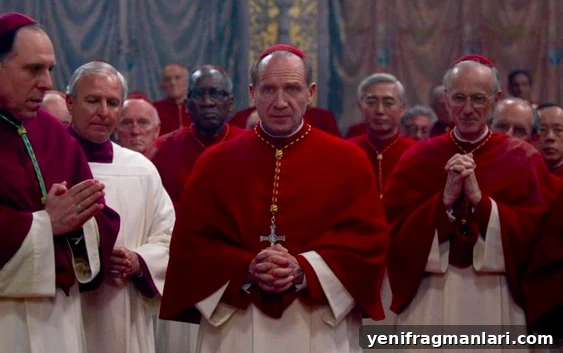
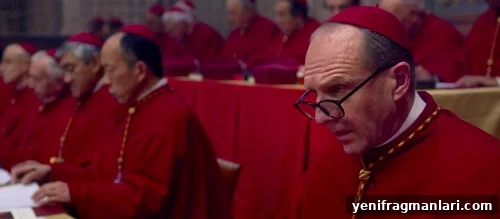
Conclave is a tightly controlled political and spiritual drama that centers on the immediate aftermath of the pope’s death and the secretive process of selecting his successor. The film concentrates on the locked-down world of the papal conclave, where cardinals from across the globe—removed from phones, media, and outside influence—convene to debate, maneuver, and vote. At the heart of the story is Thomas Cardinal Lawrence, portrayed by Ralph Fiennes, who must guide the fractious assembly while wrestling with his own doubts, loyalties, and the moral weight of the Church.
Ralph Fiennes delivers one of the most restrained, commanding performances of his career. His Cardinal Lawrence is quietly authoritative rather than theatrical: every small gesture and carefully modulated line reveals the inner conflict of a man trying to balance personal conscience with institutional responsibility. Fiennes’ work anchors the film, giving the narrative a steady emotional core even as alliances shift and secrets surface. His portrayal may well be among the most acclaimed of the year, earning both industry notice and audience admiration.
Director Edward Berger applies a disciplined visual and narrative approach that keeps the film focused and intense. Berger resists flashy techniques and instead opts for deliberate pacing and close, composed framing that emphasize the claustrophobic environment of the conclave. This restraint serves the story: by limiting visual excess, the film forces attention onto faces, gestures, and the power dynamics unfolding in each room. The cinematography, led by Stéphane Fontaine, contributes striking moments of light and shadow, including a memorable late scene where a shaft of light transforms the atmosphere and underscores the film’s themes.
One of Conclave’s strengths is its moral complexity. The screenplay avoids simple binaries; cardinals from across the ideological spectrum are shown with both virtues and flaws. Characters who champion reform possess weaknesses, and those resisting change are not rendered as one-dimensional villains. This balanced depiction of human imperfection—ambition mixed with faith, politics mixed with conscience—creates richer dramatic stakes. The film thereby becomes less a polemic and more an exploration of institutional survival, personal integrity, and the compromises inherent in leadership.
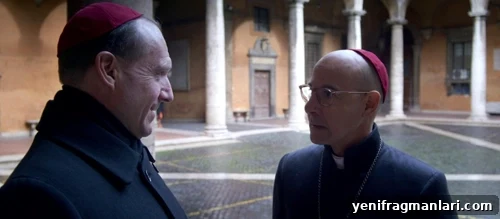
Technically, Conclave is precise and restrained. The sound design favors silence as a dramatic tool: many conversations unfold with minimal ambient noise, which heightens focus on voice and intention. This choice amplifies the film’s intimacy and the weight of each exchange. The script is dialogue-driven, but Berger and his cast punctuate those conversations with meaningful pauses, exchanged looks, and physical nuances that prevent the film from feeling static or stage-bound.
The film’s final revelations and the way it distributes secrets among its characters may feel calculated to some viewers, as if to ensure every major figure carries a burden that complicates their moral picture. While that decision is not strictly necessary for the central narrative, it allows the film to close on reflective notes about tradition, power, and the personal costs of faith. These concluding moments prompt viewers to consider not only who is chosen to lead, but what leadership itself demands.
Conclave succeeds on multiple levels: as a character study, a political thriller, and a meditation on belief. It is accessible to audiences of varied backgrounds because its core concerns—integrity, ambition, duty, and doubt—are universal. Although the film is steeped in Catholic ritual and institutional detail, its broader themes resonate beyond religious affiliation, inviting viewers to reflect on how institutions shape and are shaped by the people who serve them.
In short, Conclave is a compelling, well-crafted entry in 2024’s cinematic landscape. It benefits from an exceptional lead performance, assured direction, and a script that complicates rather than simplifies its moral terrain. For anyone interested in thoughtful drama that explores power, faith, and human fallibility, Conclave offers a richly rewarding experience.
Score: 23/24
Rating: 5 out of 5.
Recommended for you: More 2024 Film Reviews