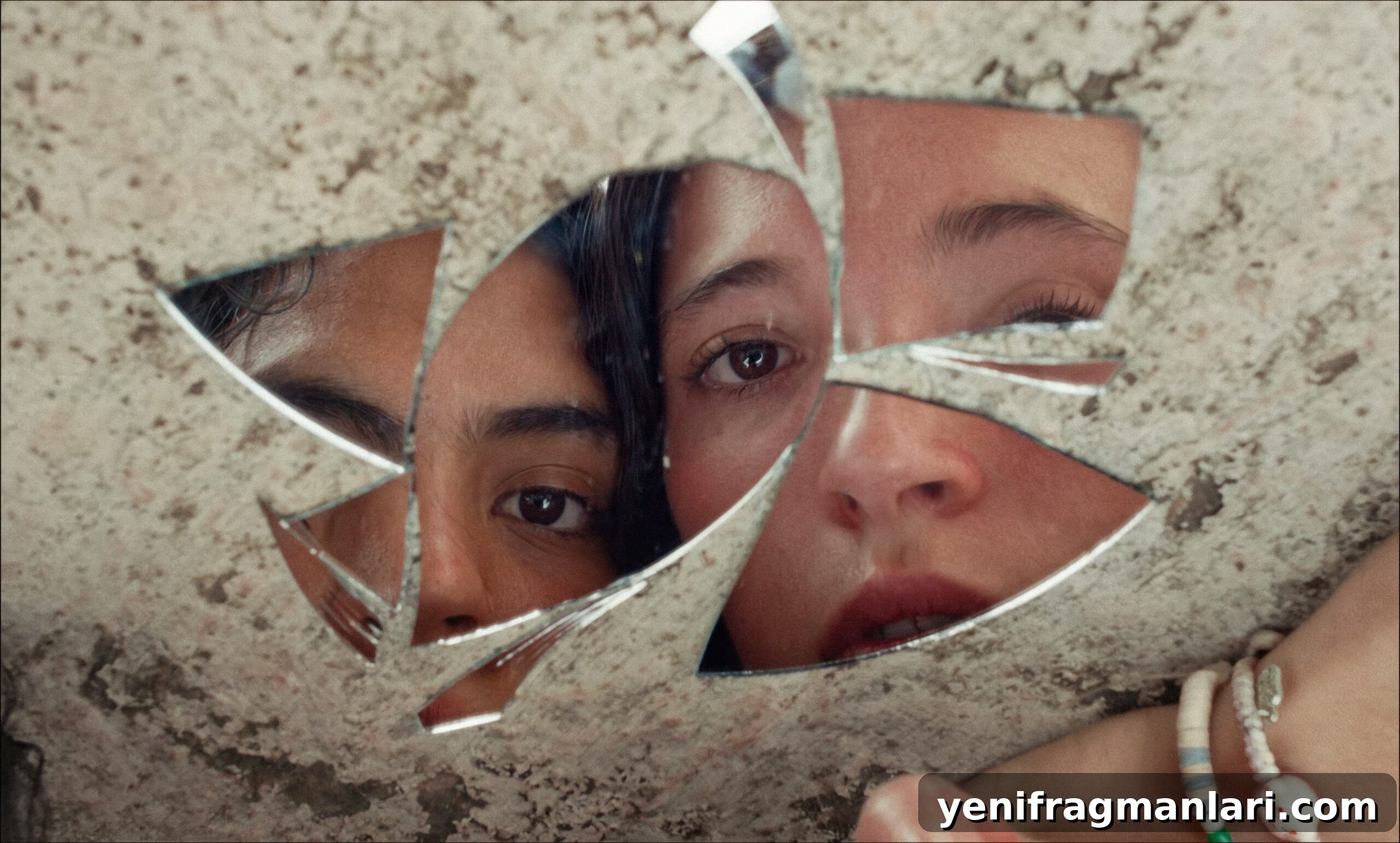
Sad Girlz Film Review | Chicas tristes Refuses to Turn Pain Into Spectacle
The journey of Sad Girlz over the past months is revealing. Written and directed by Fernanda Tovar in her feature debut, this Mexican-Spanish-French co-production opened in the Generation 14plus section of the 76th Berlin International Film Festival, where it earned both the Crystal Bear and the Grand Prix of the International Jury for Best Film.
That is a significant debut, yet Sad Girlz remains the kind of low-key film that could be overlooked. It is not loud, it does not depend on a major star, and its power is quiet and accumulative. As it plays at festivals including Tribeca, it becomes clearer why audiences and juries respond: the film treats its subject with restraint, empathy, and a keen visual sensitivity.
Equally important is how the film was made. Tovar developed Sad Girlz through Colectivo Colmena, a filmmaking collective built on shared feedback and long-term collaboration. Members read one another’s drafts, view edits together, and support each other through the slow, isolating process of making a film. For a story that deals with difficult emotions and trauma, that collaborative context matters. Tovar spent eight years writing the screenplay, and that patience shows—not as overworking but as careful attention to tone, pace, and emotional truth.
At its core, Sad Girlz is about sexual violence and its aftermath, but Tovar refuses to make that violence a spectacle. Rather than staging a single shocking moment as the film’s pivot, she focuses on what follows: the sadness, the confusion, the guilt, the silence. The film is less interested in the event itself than in the reverberations that reshape two young lives.
What is Sad Girlz About?
Sad Girlz follows La Maestra (Rocío Guzmán) and Paula (Darana Álvarez), two sixteen-year-old swimmers who are inseparable friends and the top athletes on their team. They train through the summer, hoping to represent Mexico at the Junior Pan American Swimming Championship.
The film defines itself through contrasts: the pool, with its controlled, physical discipline; the streets, where their friendship feels open and easy; and the dimmer, more uncertain spaces—bedrooms, cars, shadowed rooms—where the same relationship starts to feel fragile. It creates a compact, believable world that explains why this friendship is central to both girls.
One night at a party, Paula ends up alone with Daniel, a friend and long-time crush. Tovar chooses not to show the assault directly; instead she cuts to the aftermath, making the film’s focus the emotional and relational consequences rather than the act itself.
The Portrayal of Trauma and Sadness in Sad Girlz
One sequence in a car briefly disrupts the film’s prevailing stillness. Images and sounds whirl into a rush: color, motion, and sensory overload. Tovar does not explain what happened or prescribe how viewers should feel; instead, she creates an embodied space of confusion. That uncompromising, unarticulated disorientation is devastating precisely because the film refuses to tidy it into a dramatic beat.
Moments of silence and absence of explanation accumulate into what feels like an intrinsic sadness—a persistent emotional weather that shifts how the girls move through their lives. Tovar does not minimize the seriousness of the violence, but she also refuses to sensationalize it. That restraint is a defining strength of the film.
Rosa Hadit Hernández’s cinematography often adopts an observational, slightly voyeuristic perspective without ever feeling exploitative. The camera gives the girls room to process their experience in private and in public, usually keeping a respectful distance. Underwater and pool sequences, informed by Hernández’s experience in aquatic photography, become some of the film’s most luminous passages. In the water, bodies can move freely; the pool becomes a temporary refuge where the restrictions of the outside world fall away.
The film also allows for small moments of humor and everyday life. Supporting characters bring brief levity, though it rarely dispels the underlying tension. Many male supporting figures are portrayed as well-meaning but ultimately oblivious to the deeper harm; their inability to perceive the change in Paula is part of the film’s heartbreak. Sad Girlz is as much about the cultural and relational blind spots surrounding young women’s pain as it is about the incident itself.
Friendship and the Work of Rocío Guzmán and Darana Álvarez
The film’s emotional clarity depends on the authenticity of the friendship between La Maestra and Paula, and Rocío Guzmán and Darana Álvarez deliver performances that feel lived-in and specific rather than generic. Álvarez’s Paula embodies an internalized grief: she retreats not from inability to speak but because words would force shape onto something that still resists form. Guzmán’s La Maestra responds with urgency—trying to act, to name what happened, to protect Paula—even when Paula is not ready to articulate it.
Crucially, Paula’s silence is not framed as weakness, nor is La Maestra’s insistence cast as simplistic heroism. Both reactions emerge from believable emotional impulses: love, fear, loyalty, and frustration. This complexity reflects Tovar’s broader concern with the pervasive sadness she observed among women while growing up. Sad Girlz traces how a single violent event can alter the everyday emotional landscape, producing a sadness that is shared, often silent, and not always immediately explainable but unmistakable to those who look closely.
Is Sad Girlz Worth a Watch?
Yes. Sad Girlz is worth watching. It does not rely on melodrama; its strength lies in how patiently it sits with unresolved pain. The film is not formally revolutionary, and some plot elements are familiar, but those familiar shapes are handled with specificity and care.
The film’s power comes from its close focus on Paula and La Maestra and the trust Tovar places in the particularity of their experience. I am not a Mexican teenager, and I have not been through what Paula endures. Yet the film’s commitment to interior truth and relational detail allows its emotions to resonate beyond its immediate setting. The sadness, the protective impulses, the silences—all become recognizable human responses.
As a debut, Sad Girlz is sensitive, controlled, and thoughtful. It resists tidy answers and avoids turning trauma into spectacle. Instead it watches two girls navigate a changed present and recognizes how love, anger, silence, and protection can become entangled when there is no clear return to who they once were.
Sales for Sad Girlz (Chicas tristes) are being handled by Alpha Violet. Distribution in France has been picked up by Wild Bunch.