
A Haunting in Venice (2023)
Director: Kenneth Branagh
Screenwriter: Michael Green
Starring: Kenneth Branagh, Tina Fey, Camille Cottin, Kelly Reiley, Jude Hill, Jamie Dornan, Michelle Yeoh, Emma Laird, Kyle Allen
After two previous big-screen adaptations of Agatha Christie’s iconic detective, Hercule Poirot, expectations were high for another instalment. Kenneth Branagh returned following 2017’s Murder on the Orient Express and 2022’s Death on the Nile, and even managed to release Belfast in between. That makes A Haunting in Venice an ambitious follow-up, arriving only a year and a half after the previous film. But the creative choices behind this adaptation raise plenty of questions.
Rather than sticking closely to Christie’s Hallowe’en Party, Branagh and writer Michael Green relocate the story from the English countryside to a Venetian palazzo, compress much of the action into one night, and remake the tone into something that leans heavily on horror. Fans expecting a faithful whodunnit will find themselves surprised: the film keeps only fragments of the original novel’s iconography while transforming the narrative into a ghostly thriller. These changes feel deliberate, as if the filmmakers were reacting to criticism that the earlier films were visually sumptuous but too reverential to their source material.
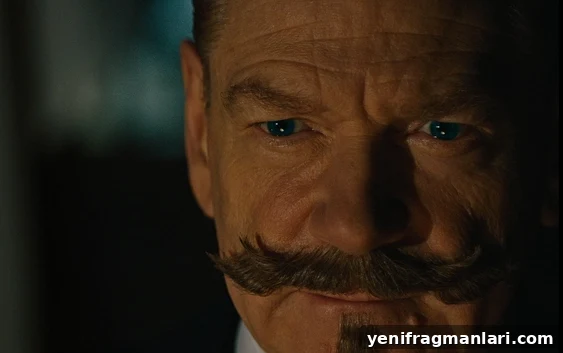
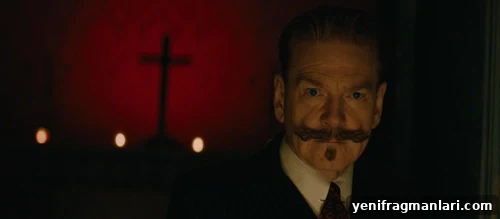
Visually, the film abandons the warm grandeur of Orient Express and the sun-bleached spectacle of Death on the Nile in favor of dim corridors, flickering lamps, and an overall gloomy palette. Cinematography emphasizes shadow and atmosphere, often at the cost of clarity. Faces are frequently obscured, and the repetitive, muted look can make characters blend into the background. If the goal was to evoke classic gothic horror, the result is moody but sometimes monotonous; many shots feel overly similar, and the film’s visual identity rarely varies.
Editing choices also undermine the picture’s momentum. Numerous scenes feel hastily cut: establishing shots land abruptly and conversation edits skip awkwardly between close-ups and mid-shots. The overall pace often reads as rushed, conveying the impression that the film was assembled quickly rather than carefully crafted. These technical missteps diminish suspense and undercut many scenes that might have benefited from more measured development.
Branagh’s Poirot has evolved across these films, but here his portrayal often feels unsteady. The character alternates between listless and alarmed, with the eccentric charm that defined earlier incarnations largely muted. Compared to more traditionally sympathetic portrayals, this Poirot is harder to read and less connected to the audience. The film’s horror focus reshapes his role into that of a detective dragged through supernatural events, rather than the meticulous, human-centered investigator Christie wrote.
A Haunting in Venice also gestures toward questions of faith and belief—using Poirot’s Catholic background and the Italian setting to introduce theological undertones—but fails to explore those themes with depth. References to scripture and spiritual doubt hover on the surface without developing into meaningful dialogue or emotional stakes. This creates a sense of thematic incompleteness: the film hints at larger ideas but never commits to them in a way that resonates.
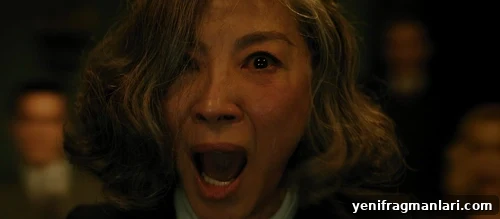
Despite its flaws, the movie is not without strengths. A few jump scares land effectively, and the atmosphere accomplishes eerie moments that recall classic haunted-house cinema. Michelle Yeoh stands out in a supporting role, delivering strong presence and emotional weight when on screen. Her interactions with Jude Hill’s young Leopold are among the film’s most engaging elements, providing a human anchor in an otherwise stylized and often impersonal thriller.
The film’s greatest weakness is its identity: it doesn’t feel like a faithful Agatha Christie adaptation nor a fully realized horror vision. Instead, it occupies a middle ground—an experiment that rearranges familiar Christie elements into a ghost story without fully committing to either genre. That makes the result feel reactionary rather than original, as if the production tried to correct perceived faults of previous outings by swinging the tone to the opposite extreme.
Viewed on its own terms, A Haunting in Venice is an okay genre piece—a moody, occasionally effective mystery-horror hybrid with a standout supporting performance. But as part of a franchise, it’s a puzzling detour. Fans seeking the intricate puzzles and social observation typical of Christie will likely be disappointed, while horror aficionados may find the suspense inconsistent. There are flashes of life and a few memorable moments, yet the film ultimately feels like a missed opportunity: the ghost of an idea rather than a fully convincing reinvention.
Score: 10/24
Rating: 2 out of 5.