
Chinatown (1974)
Director: Roman Polanski
Screenwriter: Robert Towne
Starring: Jack Nicholson, Faye Dunaway, John Huston, Perry Lopez, John Hillerman, Darrell Zwerling, Diane Ladd, Roy Jenson, Dick Bakalyan, Joe Mantell, Bruce Glover, James Hong, Belinda Palmer, Burt Young
Few films attain the status of classic by balancing every element of filmmaking while also delivering a single, indelible quality that lingers in the cultural imagination. Roman Polanski’s Chinatown, now over fifty years old, is most often celebrated for Robert Towne’s Oscar-winning screenplay — a script notable for its intelligence, dark wit and layered complexity. Even after repeat viewings, the screenplay reveals fresh details and emotional nuance. But what makes this film endure beyond its era, and how does it stand up today?
At the center of the story is private investigator J.J. “Jake” Gittes (Jack Nicholson), who begins with what seems like a routine adultery assignment. The case quickly spirals into a sprawling conspiracy that reaches into the highest levels of wealth and influence. Evelyn Mulwray (Faye Dunaway) and her family become the focus of Jake’s investigation as he uncovers secret deals involving water theft, land speculation and corrupt business practices in the drought-ridden Los Angeles of 1937.
Any discussion of Chinatown must also acknowledge Roman Polanski’s personal history. He is a filmmaker of considerable artistic influence whose career has been overshadowed by serious criminal convictions and long-standing controversy. That reality complicates how we approach his work. It’s possible to analyze the film’s artistry on its own terms, but it’s equally important to recognize that debates about separating art from the artist are unavoidable and shape how modern audiences view films made by problematic creators.
Towne’s screenplay is deliberately labyrinthine, designed to make the audience feel as disoriented and overwhelmed as Jake does. It’s a tightly constructed mystery that balances exposition and revelation with sharp, memorable dialogue. Nicholson’s performance is frequently cited as one of his best; he carries much of the film’s tone with dry humor, weary toughness and a surprising vulnerability. Lines like Jake’s casual quips at the morgue and his sardonic exchanges with corrupt characters are delivered with a perfect mix of irony and humanity. John Huston’s Noah Cross, the film’s chilling antagonist, supplies some of the most unsettling, memorable lines — a reminder that power and respectability can be cruelly indifferent to morality.
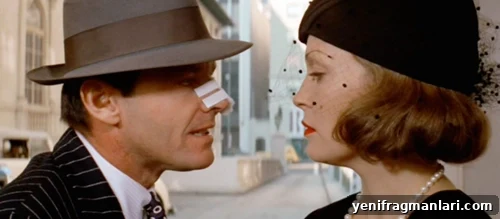
Visually and sonically, Chinatown is carefully crafted to evoke its period while maintaining an undercurrent of menace. John A. Alonzo’s cinematography uses light and composition to emphasize faces and moods without ever calling attention to itself. Jerry Goldsmith’s brassy, melancholic score supplies an audio identity that complements the film’s sepia-tinged aesthetic and hints at corruption beneath L.A.’s sunny surface.
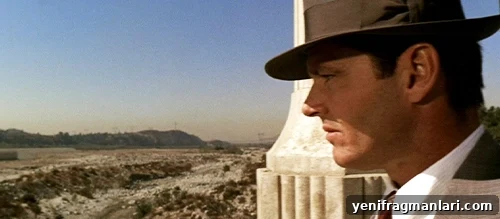
Although the plot is fictional, it draws from real historical tensions surrounding water access in early 20th-century California. The film’s fiction amplifies and fictionalizes the so-called California Water Wars, where the pursuit and control of water reshaped landscapes, economies and communities. The story echoes the real conflicts involving figures like William Mulholland and the construction of the Los Angeles Aqueduct, which transferred water and power in ways that devastated some regions while creating new wealth and development in others.
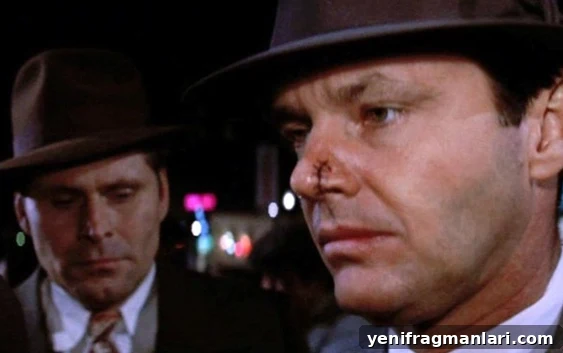
Chinatown cultivates an oppressive, unsettling atmosphere throughout. Polanski’s skill for building psychological tension — evident in earlier films like Repulsion and Rosemary’s Baby — permeates this picture. The film uses symbolic touches and ironic details to reinforce its themes: a drowned city official, the physical injuries Jake sustains while following leads, and the persistent sense that something in the city is fundamentally wrong. These elements unite to produce a mood of creeping dread rather than simple thrills.
The film’s final act is devastating. Its famous closing line, “Forget it, Jake — it’s Chinatown,” caps a series of blows that drain away hope and reveal the full scale of systemic corruption. The narrative refuses a tidy moral resolution; instead it offers a grim assessment of power and impunity. Even a hardened protagonist like Jake, seasoned in the criminal and corrupt underworlds of Los Angeles, is left stunned and defeated by the truth he uncovers.
Chinatown has influenced generations of filmmakers and screenwriters. Its template — an intricate mystery grounded in social corruption and embellished with strong character work — can be seen echoed across noir revivals, conspiracy thrillers and even unexpected genres. Attempts to recreate its particular mix of script, performance and directorial control, including Robert Towne and Jack Nicholson’s later sequel The Two Jakes, met with mixed results; the original’s cohesion and power remain distinctive.
Ultimately, Chinatown endures because it is both a product of its moment and a timeless example of cinematic craft. Its screenplay dispenses information with precision, the performances are layered and unforgettable, and the technical execution — from lighting to score — elevates the material. While contemporary viewers must contend with the problematic aspects of the director’s biography, the film’s artistic achievements continue to command respect among critics, filmmakers and audiences who study the language of cinema and the anatomy of a modern noir.
Score: 24/24
Rating: 5 out of 5.
Recommended for you: Jack Nicholson: 3 Career-Defining Performances