
Black Panther: Wakanda Forever (2022)
Director: Ryan Coogler
Screenwriters: Ryan Coogler, Joe Robert Cole
Starring: Letitia Wright, Lupita Nyong’o, Danai Gurira, Angela Bassett, Tenoch Huerta Mejía, Winston Duke, Florence Kasumba, Dominique Thorne, Michaela Coel, Martin Freeman
When Chadwick Boseman’s unexpected death was announced on August 28, 2020, the film community and audiences worldwide grieved the loss of a beloved actor who had portrayed one of Marvel’s most iconic heroes. Boseman’s passing left the makers of Black Panther with an exceptionally difficult choice: recast King T’Challa or acknowledge the character’s death within the story. The filmmakers chose the latter, shaping a sequel that both honors his legacy and expands the world he helped create.
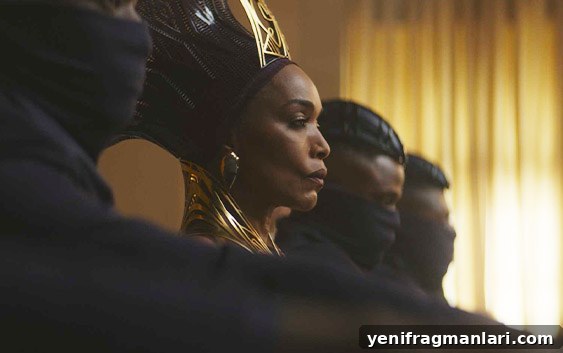
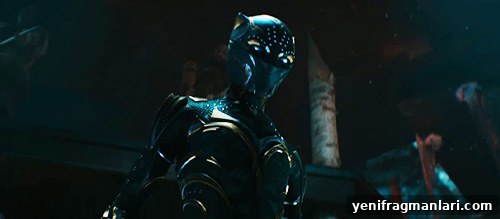
Set a year after T’Challa’s death, the sequel follows Shuri (Letitia Wright), who buries herself in work to avoid confronting grief. Queen Ramonda (Angela Bassett) stands as Wakanda’s head of state, keeping the nation on the global stage while the mantle of Black Panther remains vacant. A new and formidable threat emerges in Namor (Tenoch Huerta Mejía), ruler of the hidden and powerful oceanic nation Talokan. As tensions rise, Shuri must gather allies and step into a leadership role to protect Wakanda and preserve broader stability.
The film takes place within the altered reality of the Marvel Cinematic Universe, a world that has already experienced cataclysmic events—most notably “The Blip,” which cost many people their lives and reshaped international relations. Wakanda, a nation rich in vibranium and fiercely protective of its independence, finds itself vulnerable. Outside powers covet its resources, and incursions by other nations raise the stakes. The revelation of the Talokanil, a people determined to safeguard their own vibranium reserves, brings conflict to the surface and forces Wakanda to react.
One of the sequel’s strengths is how it elevates the supporting cast from the first film into principal roles. The original’s emphasis on family and community—T’Challa’s reliance on trusted allies—becomes central as Shuri, Ramonda, Nakia (Lupita Nyong’o), and Okoye (Danai Gurira) work to carry on his legacy. Each character receives meaningful development, and the ensemble performances are a highlight, delivering emotional depth alongside the action.
At its core, the film is about legacy and the responsibilities of motherhood and leadership. Namor’s backstory is framed through his mother’s perspective, rooted in historical trauma and survival. Angela Bassett delivers a powerful scene as Queen Ramonda, articulating the personal losses and enduring pain that drive her resolve. While the screenplay by Ryan Coogler and Joe Robert Cole sometimes favors exposition over subtlety, it chooses clarity in pivotal moments where the characters’ grief and motivations must be plainly expressed.
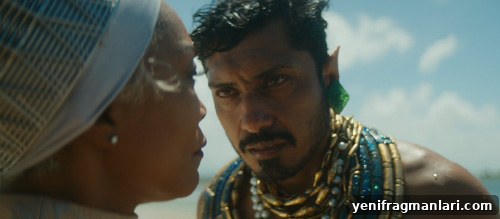
Bringing Namor to life on screen might have seemed risky, yet Tenoch Huerta’s charismatic performance combined with strong visual effects largely succeeds in making the character compelling and formidable. Known as K’uk’ulkan to his people, Namor controls the sea and commands a near-invulnerable force, turning ocean life into powerful weapons. His motivations, rooted in protecting his people and resources from colonial exploitation, make him an antagonist who is both menacing and understandable—reflecting a complex moral stance rather than simple villainy.
At just over two hours and forty minutes, the film is one of the longer entries in the MCU, second only to Avengers: Endgame. The runtime accommodates a large ensemble, significant world-building, the need to close out narrative threads from Phase 4, and the introduction of new characters who will shape future installments—such as Riri Williams/Ironheart, played here by Dominique Thorne. Although the film could benefit from tighter pacing in places and a slightly less extended final sequence, the breadth of storylines and character arcs helps explain its length.
The script’s main flaw lies in occasional uneven pacing: scenes can feel stop-start as the film toggles between intimate character moments and sweeping, multi-layered action. More streamlined world-building and smoother tonal transitions would have improved the flow. Even so, many individual scenes—ranging from quiet, poignant exchanges to spectacular set pieces—leave a lasting impression, supported by strong performances across the cast.
Black Panther: Wakanda Forever faces the nearly impossible task of mourning a star while pushing a major franchise forward. It acknowledges human vulnerability—illness, loss, and grief—and shows that even heroes must cope with those realities. Ryan Coogler’s direction balances tribute and expansion, ultimately delivering a film that honors Chadwick Boseman’s impact, advances Wakanda’s story, and offers memorable action sequences and performances. While not flawless, the movie achieves a heartfelt resonance and provides a thoughtful continuation of one of the MCU’s most distinctive worlds.
19/24
Recommended for you: Every MCU Marvel Cinematic Universe Movie Ranked