
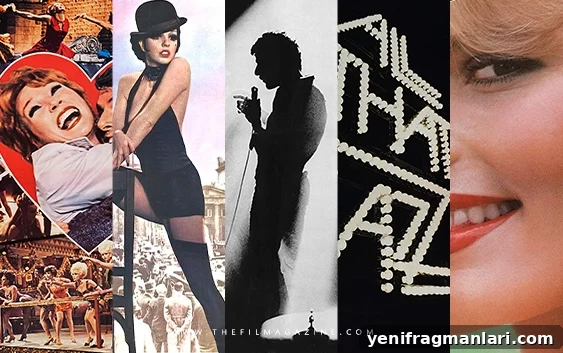
Dancer, choreographer, stage and screen director, relentless workaholic and perfectionist—Bob Fosse was a towering, conflicted creative force whose influence on musical theatre and film remains unmistakable.
Fosse’s first passion was the stage. He directed and choreographed unforgettable sequences and helped shape landmark Broadway shows such as Sweet Charity and Chicago, the latter of which he co-wrote, choreographed and directed to critical acclaim on its original New York run.
Much of his theatre work came in partnership with his wife and muse, multi-Tony Award-winning actress and dancer Gwen Verdon, who frequently starred in the productions he directed. Despite their close artistic collaboration, Verdon did not reprise many of her stage roles in the film adaptations, even when Fosse exercised broad creative control. For those who want to explore both their creative partnership and turbulent private lives, the TV miniseries Fosse/Verdon offers a detailed dramatization.
Fosse turned to filmmaking later in a career that spanned four decades. That meant fewer cinematic credits than some contemporaries, and even his film projects rarely unfolded exactly as he had planned. He won the Academy Award for Best Director for Cabaret (1972) and collected Tonys and Emmys across his career, yet many of his achievements went unrecognized at the time. The five feature films he directed are distinctive, bold works that have grown in stature with each passing decade. Had he not died of a heart attack in 1987 at age 60, his singular artistic evolution may have continued well into the 1990s.
Which of Bob Fosse’s films best capture his boundless ambition and unmistakable style? Here we rank and analyze his major films, from the darker true-crime drama to the daring, genre-shaping musical that remains his signature achievement.
5. Lenny (1974)
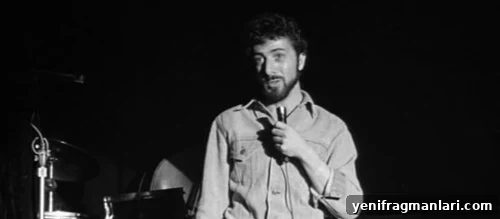
Lenny is Fosse’s pointed and sometimes abrasive biopic of comedian Lenny Bruce (Dustin Hoffman), centering on Bruce’s arrest, trial and conviction for obscenity in the late 1960s. Because Bruce’s life ended prematurely and he never fully achieved mainstream fame, the film functions in part as an epitaph for a groundbreaking but tragic figure in comedy.
The relationship between Dustin Hoffman’s Bruce and Valerie Perrine’s long-suffering wife Honey is tense and uncomfortable, and both actors earned Oscar nominations for their performances. Perrine won a BAFTA for her role.
Bruce’s confrontational stand-up, even when funny, makes him hard to like—Fosse deliberately examines that unlikability. The film probes the boundaries of free speech, asking what should be permissible in public discourse and where lines ought to be drawn. Rather than relying solely on courtroom drama, Lenny dramatizes the broader cultural backlash against obscene language through scenes that deliberately shock and provoke, arguing that repeated public usage can strip a slur of some of its power.
Lenny is a strong film that rewards one viewing; compared to Fosse’s other screen work, it’s the least theatrically adventurous, focused more on moral and legal questions than on Fosse’s signature dance-inflected visual style.
4. All That Jazz (1979)
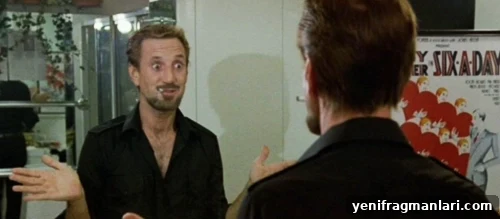
All That Jazz is a hall-of-mirrors self-portrait following a Fosse-like director, Joe Gideon (Roy Scheider), as he grapples with addiction, professional pressure, failing relationships and the simultaneous demands of staging a Broadway show while editing a film. The movie blends autobiographical elements with flamboyant fantasy sequences and stark self-examination.
Fosse’s choice to cast Roy Scheider—an established star rather than a lesser-known dancer—underscores the film’s interest in psychological complexity over purely formal dance authenticity. Scheider delivers a powerhouse performance that anchors the film’s volatile mix of charm, fury and self-destruction.
All That Jazz is Fosse at his most indulgent, explicitly channeling moments from his life and career. It foregrounds rehearsal rooms, backstage clashes and editing suites, and clearly nods to projects like Chicago and Lenny without pretending to be anything but a personal reckoning. The film’s latter sequences move into surreal territory—most famously the stylized depiction of Gideon’s health crisis and imaginative encounters with a glittering Angel of Death—culminating in a spectacular, theatrical confrontation with mortality staged as a grand musical number.
3. Star 80 (1983)
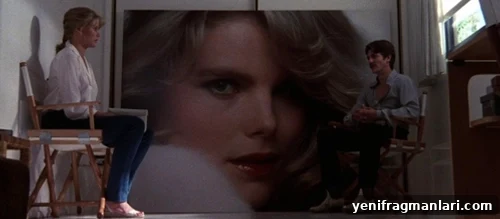
Star 80, Fosse’s final film, adapts Teresa Carpenter’s article “The Death of a Playmate.” It recounts the short, tragic life of Playboy model Dorothy Stratten (Mariel Hemingway), whose promising rise was cut short when she was murdered by her jealous boyfriend and promoter Paul (Eric Roberts).
The film is Fosse’s bleakest, restrained in stylistic excess to let Dorothy’s story stand starkly on its own. Mariel Hemingway gives a quiet, vulnerable performance that invites empathy while the men around Dorothy—Paul, Hugh Hefner and various industry figures—exploit and manipulate her for their own ends.
Eric Roberts is chilling as the jealous, entitled Paul, and Cliff Robertson’s portrayal of a calculating Hugh Hefner drew public criticism on release. Star 80 examines the predatory culture surrounding fame and the devastating power imbalances at the heart of the entertainment industry.
2. Sweet Charity (1969)
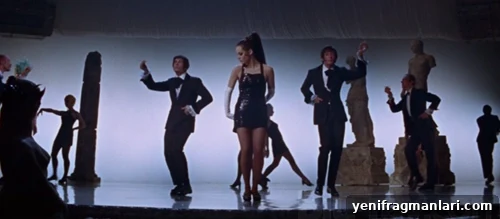
Sweet Charity transposes Federico Fellini’s Nights of Cabiria into an all-singing, all-dancing musical set in New York. Shirley MacLaine plays Charity Hope Valentine, a resilient dancer who endures heartbreak, brushes with danger and the occasional humiliating encounter, yet keeps striving for love and dignity.
If any film encapsulates Fosse’s choreography and visual grammar, it’s Sweet Charity. The “Rich Man’s Frug” sequence alone showcases the director’s trademark movements—sharp elbows, precise isolations, uncanny posture and lightning transitions—making it one of the most influential dance numbers in modern musical cinema. The soundtrack also delivers familiar standards like “Big Spender” and “If They Could See Me Now.”
Shirley MacLaine balances humor and heartbreak with warm immediacy, creating a heroine who is easy to root for despite repeated setbacks. Fosse fought to preserve his theatrical vision for the film, even shooting an alternate, happier ending that was ultimately discarded. Initially dismissed and commercially unsuccessful, Sweet Charity has been re-evaluated as a minor classic appreciated by musical fans and viewers drawn to bittersweet romantic storytelling.
1. Cabaret (1972)
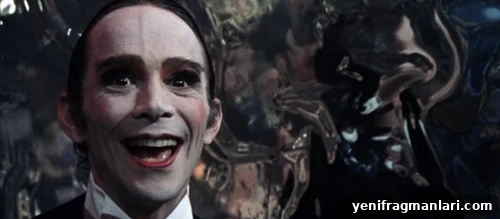
Cabaret is Bob Fosse’s masterpiece: a gritty, emotionally charged musical set in Weimar Berlin that follows the fraught relationship between English teacher Brian Roberts (Michael York) and American cabaret performer Sally Bowles (Liza Minnelli) as the Nazi Party rises. The story expands to include a decadent aristocrat, Max, and two students whose tentative romance faces mounting danger as political extremism encroaches.
Fosse radically reimagined the original stage musical, stripping away many theatrical conventions to create a more immediate, cinematic experience. Liza Minnelli’s incandescent performance as Sally and Joel Grey’s sly, omnipresent Master of Ceremonies at the Kit Kat Klub guide the film’s tonal shifts between glamour and dread. Unusually for a musical, all musical numbers are diegetic—performed for audiences within the story—heightening the film’s realism and its chilling contrast between entertainment and real-world horrors.
The film’s turning point arrives during the unsettling “Tomorrow Belongs to Me” sequence, where a seemingly innocent folk song morphs into a fascistic rallying cry, signaling how ordinary people can be swept into violent ideology. From that moment the film’s dark undercurrent becomes explicit: the era’s political tide leaves no character untouched.
Cabaret endures because it combines theatrical brilliance, unflinching social commentary and powerhouse performances. It remains relevant across generations as both a vibrant musical and a sober warning about the seductive, corrosive forces of politics and prejudice.
Bob Fosse’s short filmography spans a remarkable emotional and stylistic range: from autobiographical excess and dazzling choreography to bleak true-crime drama and searing political musicals. His work reshaped how dance, narrative and social critique can coexist on screen. Which of these films resonates most with you—his exuberant musicals or his darker explorations of fame and exploitation? Reflect on the performances, the choreography and the cultural impact, and consider revisiting these titles to experience the scope of Fosse’s vision.