
This article was written exclusively for The Film Magazine by Margaret Roarty of the Just My Thoughts on It podcast.
The Moscow Film School opened its doors in 1919, shortly after the First World War. Initially an institution that aided the Soviet state’s propaganda efforts, the school also became a laboratory for film theory. Lev Kuleshov founded and ran the Kuleshov Workshop, where limited access to film stock led to a focus on cinema’s psychological effects rather than its production volume. Kuleshov’s experiments—most famously the Kuleshov Effect—demonstrated how audiences derive meaning from the sequence of images rather than from individual shots. Sergei Eisenstein and filmmakers like Alfred Hitchcock expanded on these ideas, showing how editing shapes emotion and understanding. While American pioneers such as D.W. Griffith prioritized continuity editing to preserve spatial and narrative clarity, Kuleshov explored montage as a tool to steer viewers’ responses. His work established a crucial principle: context and juxtaposition create meaning.
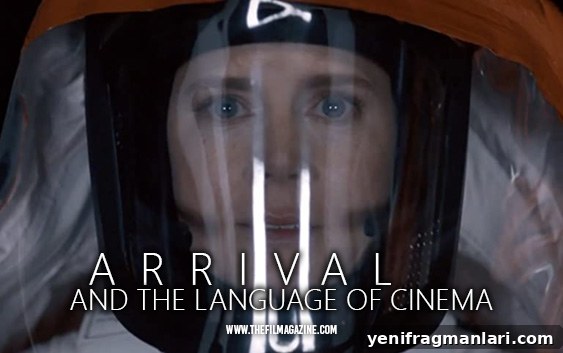
Denis Villeneuve’s 2016 science fiction film Arrival, adapted from Ted Chiang’s short story “Story of Your Life,” opens with a deliberately disorienting sequence. We first see the birth, life, and premature death of a young girl—presented as the daughter of the film’s protagonist, linguist Louise Banks (Amy Adams). Immediately afterward, Louise appears at work during the global arrival of mysterious spacecraft; she seems withdrawn and distant even as the world panics. That arrangement of scenes guides our assumptions: we believe Louise is grieving and emotionally broken. Villeneuve and editor Joe Walker deliberately use editing to shape this perception, and through that careful construction the film later delivers a reveal that recontextualizes everything the audience has seen.
Arrival hands viewers the clues necessary to uncover its central truth, but it also relies on the same editing tools that initially mislead us. The early juxtaposition—daughter’s life followed by Louise’s apparent mourning—frames our interpretation of her behavior. As the narrative progresses, Louise is recruited to decipher the Heptapods’ language so humanity can learn why the aliens have come. Governments around the world assume a hostile intent; fear and suspicion dominate their response. That collective anxiety makes the Heptapods’ presence seem threatening, illustrating how fear of the unfamiliar can distort judgment and drive nations to the brink of violence.
A scene showing soldiers watching an online radio host—an obvious parallel to contemporary conspiracy-driven figures—emphasizes how rhetoric and repetition can warp facts. Arrival feels especially relevant in an era marked by misinformation and political polarization: the film explores how persuasive communication, not just content, can steer public opinion and escalate conflict. As Louise repeatedly notes, tools shape perception—“If all I ever gave you was a hammer, everything looks like a nail”—a sentiment that threads through the film’s examination of language and interpretation.
Louise’s approach contrasts with the military’s. She listens, studies, and seeks to understand the Heptapods through their writing. Unlike the armed forces that immediately read danger into the unknown, Louise approaches their arrival with patience and curiosity. Her linguistic method—attentive, iterative, and open—allows her and physicist Ian Donnelly (Jeremy Renner) to slowly piece together the aliens’ intent. Arrival therefore becomes less a conventional alien-invasion thriller and more a meditation on communication, perspective, and the cognitive frameworks that shape human response.
As Louise learns the Heptapods’ written language, she discovers it is semasiographic: it conveys meaning directly through symbols rather than representing speech sounds. Ian explains that their logograms are “free of time,” introducing the concept of nonlinear orthography. Immersing herself in this mode of expression alters Louise’s cognition; she begins dreaming in the language and experiencing memories that blur temporal boundaries. The film explicitly invokes the Sapir-Whorf Hypothesis—the idea that language influences thought—to suggest that adopting a different linguistic system can rewire perception.
Editor Joe Walker has described how one crucial explanatory scene—originally much longer—was reworked in the editing room into a fragmentary, unsettling sequence that better reflects Louise’s mental state. By repurposing cuts, including some abrupt transitions, the scene becomes more haunting and disorienting, aligning the audience with Louise’s experience. This editorial choice underscores a recurring theme: editing manipulates time and perspective. As Walker puts it, “Time is the editor’s superpower.” In Arrival, that editorial superpower mirrors the Heptapods’ own relationship to time.
When Louise finally deciphers the Heptapods’ purpose, their answer—translated as “offer weapon”—is initially ambiguous. Other nations interpret the aliens’ gift as a tool for dominance, and tensions escalate toward war. Louise, however, comes to understand that the Heptapods’ “weapon” is actually their language: a means to perceive time nonlinearly and to share a cognitive tool across generations. This revelation flips the film’s opening on its head: Louise’s earlier “memories” are not only recollections of the past but visions of the future. Learning the Heptapods’ language has changed how she experiences time; events coexist rather than unfold in a single line.
That twist forces a re-evaluation of the entire story. The emotional weight we attached to Louise in the beginning—grief, resignation—was constructed by editing and by our own assumptions. Once the temporal framework shifts, we see Louise’s choices with new clarity: despite knowing the full arc of her life, including its joys and losses, she elects to live it. Arrival’s final act becomes a quiet, powerful affirmation of agency: Louise uses her new perspective to avert conflict and to offer humanity a way forward.
At its core, Arrival is a film about how language shapes thought, how narrative framing directs belief, and how empathy can counteract fear. In a world grappling with division, disinformation, and a tendency to dehumanize the unfamiliar, the film imagines a different path—one in which leaders and individuals prioritize collective survival and mutual understanding. Cinema itself is central to this message: film is a language that can bend time, reshape perception, and bridge cultural divides. While movies cannot single-handedly change geopolitics, they can model alternative ways of seeing and listening, reminding us that context matters and that perspective can be transformed.
Written by Margaret Roarty
You can support Margaret Roarty in the following places:
Twitter – @ManicMezzo
Podcast Instagram – @justmythoughtsonitpod
Podcast Twitter – @thoughtsonitpod
Listen to Just My Thoughts on It – Anchor