

Judy (2019)
Director: Rupert Goold
Screenwriter: Tom Edge
Starring: Renée Zellweger, Finn Wittrock, Jessie Buckley, Rufus Sewell, Michael Gambon
Rupert Goold, a director known primarily for his acclaimed stage work, makes a confident and affecting transition to film with Judy, a biographical drama that examines the later years of Judy Garland’s life. The film focuses less on a chronological life story and more on the emotional and professional toll taken on an extraordinary performer. Central to the film’s power is Renée Zellweger’s performance, which captures Garland’s vulnerability, stage magnetism, and the deep wounds beneath her public persona.
Judy opens by recalling Garland’s early breakthrough as Dorothy in The Wizard of Oz, using a flashback to underline how early stardom shaped and, in many ways, damaged her. The film frames the pressures Garland endured as formative: the relentless demands of the studio system, the infantilizing treatment by handlers, and the constant expectation to deliver joy to audiences. These elements are presented as contributing factors to Garland’s struggles with mental health and addiction later in life, while also explaining the compulsion that drove her to keep performing.
Rather than attempting a sprawling biopic that covers every era of Garland’s career, Goold and screenwriter Tom Edge concentrate on a specific period—her final years of touring and comeback attempts—so the film can explore intimacy and detail. Flashbacks are used judiciously to reveal the history behind Garland’s present-day decisions, creating a layered portrait that balances pain with the magnetic artistry that made her a legend. This approach helps the film avoid simple melodrama; instead it reveals the patterns of exploitation and resilience that marked Garland’s career.
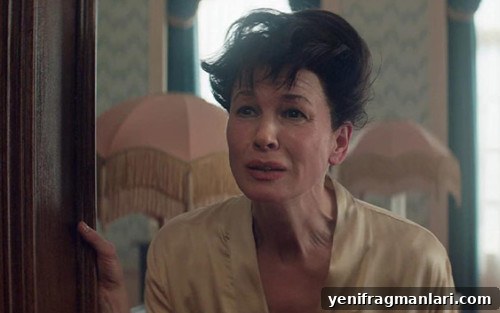
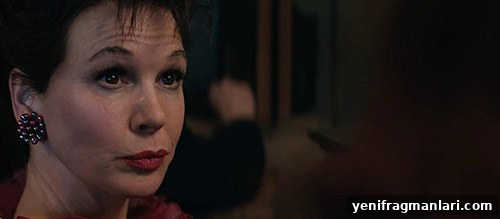
Zellweger dominates the screen in a performance that is both a physical transformation and a fully inhabited portrayal. Her vocal performances are delivered with care, and she sings herself in key sequences, lending authenticity to the onstage moments. Close-up cinematography highlights the smallest emotional shifts on Zellweger’s face, and the makeup and costume design support that transformation without resorting to caricature. The result is a performance that honors Garland’s talent while also making room for the woman behind the icon—tender, broken and fiercely determined.
Goold’s theatrical background is evident in his attention to performance and staging, yet he adopts cinematic tools—composition, editing, and a sensitive use of score—to create a film that feels cinematic rather than televisual. One of the film’s most affecting techniques occurs late in the story when Goold intercuts between Garland onstage and the faces of her audience, forging a powerful emotional connection that underlines why Garland’s work moved so many people. That sequence crystallizes the film’s central idea: Garland’s gift was inseparable from the audience’s need for her, and that relationship shaped both her triumphs and her tragedies.
Beyond Zellweger, the supporting cast provides steady, nuanced contributions. Jessie Buckley and Finn Wittrock, among others, help populate Garland’s world with figures who alternately support and fail her. Production design evokes the shifting textures of the late 1950s and 1960s, and the costumes and hair work help situate Garland’s public transformations alongside her private unraveling. The film’s score and musical arrangements never overpower the performances; instead they underscore emotional beats and enhance the sense of a life lived in song.
Critically, Judy succeeds because it resists easy judgment. It neither lionizes Garland nor simplifies her struggles; it treats her with empathy and rigorous attention. While the film is undeniably anchored by Zellweger’s tour-de-force acting—an effort that earned her the Academy Award for Best Actress at the 2020 Oscars—it is Goold’s direction and the collaborative craftsmanship of the cast and crew that allow the performance to resonate fully. Judy offers a moving, intimate account of a star who gave everything to her art, and in doing so, it reminds viewers of the human cost behind celebrity brilliance.
22/24