
This article was written exclusively for The Film Magazine by Jack Cameron.
New Order (2020)
Director: Michel Franco
Writer: Michel Franco
Starring: Naian González Norvind, Diego Boneta, Mónica Del Carmen, Darío Yazbek
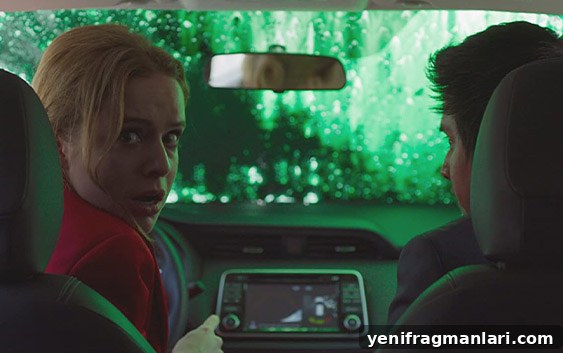
New Order begins with a disorienting montage of images: people in panic, violent outbursts, and bodies littering urban streets. The sequence is deliberately blurred and rapid, forcing the viewer to guess what kind of catastrophe is unfolding—massacre, political attack, or something more fantastic. The film later clarifies there is nothing supernatural at play, but those opening moments set a tone of confusion and dread that persists throughout.
Michel Franco, who wrote, produced and edited the picture, has constructed a challenging and technically assured film. From the outset it’s clear that New Order will not offer comfort. The narrative opens at an extravagant Mexican wedding thrown by a wealthy, powerful family. Marian (Naian González Norvind) and Alan (Darío Yazbek) are the newlyweds, surrounded by opulence and flattering guests. Franco’s editing during this sequence is brisk and efficient—character relationships and social hierarchies are sketched in with quick, purposeful cuts that avoid needless exposition. The effect is to convey a world of privilege in which those at the top are insulated, indifferent, and unaware of the pressures building beyond their estate.
That insulation quickly collapses. The film maintains a relentless pace that rarely allows the audience to relax. The sense of impending rupture grows until protesters and armed interlopers force their way into the wedding, turning celebration into slaughter. What begins as a massacre morphs into a riot and eventually into sustained urban warfare. Franco stages these shifts with a cold, clinical eye: the camera lingers on victims and survivors, often keeping the perpetrators mostly off-frame, which intensifies the horror by insisting the viewer confront the human cost.
The violence in New Order is explicit and unflinching. Several sequences are genuinely upsetting, showing torture and mass executions without aesthetic cushioning. That relentlessness can divide viewers; at times the film risks numbing the audience by piling brutality upon brutality. Still, Franco’s commitment to showing the consequences of collapse—rather than sanitizing them—gives the film a moral clarity. The camera’s focus on those who suffer keeps the story grounded, even as chaos swallows institutions and civility.
Rather than explaining the cause of the upheaval in clear narrative terms, Franco embraces an experiential approach. The film offers only fragments and hints: a political backdrop, signs of social fracture, and one recurring visual motif—the presentation of every text and credit as a mirror image, letters flipped backward. This choice reinforces the movie’s aim to act as a distorted reflection of society rather than a literal reconstruction. That ambiguity can be maddening, but it also deepens the film’s resonance; what it depicts feels eerily close to realistic social anxieties about inequality, corruption and state violence.
For viewers who persevere, New Order occasionally reaches the dizzying visual and emotional intensity of films like Monos. Its strength lies in sustained momentum and in the ways it forces the audience to inhabit panic and vulnerability. Performances are restrained and effective; Franco’s direction privileges atmosphere and consequence over melodrama, which helps maintain a documentary-like austerity that underscores the film’s themes.
As an art-house thriller about national corruption, class division and the collapse of order, New Order is daring and memorable, even if its extremes will repel some. It is a bleak, crafted piece of cinema that refuses easy answers, asking viewers to confront how fragility and violence can erupt from systems that appear stable. Michel Franco delivers a singular vision—one that is worth engaging with, even when it disturbs.
18/24
Written by Jack Cameron
You can support Jack Cameron in the following places:
Twitter – @JackCam86118967
Contently – Jack Cameron