
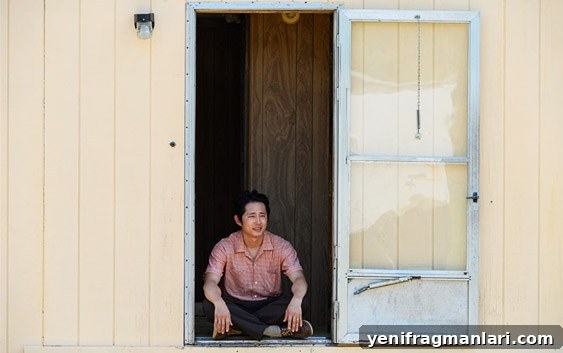
Minari (2021)
Director: Lee Isaac Chung
Screenwriter: Lee Isaac Chung
Starring: Steven Yeun, Yeri Han, Alan Kim, Noel Cate Cho, Youn Yuh-jung, Will Patton
A24’s emergence as a powerhouse in independent cinema has introduced audiences to a steady stream of acclaimed filmmakers and memorable films, and Lee Isaac Chung’s semi-autobiographical drama Minari stands among the company’s most affecting releases. This quietly powerful portrait of an immigrant family trying to build a new life in rural America offers intimate performances, careful direction, and an empathetic look at assimilation, identity, and family bonds.
Minari follows Jacob and Monica Yi and their two young children as they leave Californian factory work to try farming on a 50-acre plot in Arkansas. Jacob, determined to carve out a future by growing Korean vegetables for a growing diaspora, pours the family’s savings and energy into the land. Monica worries about the risks and the isolating life they are creating for their children, who must also cope with David’s fragile heart condition and Anne’s restless energy. Jacob’s faith in the American Dream and Monica’s desire for stability create the film’s central conflict, reflected in small domestic gestures and larger questions about belonging.
Chung draws heavily on his own memories of growing up on a rural farm, and that authenticity is evident in every scene. The film moves at a deliberate, contemplative pace, often lingering on everyday rituals—planting, repairing, cooking—that quietly reveal character and theme. Lachlan Milne’s cinematography bathes the landscape in green fields and wide, open skies, offering a visual vocabulary of hope and vulnerability. At moments the rhythm can feel languid, but those pauses serve to deepen the emotional texture rather than stall the story.
Where many familiar immigrant narratives follow a predictable arc, Minari refreshes the genre by focusing on small, human moments: the children folding paper planes with secret messages and launching them into their parents’ arguments, neighbors’ awkward attempts to connect, and the subtle cultural collisions between the Yis and their Southern surroundings. These details create a lived-in world where scenes of tenderness and tension sit side by side.
Interactions with local residents add depth and nuance. The film avoids one-dimensional portrayals of the community’s curiosity or ignorance; instead, it presents people shaped by their environment—some clumsy in their questions, others sincere in their attempts at friendship. A particularly moving element is the arrival of Monica’s mother, Soonja, played by Youn Yuh-jung. Far from a stereotypical grandmother figure, Soonja is rough-edged, outspoken, and unexpectedly disruptive, yet she brings a vital link to Korean culture and a surprising warmth to the family dynamic. Her unpredictable presence sparks both comic and tender moments that illuminate the children’s need for roots and connection.
Steven Yeun anchors the film with a restrained, nuanced performance. He portrays Jacob as tenacious and proud, a man whose ambitions are revealed less in speeches than in the small decisions and stubborn routines he adopts. Yeri Han as Monica gives a grounded, emotionally textured turn, embodying a mother caught between support for her husband and fear for her children’s future. Young Alan Kim stands out as David, earning attention for his expressive, quietly wise portrayal; he shares irresistible chemistry with Youn Yuh-jung, whose scene-stealing performance earned widespread acclaim. Will Patton also delivers a memorable, idiosyncratic turn as a devout local who alternately unnerves and supports the family.
At its best, Minari blends specificity with universality. It is a film about one Korean-American family but also a meditation on what it means to risk everything for a dream, to reconcile tradition with change, and to define family on your own terms. Its symbolism is gentle rather than heavy-handed: everyday rituals, gestures, and small acts of care accumulate into a profound portrait of resilience and love.
While the film’s quiet approach may not satisfy viewers seeking high drama, its reward is an emotionally resonant experience that lingers. Minari is a thoughtful, beautifully observed film that expands the conversation about immigration, identity, and belonging through humane performances and a director’s intimate vision.
20/24