
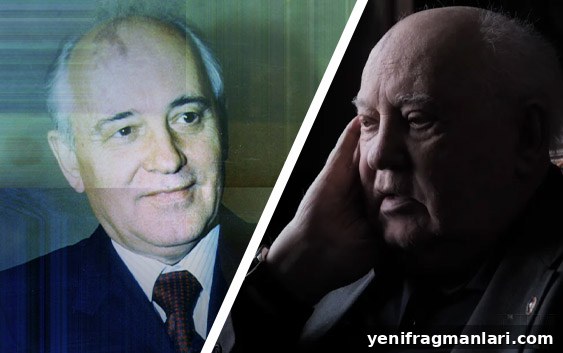
Every few years Hollywood revives familiar faces for big paydays—actors like Tom Cruise who fit the reboot mold: action-ready, scandal-resistant, and seemingly untouched by time. Mikhail Gorbachev (1931–2022), the last leader of the Soviet Union, is nothing like that archetype. Yet Russian-Ukrainian filmmaker Vitaly Mansky treated him to an unconventional cinematic reboot: a two-part documentary project consisting of Gorbachev. After Empire (2001) and Gorbachev. Heaven (2020). Rather than repeating the same formula, Mansky’s films chart a dramatic shift in how Gorbachev is portrayed, a shift that mirrors political changes in Russia over two decades and culminates in Vladimir Putin’s revanchist policies and the invasion of Ukraine.
To understand Mansky’s portrayal, a brief detour into Soviet cultural slang helps. Terms like sovok, vatnik, and Homo Sovieticus describe a mentality shaped by unquestioning loyalty to Soviet propaganda and institutions—people who clung to old certainties even as the Soviet Union dissolved. Nobel laureate Svetlana Alexievich captured these voices in Secondhand Time (2013), where ordinary Russians lamented the end of the USSR: “instead of a motherland, we live in a huge supermarket,” and mourned the loss of geopolitical influence. Yet Alexievich also records a later transformation, after 2001 and the rise of Putin: a new generation learning to be free, actively rejecting the “Sovietness” in themselves. Once it became clear the Soviet order would not return, purging sovok instincts became a central cultural and political project for many in 21st-century Russia.
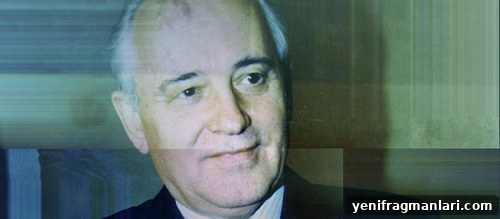
Gorbachev. After Empire, Mansky’s first portrait, frames the former leader as still entangled in sovok consciousness. In the opening shot, a red square isolates Gorbachev as he walks alone, a visual metaphor for confinement. His reforms—Perestroika and Glasnost—set in motion the USSR’s collapse, yet Mansky presents Gorbachev less as a triumphant reformer and more as a trapped figure, bearing the unintended consequences of his decisions. The film was made when the Communist Party still exerted considerable political influence in Russia, posing electoral challenges in the 1990s and 2000. Mansky overlays this mood with symbolic imagery: cranes in flight, an image that in Russian cultural memory evokes wartime sacrifice and resilience, largely due to Mikhail Kalatozov’s The Cranes are Flying (1957). Intercut with Gorbachev’s interviews, the cranes introduce a dual tone—both hope and lament—suggesting that although Gorbachev is caught in his legacy, the future might still offer a place for people defined by old loyalties in a Russia where the communist cause, while damaged, was not entirely vanquished.
Mansky’s approach to documentary aligns with his stated ambition of “Real Cinema.” Echoing early Soviet documentarian Dziga Vertov’s concept of Kinopravda—“film truth”—Mansky insists a documentary is not mere reportage but an artistic construction that shapes reality through framing and editing. Moments in After Empire feel intimate and immediate, almost like reality television. A scene with Gorbachev in the back of a car listening to his granddaughter play a German rave-techno track at full volume captures a man displaced by time. That gesture alone could be read as a comic aside; within Mansky’s larger montage it becomes an image of a Russia where sovok sensibilities persist despite modern shifts—an artistic image rather than a clinical observation.
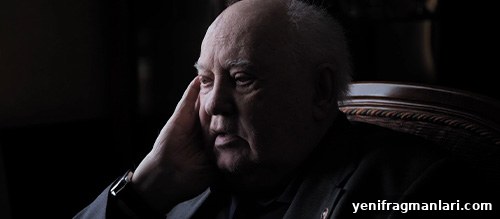
Nearly two decades later, Mansky returned with Gorbachev. Heaven, a far darker and more intimate study. Here Gorbachev is elderly and frail, largely confined to a dacha outside Moscow. The film’s visual language grows somber: shadows, mirrors, and television screens featuring Putin constantly intrude on the frame. Gorbachev’s image appears fractured, a reflection of a life and legacy splintered by time and political reversal. Mansky stages scenes with the explicit intent to provoke reflection—quoting Pushkin to Gorbachev, for instance, and prompting a correction that reveals subtle tensions about national identity and political patience. That exchange is revealing: Gorbachev corrects the phrasing, distancing himself from a collective, waiting patience that might be read as yearning for Putin’s end. Mansky’s method is not strict journalism; it blends fact with the filmmaker’s imaginative imprint, shaping a portrait where claustrophobia and melancholy overshadow the earlier film’s tempered hope.
The contrast between the two films is striking. Mansky’s duet is less a conventional sequel than a study in change—of a man, a people, and a polity over time. After Empire offers a Gorbachev seen through lingering sympathy and a hint of national possibility; Heaven presents him as a figure enclosed by decline and the heavy presence of a consolidated authoritarian order. Mansky’s “reboot” thus interrogates authenticity, authorship, and the relationship between documentary truth and artistic vision.
Beyond cinematic concerns, Mansky’s portraits raise broader political questions. Symbols such as cranes, evoked in After Empire, recall a Soviet past that defeated Nazism and imagined a different moral order than post-Soviet oligarchy. If deployed thoughtfully, such imagery might challenge the nostalgic currents that bolster authoritarian narratives and the rehabilitation of Soviet-era figures like Stalin and Brezhnev in public opinion. Mansky’s films do not offer easy solutions; they refuse the comforts of nostalgia and instead demand viewers reckon with the uneasy legacy of reform, collapse, and revival.
In the end, Mansky’s two films function as a conversation across time—between filmmaker and subject, between past and present, and between competing visions of Russia’s future. They recording both an individual’s decline and a nation’s shifting memory, reminding viewers that documentary cinema can be as much about interpretation and moral imagination as it is about recording facts.
Written by Ben Stoll