


Never Rarely Sometimes Always (2020)
Director: Eliza Hittman
Screenwriter: Eliza Hittman
Starring: Sidney Flanigan, Talia Ryder, Théodore Pellerin, Kelly Chapman
“Don’t you ever just wish you were a dude?”
“All the time.”
Eliza Hittman’s Never Rarely Sometimes Always is an intimate, quietly devastating film that tackles vast and urgent issues through the narrow, urgent lens of a single young woman’s experience. The film keeps its focus tight, following the emotional and logistical journey of a teenager forced to navigate the barriers to reproductive health care. The result is a human, empathetic depiction that refuses sensationalism and instead trusts the audience to feel the weight of every small moment.
Released digitally in the UK and Ireland on May 13th, the film brings attention to why and how a woman might seek an abortion, without turning the topic into a polemic. Hittman has said the story was inspired in part by the case of Savita Halappanavar, the Irish woman who was denied an abortion after an incomplete miscarriage and later died in 2012. That real-world context gives the film a moral seriousness, but Hittman’s narrative remains grounded in Autumn, a seventeen-year-old played with remarkable restraint by newcomer Sidney Flanigan.
Set in rural Pennsylvania, Autumn arrives at a local pregnancy center seeking information and quietly looking for help. She soon recognizes the clinic’s anti-abortion stance and, with the support of her cousin Skylar (Talia Ryder), sets out for New York to access a legal abortion at a Planned Parenthood clinic. The film depicts the journey as a series of practical and emotional hurdles: limited money, scarce accommodation, time pressures, and the everyday misogyny that sits beneath the surface of both small towns and city streets.
Hittman does not dwell on the circumstances that led to Autumn’s pregnancy; those details are intentionally peripheral. What matters is Autumn’s present experience—her fear, her stoicism, her tenderness. Sidney Flanigan’s performance is carefully calibrated: outwardly composed but fragile, full of moments where reserve gives way to raw emotion. The most pivotal scene, and the one that lends the film its title, takes place when Autumn speaks with a social worker in Manhattan. The interview requires binary responses—“never,” “rarely,” “sometimes,” or “always”—and each answer crackles with the difficulty of speaking about relationships and sexual experience under scrutiny.
Hittman sought authenticity in that sequence, filming it in a real clinic and casting a real counselor in the role of Social Worker #2. That realism extends through the film: guerrilla-style camerawork and unobtrusive sound design create an immediacy that feels documentary-like, intensifying quieter moments of connection between characters. Small gestures—a hand squeezed in a waiting room, a look exchanged on a subway—gain potency because the film earns them slowly and honestly.
The supporting performances, particularly Talia Ryder as Skylar, balance Autumn’s inwardness with a more outwardly resilient energy. Skylar’s practicality and loyalty highlight how decisions about reproductive care are often shared within relationships of trust and obligation. Misogyny surfaces repeatedly—taunts from peers, uncomfortable advances at work, and casual language from adults—reminding viewers that the social conditions around young women are often unsupportive and infantilizing.
Clocking in at a brisk 95 minutes, the film wastes no time on extraneous plot. It concentrates instead on the logistics and emotions of accessing care: travel, paperwork, waiting rooms, and the humiliation or compassion encountered along the way. Hittman’s filmmaking choice to keep the narrative focused on process rather than backstory makes the experience feel immediate and universal, while still honoring the specificity of Autumn’s circumstances.
The film’s strength lies in its empathy. Hittman refuses to sensationalize pregnancy or abortion; she depicts reproductive health as a matter of privacy, dignity, and bodily autonomy. At a time when access to care remains contested and often politicized, the film argues—without didacticism—for the importance of safe, legal, and compassionate services. The rough texture of the cinematography and the naturalistic performances work together to present a world where small acts of kindness and decency matter, and where institutional obstacles can have profound human consequences.
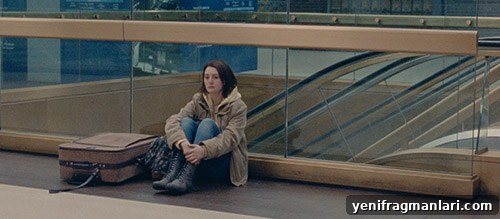
Hittman’s film is not easy to watch, but it does not ask to be easy. It asks only to be seen, to be listened to, and to be understood. By centering Autumn’s experience with dignity and care, Never Rarely Sometimes Always succeeds as a compassionate, necessary piece of independent cinema that foregrounds reproductive rights, bodily autonomy, and the quiet courage of a girl who must fend for herself.
21/24
Written by Pagan Carruthers
Support the author:
Twitter – @PaganCarruthers
Letterboxd – /pagancarruthers