
Nosferatu (2024)
Director: Robert Eggers
Screenwriter: Robert Eggers
Starring: Bill Skarsgård, Nicholas Hoult, Lily-Rose Depp, Aaron Taylor-Johnson, Emma Corrin, Ralph Ineson, Simon McBurney, Willem Dafoe
Robert Eggers entered the 2020s already regarded as one of cinema’s most compelling auteurs, and his 2024 Nosferatu cements that reputation. Known for obsessive period detail and an ability to fuse folklore with visceral dread, Eggers brings a singular vision to this reinterpretation of F.W. Murnau’s silent classic. Where Murnau used German Expressionist shadows and stylized sets to invent a cinematic image of the vampire, Eggers updates that lineage for modern audiences while preserving the eerie, dreamlike logic that made the original unforgettable.
Eggers’ Nosferatu draws directly from Murnau’s A Symphony of Horror, itself a near-adaptation of Bram Stoker’s Dracula that famously altered names and details. This new film remains a close homage to the 1922 original, but it is unmistakably Eggers’ own work: painstakingly textured, acoustically unsettling, and shot through with a naturalistic approach that makes the supernatural feel uncomfortably real. The result is a remake in spirit and structure, reimagined for color, sound, and contemporary sensibilities.
The central story follows newlyweds Thomas (Nicholas Hoult) and Ellen Hutter (Lily-Rose Depp) in a rural German setting. Thomas travels to Transylvania to finalize a property sale for the mysterious Count Orlok (Bill Skarsgård). Orlok’s arrival triggers a growing nightmare: plague and death spread through the couple’s town, and Ellen begins to suffer prophetic dreams and visions tied to the vampire’s presence. As the horror escalates, Thomas and Ellen must confront forces that blur the line between waking life and dream.
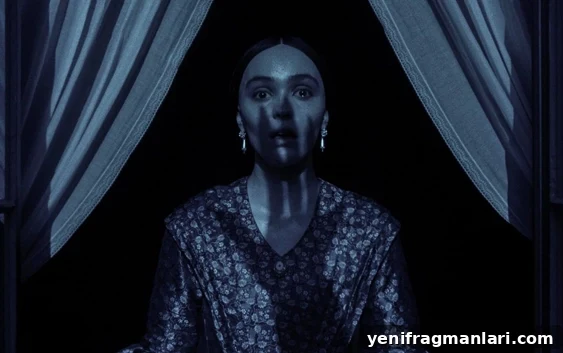
Visually and aurally, Eggers achieves a sustained atmosphere of dread. Much of the film toggles between desaturated palettes and sequences that feel almost monochrome, evoking the silent era while allowing bursts of red—blood and ritual—to shock the eye. The cinematography leans on natural light and high-contrast compositions that recall Expressionism but remain grounded in texture: weathered fabric, mud, and the tactile grime of provincial life. This realism makes the horror more pungent; Orlok’s presence is not merely supernatural but socially invasive, bringing plague, decay, and moral rot.
Sound design plays an essential role. From the rasping breath of Orlok to wet, intimate noises of feeding and the brittle snap of small animals in motion, the film uses auditory detail to unsettle as effectively as it uses imagery. Editing and camera movement favor elliptical, dreamlike transitions: shots that distort distance, sudden shifts in scale, and moments where the viewer feels transported into a character’s fevered vision. These techniques amplify the sense that the world has been tilted off its axis.
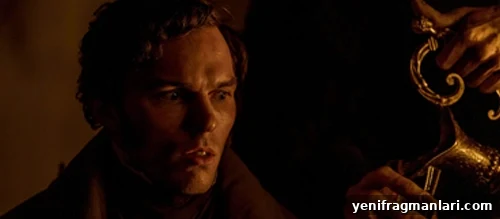
The cast delivers layered work that underpins Eggers’ meticulous mise-en-scène. Lily-Rose Depp is remarkable as Ellen, inhabiting the role with a mix of fragility and resolute inner strength; her emotional trajectory—labeled and limited by the period’s social expectations—becomes the film’s moral center. Nicholas Hoult brings vulnerability and increasing terror to Thomas; his performance gradually reveals the character’s unraveling as he encounters Orlok and the uncanny. Bill Skarsgård is almost unrecognizable as Orlok, transforming into a cadaverous, predatory figure whose physicality and vocal choices create a profoundly unsettling villain.
Supporting players add weight and texture: Ralph Ineson and Simon McBurney contribute memorable turns that help ground the narrative in communal fear, while Willem Dafoe appears in a role that is solid but deliberately distinct in tone—his recognizable presence adds a curious counterpoint to the film’s tightly controlled world. Overall, the ensemble supports Eggers’ grand, tactile aesthetic rather than distracting from it.
Eggers’ strength lies in making the fantastic feel inevitable. Like his previous films, Nosferatu is anchored by painstaking production design—costumes, props, dialect, and the smallest material details—that create a lived-in historical reality. That attention to verisimilitude makes the vampire’s corruption feel all the more obscene: the threat is not only supernatural but also disturbingly human, tied to historical brutality and the mythic figure of a conqueror like Vlad the Impaler. Blood rituals and scenes of corporeal horror recall Eggers’ earlier willingness to depict physical rites and their psychological consequences.
Structurally and thematically, Nosferatu succeeds as both a faithful tribute and a fresh auteur statement. It renders an old story through the lens of modern craft, preserving the original’s nightmare logic while using contemporary sound, color, and performance to intensify emotional stakes. For cinephiles who have awaited Eggers’ take on Nosferatu since the project’s announcement, the film is a fulfilling, often harrowing payoff—a work that honors its silent-era roots while staking its claim as a milestone of 2020s horror cinema.
Score: 23/24
Recommended reading: 50 Unmissable Horror Movies (curated list for readers interested in essential horror films).