
This article was originally published to SSP Thinks Film by Sam Sewell-Peterson.
Tinker Tailor Soldier Spy (2011)
Director: Tomas Alfredson
Screenwriters: Bridget O’Connor, Peter Straughan
Starring: Gary Oldman, Colin Firth, Mark Strong, Benedict Cumberbatch, Tom Hardy, John Hurt, Toby Jones, Ciarán Hinds, David Dencik, Roger Lloyd Pack, Stephen Graham, Kathy Burke, Simon McBurney
Tomas Alfredson’s 2011 film adaptation of John le Carré’s Tinker Tailor Soldier Spy remains a quietly powerful piece of cinema that grows more resonant with each passing year. Though set in the 1970s and wrapped in a palette of cold greys, the film’s themes of institutional paranoia, betrayal, and moral exhaustion feel especially relevant in an era defined by conspiracy and fractured public trust. Alfredson brings a patient, deliberate hand to the material, creating a tense, atmospheric portrait of an intelligence service in decline.
The story centers on the British Secret Service—euphemistically called The Circus—which has been compromised by a mole leaking sensitive information to Moscow. After an operation in Europe goes disastrously wrong, an important agent appears to be dead and vital intelligence is lost. With suspicion falling on many of his former colleagues, George Smiley (Gary Oldman) is coaxed out of retirement to investigate. His task: identify the traitor within the organization before the damage becomes irreversible.
Alfredson, a Swedish director, may have seemed an unexpected choice to helm such a distinctly British tale, but his prior work—most notably the measured, haunting Let the Right One In—demonstrated his skill in building slow-burn tension and maintaining a consistently chilly atmosphere. Those strengths serve the adapted le Carré material well. Alfredson crafts an intelligence-world that feels detail-oriented, emotionally desiccated, and claustrophobically controlled, matching the novel’s bleak worldview without over-explaining it.
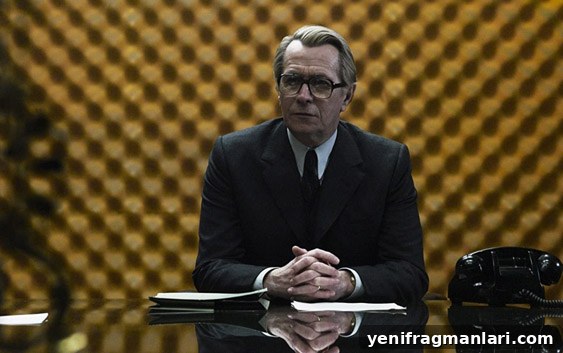
The ensemble cast is superb. Gary Oldman delivers a restrained, masterful performance as George Smiley, conveying depths of thought and emotion through small, almost imperceptible gestures. Oldman’s Smiley is a man who watches and listens, whose power lies in observation and inference rather than charisma or force. Although some readers of the novel might imagine a slightly different physical profile for Smiley, Oldman captures the character’s essence with nuance and authority.
Colin Firth plays Bill Haydon, the charming and dangerous “Tailor,” with an appealing mix of elegance and menace. Mark Strong brings quiet intensity to the role of Jim Prideaux, an agent in exile. Benedict Cumberbatch’s Peter Guillam is a loyal and resourceful ally to Smiley, while John Hurt portrays the once-dominant Control with a brittle, imperious presence. Toby Jones, as Percy Alleline (“Tinker”), projects complacent confidence that masks a deeper instability. Each actor contributes to the film’s layered portrait of an organization unraveling from within.
Bridget O’Connor and Peter Straughan’s screenplay streamlines le Carré’s dense plotting while preserving the novel’s moral weight. The film resists tidy exposition and instead trusts viewers to follow Smiley’s methodical deductions. Cinematography and production design reinforce the story’s mood: bleak offices, damp hotel rooms, and unforgiving institutional spaces emphasize isolation and decline. The visual language supports the idea that these characters are slowly rotting from the inside—professionals hollowed out by a lifetime of compromise and secrecy.
More than a conventional spy thriller, Tinker Tailor Soldier Spy functions as a meditation on the futility and human cost of geopolitical conflict. Le Carré’s scathing view of intelligence work as a profession that corrodes those who practice it remains intact in this adaptation. The film’s melancholy is punctuated by small, human moments: a glimpse of Guillam’s life beyond espionage, a nostalgic memory shared between Smiley and retired researcher Connie Sachs (Kathy Burke), and the bitter irony that loyalty and friendship can be corrupted by betrayal. A haunting musical choice—Julio Iglesias’ “La Mer”—underscores the film’s final montage, signaling friendships and institutions irreparably altered.
Alfredson’s film rewards repeated viewings. Even after multiple screenings or familiarity with the source novel, viewers can appreciate Smiley’s precise mental work and the film’s careful pacing. The ending leaves an ache rather than catharsis, as the consequences of exposure unfold and the hidden casualties of espionage become clear.
One lingering question persists: given the success and fidelity of this adaptation, why has there not been a follow-up drawing on the rest of le Carré’s Karla Trilogy—The Honourable Schoolboy and Smiley’s People? The world Alfredson and his team created feels rich enough for further exploration, and the source material offers more stories that examine the cost of intelligence work on a human scale. Whether future adaptations will emerge remains uncertain, but Tinker Tailor Soldier Spy stands as a definitive, elegiac interpretation of le Carré’s vision.
23/24