Ringu (1998)
Director: Hideo Nakata
Screenwriter: Hiroshi Takahashi
Starring: Nanako Matsushima, Hiroyuki Sanada, Rikiya Otaka, Miki Nakatani, Rie Ino’o, Yûko Takeuchi, Hitomi Satô
The idea of watching a horror film alone still makes many of us uneasy. We invite friends over, order pizza, and trade nervous laughs as we grip the edge of the sofa, peeking through our fingers during jump scares. As writers Haiyang Yang and Kuangjie Zhang noted in the Harvard Business Review, we often enjoy frightening experiences when our surroundings feel safe and when we can remind ourselves the danger isn’t real. In other words, horror can be enjoyable precisely because it poses no real threat—until you encounter Hideo Nakata’s 1998 J-horror landmark, Ringu.
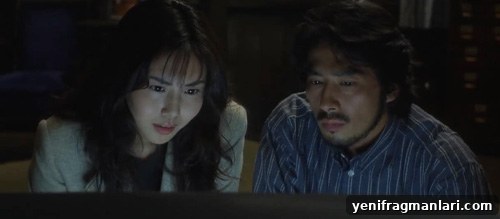
Ringu begins with a chilling urban legend among Tokyo teenagers: a cursed videotape that kills anyone who watches it seven days later. When high school student Tomoko (Yûko Takeuchi) and three friends die mysteriously one week after visiting a cabin in the woods, her aunt Reiko (Nanako Matsushima), a journalist, begins investigating the deaths.
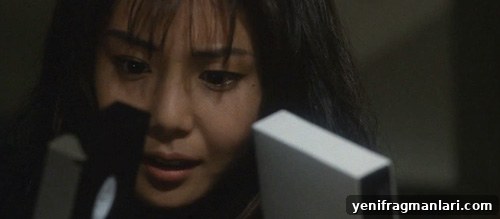
Reiko’s inquiry leads her back to the cabin, where she watches an unmarked videotape filled with disjointed, unnerving images and closing on a blurred shot of a well. After seeing an apparition of a girl in white with long black hair and receiving an eerie phone call, Reiko becomes convinced she’s been cursed to die in seven days. The stakes climb when Reiko’s ex-husband Ryūji (Hiroyuki Sanada) and their son Yōichi (Rikiya Ōtaka) also view a copy of the tape, turning the film into a tense, urgent race to break the curse.
To contemporary viewers or fans familiar with the 2002 American remake, The Ring, Nakata’s original may feel deliberately restrained. The film avoids many conventional horror tropes—there’s little gore, few sudden shocks, and no over-the-top action. Nakata concentrates on Reiko’s methodical investigation and the tragic backstory of the spectral antagonist, Sadako. What Ringu lacks in brute-force scares, it more than makes up for with slow-burn suspense, a pervasive sense of dread, and an unforgettable finale.
Released at the cusp of the 21st century and adapted from Koji Suzuki’s 1991 novel, the film captures a cultural anxiety about the collision of tradition and modern technology. Technology in Ringu becomes an instrument of malevolence: televisions, videotapes, and phone calls transmit doom like a contagion. One striking sequence echoes the 1982 film Poltergeist, as Reiko finds her son transfixed in a dark room by the videotape’s distorted image of the well, bathed in cold blue light. Here technology is not merely a tool but a vector that infects and isolates.
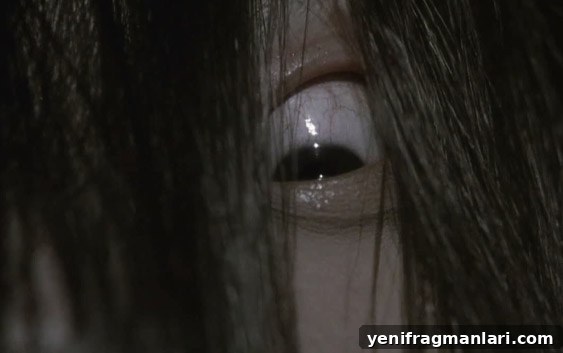
As Reiko and Ryūji trace the tape’s origins, the narrative gradually leaves the modern world and ventures into older, mythic territory. Their investigation becomes a descent into folklore and the supernatural. Sadako herself draws directly on Japanese ghost traditions—yūrei—typically depicted as women in white kimonos with long, unkempt black hair. These spirits are often portrayed as souls that could not rest after a sudden or violent death and are driven by unresolved purpose, frequently revenge. This grounding in established folklore gives Sadako a cultural and psychological weight that deepens the film’s terror.
Nakata has also acknowledged that parts of the story were inspired by real-life accounts. In interviews reported in film journals, he referenced a woman studied in the early 20th century who claimed psychic abilities, was later discredited, and subsequently took her own life. That kernel of historical tragedy lends the film’s backstory an unsettling plausibility: the idea that something human, traumatized and wronged, can become an enduring and destructive force.
The true horror of Ringu stems from its plausibility. By avoiding reliance on cheap shocks or grotesque monsters, the film exploits our inability to fully distance ourselves from its premise. It taps into long-standing fears about restless spirits while also engaging contemporary anxieties about technology that behaves in ways we do not understand. The result is a psychological terror that lingers long after the credits roll.
Decades after its release, Nakata’s film remains relevant. As modern media continue to question the relationship between humanity and technology—whether through television series like Black Mirror or in everyday conversations about digital risk—Ringu still resonates. Its imagery, atmosphere, and the iconic notion of a ghost emerging from a screen continue to unsettle viewers.
If you’re planning your next horror marathon, consider adding Ringu. It’s an excellent choice for aficionados of atmospheric terror and for groups who want a movie that builds dread through story and mood rather than shock value alone. Invite friends, order pizza, and prepare for a film that rewards patience and attention. But remember the film’s central warning: in Ringu, the act of watching can itself be dangerous—so tread carefully, and maybe don’t pass the tape along.
Score: 20/24
Written by Emily Nighman