

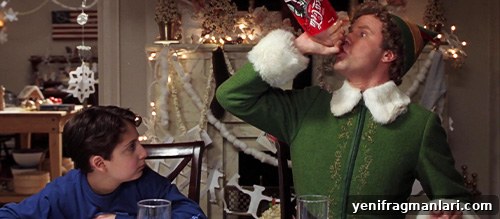
Elf (2003)
Director: Jon Favreau
Screenwriter: David Berenbaum
Starring: Will Ferrell, James Caan, Bob Newhart, Zooey Deschanel, Ed Asner, Mary Steenburgen
Warmhearted, joyful, and genuinely kind, Elf has grown into a modern Christmas classic. The story of a fully grown man raised as an elf who arrives in New York City to find his biological father could easily have become awkward or grotesque, yet the film’s creators shaped it into a heartfelt, endlessly rewatchable holiday favorite.
Written by David Berenbaum and directed by Jon Favreau, Elf was both a critical and commercial success, earning $223.3 million on a $33 million budget. Its lasting appeal rests on several strengths: a breakout central performance, thoughtful direction, practical visual choices, and an emotional core that resonates with audiences across generations.
At the center of the film is Will Ferrell’s career-defining performance as Buddy. This role transformed Ferrell from a talented sketch comedian into a leading figure in contemporary comedy. Buddy is instantly memorable because Ferrell commits fully to the character’s innocence and unfiltered enthusiasm. He doesn’t need a flamboyant physicality to convince; his ordinary, everyday look makes him all the more believable as someone who simply doesn’t belong in either world—North Pole or New York City. Whether clad in elf garb or a plain suit, Ferrell’s energy never fades; he remains infectiously sincere, and the film depends on that purity of performance.
Elf is essentially about rediscovering childlike wonder as a path to happiness. Buddy treats New York like his personal playground, finding joy in mundane interactions and infusing everyday scenes with wonder. Simple moments—mistaking a man in a white beard for Santa, gleefully exploring a revolving door—establish Buddy’s optimistic worldview and make his joy contagious to viewers.
Jon Favreau’s direction gives the film its enduring visual and emotional clarity. Instead of relying heavily on computer-generated effects, Favreau used practical techniques such as forced perspective to make Buddy appear larger than the other elves in North Pole sequences. These tactile effects age gracefully compared with CGI-heavy productions; they retain a handcrafted charm that contributes to the film’s timelessness. Favreau’s approach balances visual inventiveness with narrative warmth, and this sensibility would later influence his work on major franchise films and family-oriented storytelling.

Costume and production design also play a large role in Elf’s identity. Favreau and Berenbaum drew inspiration from classic stop-motion holiday specials; that influence informs the film’s color palette, set pieces, and the inclusion of stop-motion sequences that highlight Buddy’s origins. These choices tap into a broader nostalgia that resonates with older viewers while remaining fresh and accessible to younger audiences. The result is a movie that feels both rooted in holiday tradition and distinctly contemporary.
More than its comedic beats and visual style, Elf succeeds because of its emotional heart. The film centers on a father-and-son story shaped by writer David Berenbaum’s reflections on loss and family. The dynamic between Buddy and his biological father explores themes of rejection, forgiveness, and unconditional love. Buddy’s unwavering affection—despite being initially spurned—leads to moments that are both humorous and profoundly moving.
James Caan delivers a strong counterpoint as Buddy’s father, offering a world-weary, intimidating presence that underscores the film’s emotional stakes. Caan’s performance helps transform the father-son arc from a simple plot device into a believable, affecting reconciliation. The final acceptance scene remains genuinely stirring precisely because of the sincerity brought by both performers.
The supporting cast is carefully chosen and well-used. Zooey Deschanel brings a grounded sweetness as a coworker who rediscovers the magic of the season. Bob Newhart lends a dry, steady warmth as Papa Elf, balancing Buddy’s exuberance with calm wisdom. Ed Asner’s portrayal of Santa is a comforting, authoritative presence that fits the film’s tone and tradition.
Ultimately, Elf endures because it combines a star-making lead performance, thoughtful direction, and a simple but powerful emotional premise. The film avoids cynicism and treats its central conceit with honesty and heart, turning an unusual holiday idea into one of the most cherished Christmas films of the 21st century.
24/24
Written by Elisabetta Pulcini