

When it comes to remakes, skepticism is understandable. How can a new version possibly match the original’s impact? Often that doubt is justified. Yet remakes can also be worthwhile: when thoughtfully reimagined, they can update outdated ideas, offer fresh perspectives, or deepen themes the original only hinted at.
Remakes have a poor reputation, but sometimes they breathe new life into tired material. They can highlight aspects that went unsaid before or expand the story in meaningful ways. Films such as The Thing (1982) and Scarface (1983) are examples of remakes or reworkings that found their own identity and strength. Still, many remakes fall short, repeating what the original already achieved without adding creative insight.
The 2013 remake of Carrie, originally adapted from Stephen King’s debut novel and first brought to the screen in 1976, is an instance where the remake largely retraces familiar ground rather than reinterpreting it. The 1976 Brian De Palma version remains a tense, unforgettable piece of filmmaking more than four decades on. The 2013 version, despite competent craftsmanship in places, rarely departs from the template set by its predecessor. It follows the plot beat for beat and rarely takes risks or introduces compelling new ideas. In this edition of Original vs Remake, we compare how the two films approach the same source material and why the earlier adaptation endures.
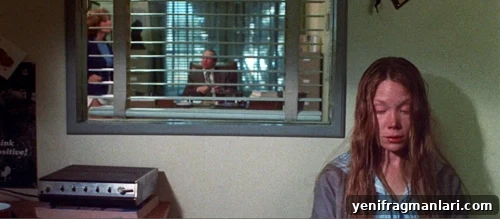
Stephen King’s 1974 novel Carrie transformed his career. Though not an immediate runaway bestseller, the book sold well enough for King to leave teaching and pursue writing full time, helping to usher mainstream success for modern horror. Brian De Palma’s 1976 film—starring Sissy Spacek as Carrie and Piper Laurie as her fanatical mother—matched the novel’s impact on audiences. The film achieved both commercial success and critical recognition, with Spacek and Laurie receiving Academy Award nominations for their performances. To this day, Carrie is widely regarded as one of the most effective Stephen King adaptations.
After the original film, the property produced several variations: a poorly received 1999 sequel, a 2002 television adaptation, and even a stage musical from the late 1980s. More than three decades after De Palma’s version, Kimberly Peirce directed the 2013 reimagining starring Chloë Grace Moretz as Carrie and Julianne Moore as Margaret White.

Both films center on Carrie White, a shy, sheltered teenager raised by a devout and abusive mother. Ignorant about her changing body and the world beyond her home, Carrie is humiliated by classmates when she experiences her first period at school. That moment triggers the emergence of Carrie’s telekinetic powers, and as those powers swell, the bullied girl gradually transforms, leading to the infamous prom climax: the prank with pig’s blood and the catastrophic fallout that follows.
Though the narrative arc is the same, the two films handle tone, style, and emphasis very differently. De Palma’s 1976 Carrie builds tension through atmosphere, visual composition, and restraint. The score by Pino Donaggio underlines an unsettling mood rather than relying on shock tactics. De Palma’s film is often hazy and stylized—the prom drenched in glitter and darkness, Carrie’s home steeped in shadow and Catholic iconography. Blood in the original functions symbolically: it represents humiliation, awakening, and destructive release. Aside from the two defining blood moments, the film uses restraint, which makes those scenes devastatingly effective.
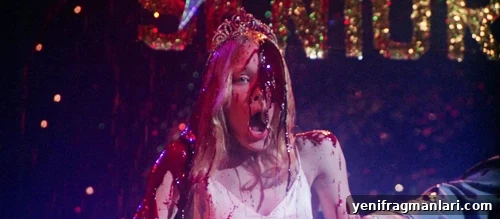
By contrast, the 2013 version emphasizes explicit gore and spectacle. The gym’s destruction is filled with graphic imagery that, for some viewers, feels gratuitous rather than generative. While the remake expands the geographical scope of Carrie’s destruction to more closely match the novel, De Palma’s choice to concentrate the devastation on the school—the epicenter of adolescent life—carries more emotional weight. The 1976 film’s selective focus on the school and prom heightens the tragedy and the symbolism of Carrie’s ruin.
De Palma’s directorial flair elevates material that might otherwise be straightforward. His visual techniques—split screens, careful framing, and slow-motion sensibilities—create a lingering dread: the audience sees disaster approaching and is made helpless by the suspense. The locker room sequence, shot with care and paradoxically sensual tenderness before it turns to horror, is a masterclass in building unease.
Kimberly Peirce, known for Boys Don’t Cry, brings a different sensibility to the 2013 Carrie but the remake suffers from an inconsistent vision. Production issues and script rewrites contributed to a film that often feels too close to the 1976 version without finding its own distinct voice. Reused dialogue and replicated scenes give the impression of a faithful rehash rather than a sincere reinterpretation. Attempts to modernize—such as integrating cellphone video and online humiliation—are present but not explored deeply enough to justify the retelling.

Performance differences also mark the two films. In the 2013 version, Portia Doubleday and Gabriella Wilde play Chris and Sue capably but without much depth. Ansel Elgort is serviceable as Tommy Ross, and Alex Russell’s Billy lacks the magnetism that made John Travolta’s version memorable. Most consequentially, Chloë Grace Moretz struggles to embody the fragile, terror-inducing duality of Carrie’s character. Though Moretz convincingly portrays vulnerability, her physicality and delivery during the climactic rampage often feel stiff or performative rather than eerily controlled.
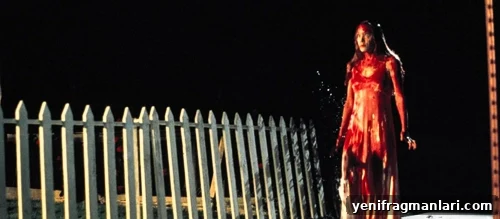
Sissy Spacek’s portrayal in 1976 remains a benchmark. Spacek embodies Carrie’s innocence, loneliness, and the sudden, terrifying command of her power with a frightening economy of movement and expression. When the blood spills on her at the prom, Spacek’s subtle transformation—those still, unblinking eyes and a sudden, decisive motion—creates one of cinema’s most chilling moments. Her restraint makes the horror feel inevitable and unstoppable.
Ultimately, the 1976 Carrie outshines the 2013 adaptation across production design, cinematography, direction, and performance. De Palma’s film retains a clear artistic vision that allows the story’s emotional and symbolic resonances to land. The 2013 remake, by trying to replicate the original without discovering a fresh approach rooted in King’s novel, fails to justify its existence. Rather than reinterpreting the source for a contemporary audience, it often feels like an imitation that lacks the original’s heart and intensity.