
Our Uniform (2023)
Director: Yegane Moghaddam
Screenwriter: Yegane Moghaddam
Starring: Yegane Moghaddam
Yegane Moghaddam’s Oscar-nominated animated short Our Uniform is a distinctly personal film. It reads like an intimate memoir translated into animation: a reflection on growing up within an environment that prescribes how women should present themselves and how that prescription limits personal freedom. The film’s voice is simultaneously gentle and pointed, offering insight into the lived experience of those raised in a society where choices about clothing and appearance are regulated.
The short opens with a careful disclaimer: “This film is not criticizing ‘Hijab’ and the people who wear it. It’s a mere depiction of schools in Iran, where full Hijab is mandatory.” That framing signals the filmmaker’s intention to separate an attack on personal faith or the headscarf itself from a critique of enforced uniformity and institutional control. The film’s narrative focus remains on rules, enforcement, and the emotional consequences of compulsory dress codes rather than on religious practice.
At just seven minutes, the film compresses a lot of memory and observation into a compact runtime. Moghaddam narrates her own story in voiceover, recounting the tension between self-expression and the obligations imposed by school policy. The arc follows her journey from constraint toward a sense of release and self-discovery after relocating to the United States. The account is presented with sincerity: the filmmaker’s own voice lends authenticity and immediacy to the recollections, and the intimate tone helps the viewer connect to the personal stakes behind seemingly simple choices about clothing and hair.
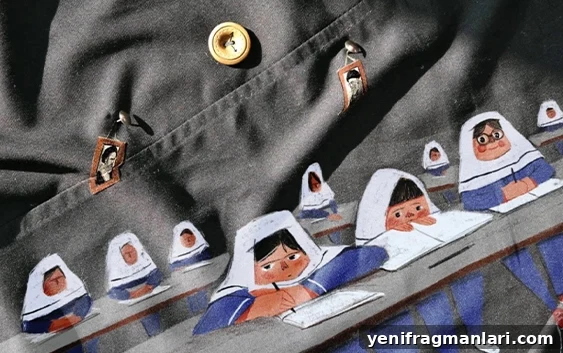
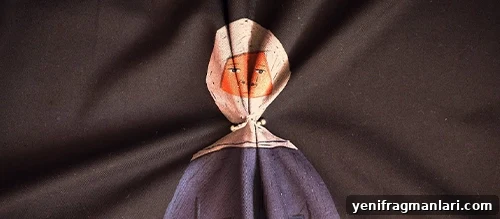
Visually, Our Uniform is inventive and tactile. The film combines live-action photography, stop-motion, and traditional 2D animation to create a layered visual language. Each animated scene is staged on fabric and clothing—a sleeve, a pair of jeans, a shirt—so that the garments themselves become the film’s landscape. Characters, drawn in animation, interact with these clothing surfaces through stop-motion movement, producing moments that are at once playful and emotionally resonant. This hybrid approach allows the film to literalize the relationship between identity and dress: clothes are not merely covering but terrain that shapes perception and feeling.
Some scenes stand out for their emotional clarity. One particularly memorable sequence depicts the filmmaker’s joy the first time she swims in a public swimsuit. The animation shows a figure diving from the sleeve of a shirt into the skin of an arm; the arm’s hairs rise in exhilaration, a small but powerful image of bodily and emotional liberation. These visual metaphors—simple, tactile, and precise—compose the film’s strongest moments. They show how animation can capture subtle inner states in ways live action sometimes cannot.
That said, the film’s verbal presentation is more conventional. The narrative is delivered almost entirely as voiceover, in a documentary-like recounting of events. While that approach grounds the film in lived experience, it occasionally softens the political edge the visuals create. The opening disclaimer and the measured tone of the narration seem designed to avoid provocation; as a result, the film stops short of a more confrontational critique of the systems it describes. For some viewers, the restraint will feel prudent and thoughtful; for others, it may feel like a missed opportunity to push harder against the structures the filmmaker found oppressive.
The film’s balance between artistry and caution defines its overall impact. Moghaddam’s use of mixed media is bold and memorable, and the short makes compelling use of animation’s capability to merge metaphor with material reality. Yet the narrative voice maintains a conciliatory distance that keeps the film from becoming a rallying cry. It is a reflective piece—eloquent, visually rich, and centered on personal memory—rather than an aggressive polemic.
Part of the short’s appeal lies in that very duality: it is personal and subtle, expressive without resorting to spectacle. The result is a work that will resonate differently depending on the viewer’s perspective. Some will remember its visual inventiveness and tender honesty; others will wish for a sharper, more politically urgent statement. Either way, Our Uniform demonstrates the distinctive strengths of animation for conveying intimate, embodied stories about identity, constraint, and small acts of freedom.
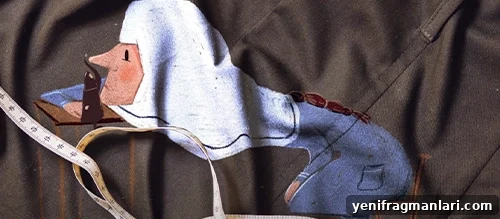
Technically and artistically, the film is accomplished: the mixed techniques are integrated with purpose, and the texture of fabric as a setting becomes a recurring motif that supports the central theme. The voiceover’s intimacy complements the tactile images, even when the narration opts for restraint over confrontation. For viewers who value craft and subtlety, the film will likely linger; for those seeking a more forceful political statement, it may feel underpowered in its rhetoric. Ultimately, the film’s lasting impression will depend on how much weight a viewer places on personal testimony and visual invention versus overt political challenge.
Score: 15/24
Rating: 3 out of 5 stars