Run Lola Run (1998)
Director: Tom Tykwer
Screenwriter: Tom Tykwer
Starring: Franka Potente, Moritz Bleibtreu, Herbert Knaup, Armin Rohde, Nina Petri
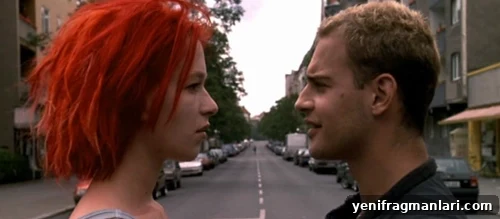
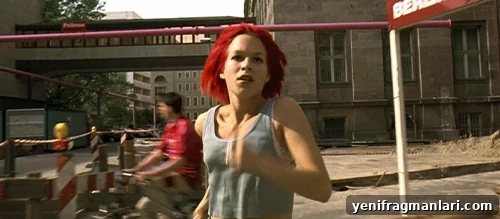
The film opens with a series of urgent, small events: a phone call, a forgotten bag left on the U-Bahn, and two lovers pushed to the edge. Lola (Franka Potente) has twenty minutes to find 100,000 Deutschmarks to rescue Manni (Moritz Bleibtreu), who has misplaced a criminal sum and faces violent consequences if he cannot return it. The setup is deliberately simple, distilled down to a single, high-stakes problem that will drive every scene that follows.
What makes the film memorable is not just the suspense but the structure. After Lola races off to solve the crisis, the narrative refracts into three repeated runs. Each iteration begins with the same premise but deviates by a few small choices: turning left instead of right, pausing for a second to tie a shoe, or a chance encounter with a stranger. Those small differences produce dramatically different outcomes. In one run Lola narrowly avoids catastrophe; in another she suffers a brutal defeat. The film interrogates cause and effect, showing how tiny, almost accidental moments can cascade into irrevocable consequences.
Director Tom Tykwer stages the movie with kinetic energy. The camera hurries along with Lola; editing is a propulsive instrument that keeps the audience breathless. Intercut with fast editing are freeze-frame glimpses of the futures of people Lola passes—short, photographic snapshots that suggest lives altered by the merest brush of contact. These visual flourishes function like dominoes, revealing how small actions ripple outward into other people’s stories.
Despite its action-film pacing, the movie folds in a gentle metaphysical strain. Lola appears to learn between each run, remembering details and changing her behavior. Her scream, her intensity, and even the presence of a blind woman who seems to sense the situation introduce an uncanny undertone. Tykwer resists explaining whether the repeated sequences are literal rewinds of time, alternate possibilities, or a fantasy played out inside a dying mind. That ambiguity is purposeful: the film asks questions without forcing definitive answers, inviting viewers to weigh determinism against chance.
The soundtrack plays a crucial role in the picture’s identity. Built largely from electronic beats and tense rhythmic scores—parts of which Tykwer himself contributed to—the music acts as a metronome. Lola’s footsteps often sync to the pulse of the score, turning her running into an almost choreographed dance. The soundtrack not only heightens urgency but also anchors the viewer emotionally, marrying rhythm and narrative in a way that intensifies the viewing experience.
Run Lola Run also reshaped how international audiences thought about foreign cinema in the late 1990s. At a time when festival favorites and arthouse imports often carried a certain solemnity, Tykwer’s film arrived as a muscular, accessible counterpoint: a film in German that moved like a mainstream thriller while remaining inventive and artistically adventurous. It demonstrated that a non-English-language film could be both entertaining and formally ambitious, widening the perceived possibilities for world cinema in mainstream markets.
The performances are compact and effective. Franka Potente’s Lola is fearless, fragile, and fiercely determined; her energy anchors the film. Moritz Bleibtreu’s Manni balances desperation and bluntness, and the supporting cast supplies small but memorable flourishes that alter each version of events. The ensemble’s chemistry makes the repeated retellings feel fresh rather than redundant, because each variation reveals a new facet of character or consequence.
At its core, the film is a meditation on consequence, chance, and human agency. It explores how the most mundane interactions—a stray dog, a missed step, a brief exchange in a shop—can recalibrate lives. For viewers who demand closure and tidy explanations, the film’s refusal to pin down a single, definitive reality can frustrate. For those willing to sit with ambiguity, however, the movie provides a thrilling, thoughtful inquiry into how lives hinge on tiny choices.
Run Lola Run remains a remarkable debut that launched Tom Tykwer into international prominence and continues to be a film prized for its inventiveness, pace, and emotional kick. It is both a kinetic thriller and a philosophical experiment, equal parts pulse-quickening entertainment and a sly meditation on fate and free will.
Score: 20/24