
The year 2024 will be remembered for its mix of triumphs and disappointments, new beginnings and definitive endings, and an industry transformed while still struggling for relevance.
Unsurprisingly, Disney continued to dominate the box office with titles like Inside Out 2, Deadpool & Wolverine and Moana 2. Warner Brothers enjoyed success with Dune: Part Two and Godzilla x Kong, though George Miller’s Furiosa significantly underperformed, effectively eliminating hopes for another Mad Max sequel. The combined financial and critical failures of projects such as Joker: Folie à Deux, Argylle and Francis Ford Coppola’s long-anticipated Megalopolis ought to have taught studios useful lessons; instead, many will likely retreat further into the perceived safety of sequels and take fewer creative risks. Sony’s attempts to extend its Spider-Man universe sputtered too, epitomised by the ill-fated promotional tour for Madame Web starring Dakota Johnson.
The debate around A.I. in Hollywood attracted overdue attention in 2024, and there was also worrying backlash against films and filmmakers whose political views clashed with those of powerful interests. Smaller “culture war” battles were amplified by toxic audiences and social media algorithms that reward outrage. It has become a difficult environment to make films that challenge the establishment or tell the stories of marginalized or persecuted communities, which makes it all the more important that such films receive support and protection.
While 2024 may not go down as the greatest year in cinema history, it still delivered a generous selection of exciting, thought-provoking and affecting films that will stick with viewers. These are, in my view — Sam Sewell-Peterson — the 10 Best Films released in the UK in 2024.
Follow @SSPThinksFilm on Instagram, Bluesky, X (Twitter).
10. Hundreds of Beavers
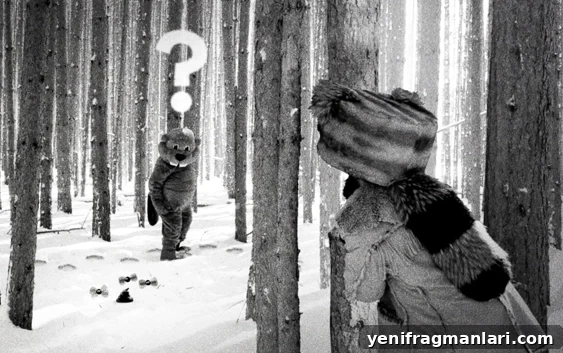
Calling a film “the most unique of the year” is often a lazy turn of phrase reserved for anything with an odd visual style or non-linear structure, but Hundreds of Beavers genuinely deserves the label. Made on a shoestring budget of around $150,000, it’s a singular and joyous piece of cinema. There was nothing else in 2024 that matched the sheer fun of recounting the film to someone after seeing it.
The film follows an inept fur trapper (Ryland Brickson Cole Tews) whose slapstick battles with forest creatures escalate into an epic and absurd conflict with an army of industrious beavers during a brutal Wisconsin winter.
Resourcefulness is the film’s greatest strength. With a budget that barely covered half a dozen animal mascot costumes, writer-director-editor Mike Cheslik leans into creativity. Shot over two winters, the film riffs on Looney Tunes-style cartoon antics, retro and modern survival-crafting video games, silent-era comedy and surreal influences. The result is an energetic, hilarious montage of skits that, while childish in places, is uncommonly bold: it sets out to do something highly specific and accomplishes exactly that.
9. The Wild Robot
The Wild Robot Review
Animation enjoyed a remarkable year in 2024, and many of the medium’s standout films shared themes: the celebration of family in its many forms and the search for belonging.
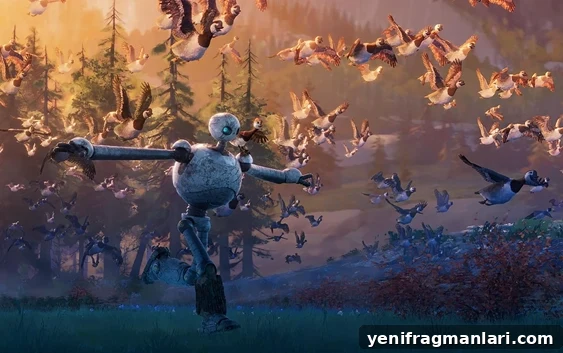
In The Wild Robot, service robot Roz (voice of Lupita Nyong’o) crash-lands on a deserted island during a storm and must adapt her programming to survive and to help the island’s animal inhabitants, especially the skeptical fox Fink (Pedro Pascal) and the orphaned goose Brightbill (Kit Connor).
Director Chris Sanders and DreamWorks Animation continue to expand what animated features can achieve. Where Spider-Verse drew on comic-book art, The Wild Robot uses CGI techniques to suggest the brushstrokes of hand-painted nature. The film’s rendering of untouched landscapes and their creatures is breathtaking, but the emotional heart — a found family forged in unlikely circumstances — is what resonates most deeply. Much is shown rather than told, often with minimal dialogue, and those visual choices make the film’s major emotional moments even more affecting.
8. Sometimes I Think About Dying
This quietly devastating drama will either become a new favourite for people who identify as deeply introverted or feel painfully truthful for those stuck in repetitive routines.
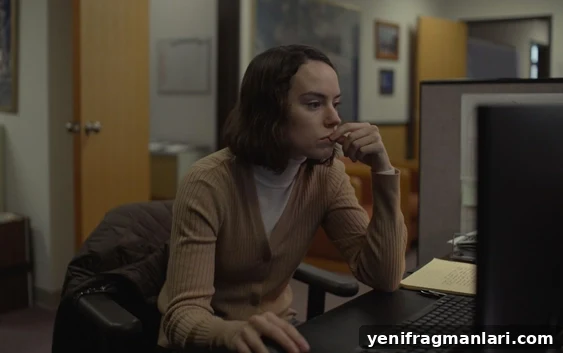
Fran (Daisy Ridley) is a committed loner and an office worker who must navigate workplace changes, new relationships and an onslaught of social interactions she has long avoided.
Director Rachel Lambert’s film thrives on subtle detail and interior devastation. Like other former franchise stars who have deliberately chosen challenging projects (think Robert Pattinson or Kristen Stewart), Daisy Ridley opts for roles that test her range. Fran is a character observed in micro-expressions, nervous tics and small gestures that reveal far more than dialogue could. The screenplay drops viewers into a subdued reality where little appears to happen, punctuated by strangely calming, almost ritualistic contemplations of death, creating a film that captures the difficulty of making meaningful human connections. The emotional payoff of Fran’s tentative relationship with Robert (Dave Merheje) arrives unexpectedly and hits hard.
7. Kneecap

Music biopics might feel exhausted as a genre after films like Walk Hard skewered their clichés, yet they remain commercially viable. If these stories persist, at least some should strive to be distinctive — and Kneecap does just that.
In a highly unconventional musical biopic, the West Belfast Irish republican rap trio Kneecap (Móglaí Bap, Mo Chara and DJ Próvai) play versions of themselves, fighting for success while avoiding retaliation from authorities and sectarian gangs.
Director Rich Peppiatt’s striking debut brings explosive style to an anarchic story: brisk editing and kinetic cinematography enliven both performance sequences and hallucinatory drug trips, evoking the energy of directors like Danny Boyle or Quentin Tarantino in spots. The band members are magnetic, growing beyond their rebellious personas to deliver genuine pathos while also conveying the film’s secondary theme: the preservation of the Gaelic language as a vital expression of cultural identity.
6. The Zone of Interest
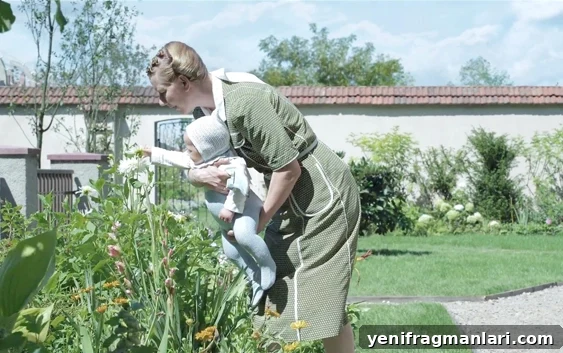
Jonathan Glazer’s films are rare events — his previous feature, Under the Skin, arrived a decade earlier — and each one is unmistakably singular. The Zone of Interest left many viewers shaken with its unsparing depiction of a horror from nearly 80 years ago, and its themes remain painfully relevant to contemporary atrocities.
The film portrays the commandant of Auschwitz and his family living a comfortable, privileged life in a house adjacent to the death camp, largely indifferent to the atrocities unfolding beyond their garden wall.
Glazer’s film is harrowing and necessary. He constrains our field of vision with long, wide-angle takes of tranquil domestic scenes while unimaginable cruelty occurs just out of frame or out of earshot. The relentless, oppressive sound design is perhaps the film’s most unsettling element, daring viewers to block it out the way the privileged characters have blocked out the reality around them. Sandra Hüller delivers one of the most chilling portrayals of moral complacency in recent memory, while Christian Friedel’s depiction of Rudolf Höss hints at the weight of conscience catching up in a rare, almost fantastical flourish at the film’s close.
5. Perfect Days
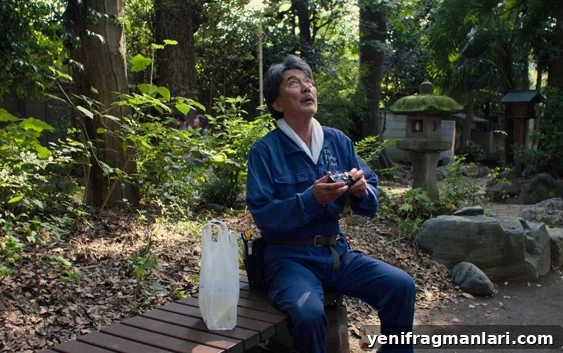
Originally conceived as the basis for a Tokyo tourism documentary, Wim Wenders’ Perfect Days organically evolved into a gentle narrative feature: a modest, carefully observed and beautiful two-hour experience.
Hirayama (Kôji Yakusho) is a Tokyo toilet cleaner who finds contentment in the ritual of his work and takes pride in maintaining small, personal routines — until a series of minor changes unsettles his equilibrium.
Perfect Days embraces repetition intentionally: Hirayama’s day-to-day patterns and the cassette tapes that soundtrack them repeat with variations, reflecting his need for order. The film’s unhurried pace invites the viewer into his mental space, creating a meditative atmosphere that rewards patience. It’s not a spectacle, but the quiet, enigmatic protagonist draws you in through his appreciation for small moments and simple pleasures.
4. All of Us Strangers
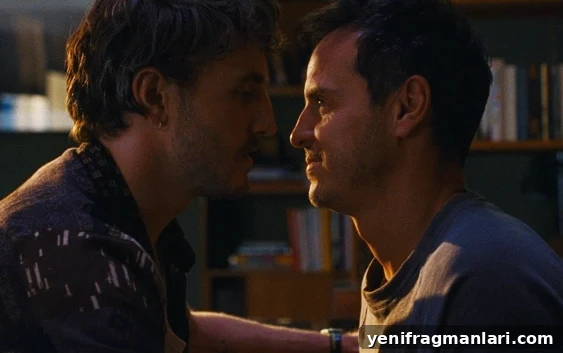
Andrew Haigh’s All of Us Strangers opens with one of the most striking and thematically resonant shots in recent cinema and sustains its emotional intensity throughout.
Adam (Andrew Scott), a lonely writer living in a near-empty London tower block, begins a passionate relationship with his neighbour Harry (Paul Mescal) while also encountering time-displaced apparitions of his parents (Claire Foy and Jamie Bell) when he revisits his childhood home.
The finely tuned performances and emotionally intelligent script are remarkable, but the film’s greatest strength lies in the questions it asks: If you could spend more time with someone you’d lost, how would you use it? What would you ask, and what would they ask you? Who, in the film’s world, is truly gone? This is one of the year’s most moving films, subverting expectations and speaking with rare tenderness to anyone who has ever felt like an outsider.
3. Robot Dreams
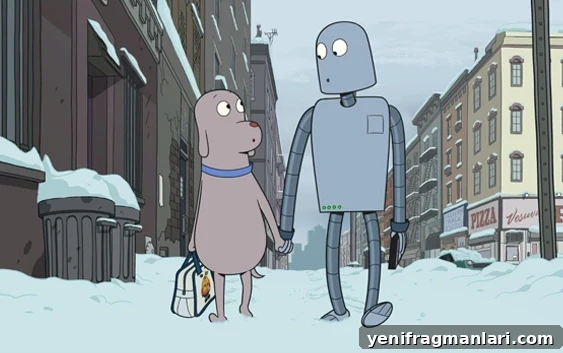
Animation can be both cinema and therapy, and Pablo Berger’s Robot Dreams is a testament to the medium’s emotional power. The film will likely become a favourite among introverts and may convert viewers who typically dismiss animation as mere “cartoons.”
Set in a 1980s New York inhabited by anthropomorphic animals, a lonely dog orders a robot companion by mail. They become instant soulmates until events conspire to separate them, and both ache to reunite.
Told entirely without dialogue, Robot Dreams relies on exquisitely expressive hand-drawn animation. The film takes its time, allowing viewers to form a deep connection with the protagonists and to appreciate the small pleasures of life and the resilience of meaningful bonds. Its emotional maturity is notable: it acknowledges the passage of time, the inevitability of change and the fact that life’s wounds do not always heal neatly.
2. The Teachers’ Lounge
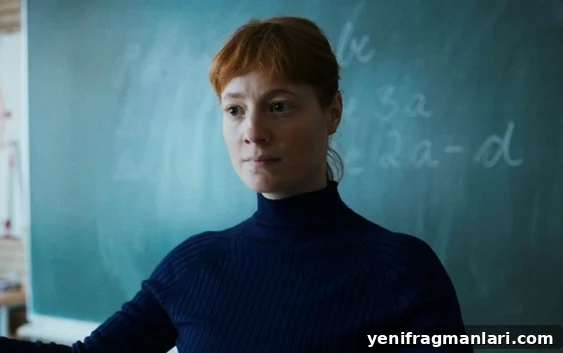
School settings have been used to reinvent nearly every genre, yet Ilker Çatak’s The Teachers’ Lounge stands out as a tense, twisty mystery rooted in an educational environment.
After an accusation of theft at a German secondary school, Miss Nowak (Leonie Benesch) faces professional consequences and sets out to uncover the truth, clashing with colleagues, pupils and parents as the investigation deepens.
Who would have predicted that the most suspenseful film of the year would take place largely in and around a staff room? Çatak achieves a great deal with modest means: a single primary location, a tight cast, naturalistic performances and believable petty human cruelty. Leonie Benesch’s raw, increasingly exasperated performance and the film’s persistent uncertainty up to its final moments make this an unexpectedly compelling small-scale thriller that may well put audiences off teacher training for life.
1. Poor Things
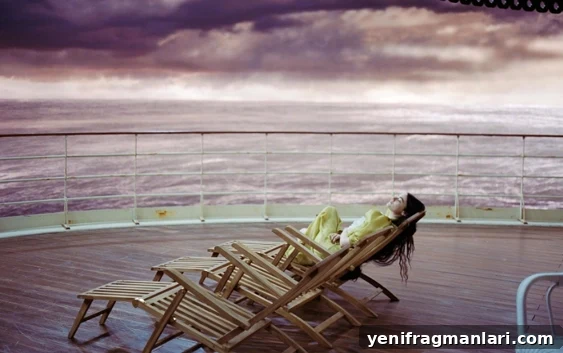
Yorgos Lanthimos had a remarkable year, with the awards success of Poor Things and the memorable, disorienting anthology Kinds of Kindness. He shows no sign of slowing down, and his collaboration with Emma Stone has already continued into another project.
Bella (Emma Stone), artificially resurrected and possessing a childlike mind, sets out to broaden her horizons and gradually assert independence and sexual liberation as she travels the world.
Stone’s layered, committed performance earned deserved acclaim, supported by a vivid ensemble including Mark Ruffalo, Willem Dafoe and Kathryn Hunter. Together they inhabit Lanthimos’ exaggerated, theatrical pseudo-Victorian world, which nevertheless speaks disturbingly to contemporary realities of repression and the oppression of those who do not conform. The film is fearless, filthy and frequently hilarious, functioning as both a lavish fantasy period piece and a surreal, Gothic-tinged critique of power and control. It may be Lanthimos’ most accessible and enjoyable film to date — though you might hesitate to watch it with your parents in the room.
Cinema remains alive and vital as we move into 2025. It still has the capacity to surprise, to provoke thought and, at times, to inspire change. Because online feeds favour the most clickable content, cultivating a well-informed stream of film criticism has become increasingly difficult, leaving the largest outlets best positioned to survive. That makes the role of committed cinephiles even more important: talk to others about the films you love, champion underrated work, curate watchlists and broaden your cinematic horizons. As long as people continue to watch, discuss and learn from films past and present, cinema will endure.