
She Said (2022)
Director: Maria Schrader
Screenwriter: Rebecca Lenkiewicz
Starring: Carey Mulligan, Zoe Kazan, Patricia Clarkson, Andre Braugher, Samantha Morton, Jennifer Ehle, Angela Yeoh, Maren Heary, Tom Pelphrey, Adam Shapiro, Mike Houston
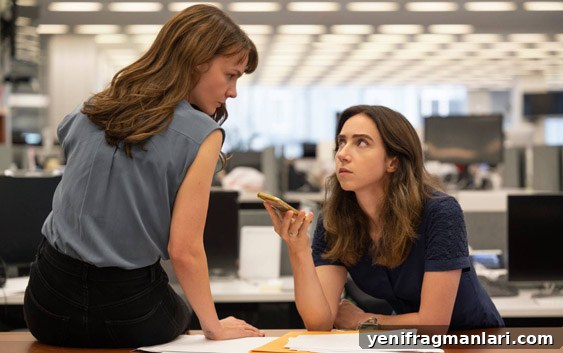
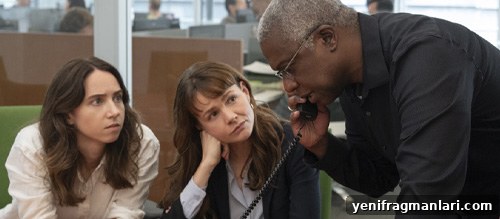
Adapted from the 2019 book of the same name, Maria Schrader’s film She Said follows the investigative work of two New York Times reporters, Megan Twohey and Jodi Kantor, who exposed decades of sexual misconduct allegations against powerful movie producer Harvey Weinstein. Carey Mulligan and Zoe Kazan portray the journalists whose 2017 reporting helped shatter a long-standing silence in Hollywood and catalyzed the global #MeToo movement.
The story opens with Twohey pursuing an article about sexual assault allegations tied to then-presidential candidate Donald Trump. After Trump’s election, Twohey hesitates to take on the Weinstein story, haunted by the sense that a world electing a leader after the “pussygate” revelations might ignore women’s accounts. This early ambivalence underscores the precariousness of women’s voices in a culture that often devalues them.
Throughout the film, Twohey and Kantor methodically track down former Miramax employees and other women connected to Weinstein, persuading them to share painful experiences and, eventually, to speak on the record. The reporters interview actresses and survivors, including Ashley Judd, one of the first high-profile women to accuse Weinstein, who appears as herself. The film also recreates tense exchanges with figures such as Rose McGowan, whose early accusations were initially dismissed.
One recurring thread is the story of former Miramax intern Laura Madden, played by Jennifer Ehle. A young woman is shown fleeing a set in tears at the film’s outset; years later she describes how Weinstein “took [her] voice just as [she] was about to start finding it.” Another survivor, Zelda Perkins (portrayed by Samantha Morton), recounts confronting Weinstein after a colleague was raped in the 1990s. Perkins later learned she had been bound by a hush contract that barred her from discussing the assault with anyone, even loved ones or therapists.
The film carefully distinguishes between encouraging survivors to recount experiences and convincing them to go public. Weinstein’s ability to ruin careers with a single phone call, along with the prevalence of payoffs and nondisclosure agreements, made many women reluctant to speak. The reporting uncovered that Weinstein had reached settlements with multiple women in attempts to silence them for years.
Schrader’s direction treats survivors with sensitivity. The film avoids graphic reenactments and instead focuses on testimony and emotional aftermath. One of the most chilling sequences features a recording of a conversation between model Ambra Battilana Gutierrez and Weinstein outside his hotel room. The image remains an empty hotel corridor while Gutierrez, then 22, confronts him about groping her at a business meeting. His pleading and insistence that she come into the room, contrasted with her repeated refusals, convey menace without showing the assault itself.
This restrained approach echoes the tonal choices of other films that examine workplace abuse, emphasizing the culture of silence and complicity around predators. In She Said, Weinstein’s presence is felt through off-screen voice and the back of his head, while the narrative firmly centers the women whose courage brought these abuses to light. The film’s title highlights its central theme: the power and previous marginalization of the female voice.

Zoe Kazan and Carey Mulligan deliver compelling, nuanced performances as Kantor and Twohey, capturing both their professional frustration and their unwavering determination. Kazan’s reaction when a survivor agrees to go on the record communicates a mix of heartbreak and triumph that defines much of the film’s emotional force. Mulligan, following her recent powerful work in provocative dramas, embodies a reporter driven to expose wrongdoing and seek accountability.
The film emphasizes the collective nature of the breakthrough: the reporting only gained momentum when many women chose to come forward together. As the journalists note, survivors were more willing to speak if they did so as part of a group, reducing the isolation that predators often exploit. After the Times investigation was published, the flood of additional accusations—some one hundred women naming Weinstein—ignited widespread conversations about sexual misconduct across industries and increased public support for survivors.
In the years since the exposé, Weinstein has faced criminal charges and imprisonment for rape and sexual assault. While #MeToo has increased public attention to sexual violence and the importance of believing survivors, ongoing legal and cultural battles—illustrated by recent debates over reproductive rights and bodily autonomy—show that progress remains contested. She Said stands as a cinematic testament to the impact of solidarity, persistent reporting, and individual courage in driving social change.
Score: 22/24
Written by Gala Woolley
You can support Gala Woolley in the following places:
Twitter – @GalaWoolley
Blog – screenqueens.co.uk