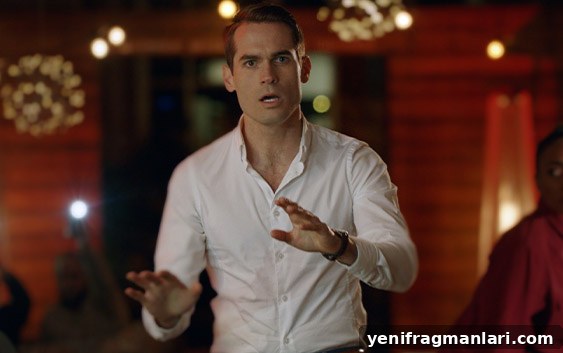

The Beta Test (2021)
Directors: Jim Cummings, PJ McCabe
Screenwriters: Jim Cummings, PJ McCabe
Starring: Jim Cummings, Virginia Newcombe, PJ McCabe
Jim Cummings returns as a force in independent film with The Beta Test, a sharp, often darkly comic thriller that skewers modern Hollywood and the predatory systems that thrive within it. Following his breakout success with Thunder Road and the genre-blending The Wolf of Snow Hollow, Cummings co-wrote and co-directed this tense satire with PJ McCabe. Here he also stars as Jordan, a glossy, high-powered talent agent whose outward success masks a fragile, paranoid interior.
Set in post-Weinstein Hollywood, the film uses Jordan’s unraveling to examine toxic masculinity, insecurity, and the commodification of desire. Jordan appears to have everything: a Tesla, a sprawling expense account, and the polished charm that sells meetings and packages. But his professional confidence is brittle. With the Writers Guild and changing industry ethics chipping away at old agent power, Jordan’s deals and schemes are less secure, leaving him grasping at influence and relevance.
The plot accelerates when Jordan receives an ornate purple envelope containing an anonymous invitation: a one-night, anonymous sexual encounter arranged by “an admirer.” After agonising over the consequences and ticking boxes on an RSVP that indicate his secret preferences, Jordan receives a hotel key and shows up for a blindfolded liaison. That single night of forbidden anonymity launches him into obsession. When the correspondence abruptly stops, Jordan becomes consumed by the need to discover his anonymous partner’s identity—an investigation that drags him into a labyrinth of murder, surveillance, data harvesting and consumer manipulation.
The film broadens from one man’s erotic fixation to a citywide threat: other Angelenos who answered similar invitations are being murdered after confessing affairs to jealous partners. The narrative turns into a dark, algorithmic investigation as Jordan discovers how deeply the internet’s tracking and profiling has mined human desire for profit. Social media footprints—clicks, likes, and shares—become the currency that connects private longings with ruthless monetisation. Cummings uses this premise to critique how digital capitalism weaponises intimacy and fosters a culture of voyeurism, while simultaneously exposing the hollowness of industry glamour.
Performance-wise, Cummings delivers a layered portrayal of a man imploding from within. Where his earlier characters wore their emotions on their sleeves, Jordan is far more inwardly corrosive. Cummings balances frantic comedic timing with a slowly emerging menace, creating sympathy for a character who is also morally compromised. The role recalls the tonal shifts of performers who transitioned from mainstream comedy to darker, more introspective work: the public persona remains performative while the private self decays.
Directorially, Cummings and McCabe craft a tense atmosphere that borrows from thriller conventions and body-horror aesthetics. The score underscores an uneasy, almost horror-tinged mood, amplifying the sense that ordinary consumer experiences can mutate into something sinister. At the same time, the script delivers acidic observations about Hollywood elitism and the industry’s habit of sanitising unsavoury behaviour with charm and philanthropy. These elements collide in sequences that are both funny and unsettling, often landing on the razor-edge between satire and genuine dread.
The film’s strengths are its lead performance, its willingness to interrogate the influence of digital platforms, and its savage humour aimed at industry gatekeepers. Some tonal dissonance exists: the string of violent murders and the eerie portrait of online capitalism sometimes clash with the satirical Broadway-style takedown of Hollywood privilege. For viewers uninterested in the inner workings of the film business, those specific jabs may land less effectively. But for cinephiles and anyone attuned to the cultural fallout of powerful industries, The Beta Test offers a provocative, darkly comic mirror.
Visually and thematically, the movie is precise in its aims. Luxury and decay are repeatedly juxtaposed—gleaming teeth, expensive stationery, the veneer of success hiding rot. That visual metaphor reinforces the central critique: appearances are meticulously curated for public consumption while internal ruin advances unchecked. Cummings keeps the audience off-balance by alternating moments of absurd comedy with creeping paranoia and actual danger, which makes the film both entertaining and unsettling.
Ultimately, The Beta Test is a provocative entry in Jim Cummings’ filmography: audacious in tone, critical in focus, and anchored by a committed central performance. It won’t satisfy every viewer, but for audiences interested in social satire, media critique, and indie thrillers that blend laughs and unease, this film is a memorable, tense ride that exposes the predatory underside of both Hollywood and the digital economy.
19/24