
The Book of Clarence (2023)
Director: Jeymes Samuel
Screenwriter: Jeymes Samuel
Starring: LaKeith Stanfield, RJ Cyler, Omar Sy, Anna Diop, Marianne Jean-Baptiste, Micheal Ward, Caleb McLaughlin, Alfre Woodard, James McAvoy
In the golden age of Hollywood, Biblical epics were a cinema staple—from grand retellings of scripture to films that borrowed its aesthetics. Jeymes Samuel, who drew praise for his stylish Western debut, brings that same visual bravado to a Biblical satire with The Book of Clarence. The film reimagines first-century Judea through a modern lens, balancing satire, music, and spectacle to tell a story that plays with faith, ambition, and identity.
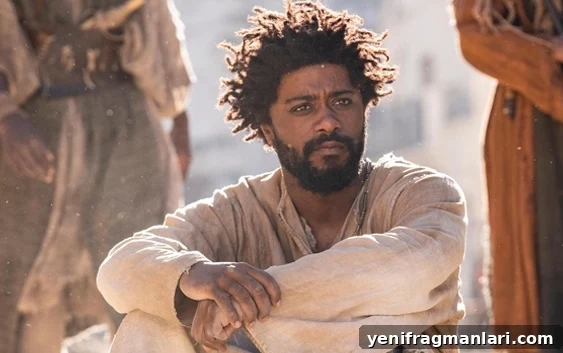
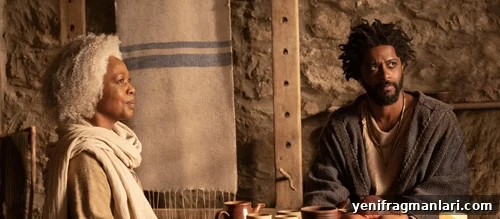
The Book of Clarence centers on Clarence (LaKeith Stanfield), a directionless hustler and small-time drug dealer living in lower Jerusalem in 33 AD. Clarence is the twin brother of the Apostle Thomas—also played by Stanfield—and he resents Thomas for abandoning their mother, Amina (Marianne Jean-Baptiste), to follow Jesus. While Thomas embraces devotion and discipleship, Clarence is a self-styled rational skeptic. After losing a chariot race and falling into debt to a local gangster, Clarence hatches a scheme: inspired by an opium-fueled vision, he decides to pose as a new Messiah to gain power and fortune by exploiting the growing fame of Jesus of Nazareth.
Clarence recruits his loyal friend Elijah (RJ Cyler), the freed slave Barrabas (Omar Sy), and young cart-driver Dirty Zeke (Caleb McLaughlin) to help stage miracles and build a following. Clarence’s recurring sermon line—“Knowledge is stronger than belief”—frames his attempt to manipulate public faith. The film tracks his rise and the consequences that follow as his impersonation collides with genuine devotion, complicating the boundaries between performance and faith.
The movie is structured in three chapters, each with its own tone and intent. That triptych approach gives Samuel room to experiment, but it also creates uneven pacing: the film oscillates between sharp satire and sincere portraiture without always finding a smooth bridge. Early scenes tilt toward irreverence and critique of religious spectacle, while the later sections adopt a more earnest, contemplative view of belief. The tonal shifts make the film feel ambitious but occasionally unsettled, as it attempts to be a comedy, a love story, a crime drama, and a meditation on faith all at once.
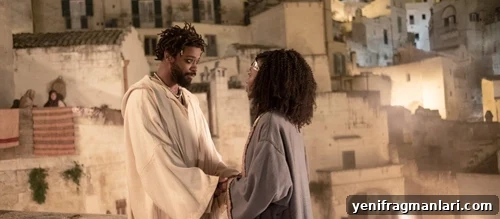
Where the screenplay sometimes falters, the film’s style consistently dazzles. Samuel and cinematographer Rob Hardy staged most scenes on location in Matera, Italy, and the result is a tactile, lived-in world that feels real and immediate. The production leans on carefully crafted details—costume designer Antoinette Messam blends historical references with Pan-African influences, creating a distinct visual language that refreshes the Biblical milieu. The choice to shoot in authentic stone streets and plazas rather than on soundstages gives the film texture and weight.
Music is another defining element. Samuel, who also contributed to the score, mixes R&B and gospel influences into a sound that supports the film’s dreamlike atmosphere. The soundtrack carries the audience through Clarence’s drug-induced reveries and underscores key set pieces, including a surreal, electrifying dance sequence set in an ancient club that unexpectedly works as a tonal pivot and a stylistic high point.
The cast elevates material that could otherwise feel uneven. LaKeith Stanfield delivers a multi-layered performance as both Clarence and his devout twin, combining charisma with vulnerability. Anna Diop brings warmth and depth as Varinia, Clarence’s love interest, grounding the film’s emotional heart. Omar Sy lends a gentle, powerful presence as Barrabas, while Caleb McLaughlin brings youthful intensity. Nicholas Pinnock portrays Jesus with calm authority, and veteran actors such as Alfre Woodard and David Oyelowo make memorable appearances, even in smaller roles. A well-placed cameo adds sharp comic relief, underscoring Samuel’s playful tone.
Samuel’s visual ambitions largely pay off, even if the narrative could use tighter focus. The film is rich in memorable moments—carefully composed tableaux, bold costume choices, and kinetic musical sequences—that make it a compelling cinematic experience. At the same time, the story’s tonal pivots and thematic breadth sometimes leave the viewer wanting more clarity about the film’s central argument. Is it satirical critique, earnest exploration of faith, or both? The answer feels intentionally ambiguous, and while that ambiguity can be intriguing, it also keeps the film from fully coalescing.
Score: 15/24
Written by Rehana Nurmahi
Support Rehana Nurmahi:
Twitter – @Han_notsolo
Letterboxd – hana_banana97
Portfolio – Authory