The Muppet Christmas Carol (1992)
Director: Brian Henson
Screenwriter: Jerry Juhl
Starring: Michael Caine, Dave Goelz, Steve Whitmire, Jerry Nelson, Frank Oz, Steven Mackintosh, Meredith Braun, Robin Weaver, Raymond Coulthard
The opening of The Muppet Christmas Carol carries a bittersweet tone even after thirty years. The film’s immediate dedication to Jim Henson, creator of the Muppets, and Richard Hunt, the performer behind Scooter, is a poignant reminder that this production was made in the shadow of real loss. That background casts a reflective mood over the movie, especially given later corporate changes: Disney acquired the Muppets property years after the film’s release and now controls the franchise’s output and branding.
While Disney did not gain full ownership of the Muppets until 2004, conversations between Jim Henson and Disney executives began in the late 1980s. Those talks, and Henson’s desire to focus more on creative work than business, preceded his sudden death in 1990. The Muppet Christmas Carol was completed during a transitional and emotionally charged period for Henson’s family and collaborators; Brian Henson directed the film, determined to honor his father’s legacy and preserve the Muppets’ creative spirit.
Because of that connection to its creators, The Muppet Christmas Carol is often seen as one of the purest examples of the Henson-era Muppets: inventive, soulful, and emotionally grounded. Even when the franchise has changed hands and modern iterations have followed different directions, this film stands out for its warmth, humor, and sincere storytelling. It remains widely regarded as the definitive Muppet film, and a model of how to adapt a classic while staying true to both the source material and the Muppet ethos.
Charles Dickens’s A Christmas Carol, first published in 1843, is one of the most frequently adapted works in English literature. The story of Ebenezer Scrooge’s redemption—guided by the Ghosts of Christmas Past, Present, and Yet to Come—has been reshaped countless times for stage, screen, and television. Its themes about generosity, social responsibility, and compassion have retained powerful relevance. The challenge for any adaptor is to make the familiar feel fresh, and The Muppet Christmas Carol succeeds by embracing both the story’s darkness and the Muppets’ comic eccentricity.
Using the Muppets to tell Dickens’s tale is a brilliant and subversive choice. The film knows what audiences expect from the Muppets—goofy jokes and playful chaos—but it also respects Dickens’s original tone. The result is an adaptation that is funny, heartfelt, and occasionally haunting. The filmmakers do not dilute the story’s emotional stakes to accommodate jokes; instead, they balance humor with genuine feeling so the film appeals to children and adults alike. Moments of laughter and lightness sit comfortably beside scenes of grief, regret, and moral reckoning.
“Boy, that’s scary stuff! Should we be worried about the kids in the audience?”
“Nah, it’s all right. This is culture!”
The film opens with an imaginative credit sequence that lists the Muppets in character roles alongside the human cast. This sets the tone for the film’s world, where frogs, bears, rats, and people coexist naturally. That seamless blending of Muppet and human performers allows the movie to move quickly between comic set pieces and serious dramatic moments without jarring tonal shifts.
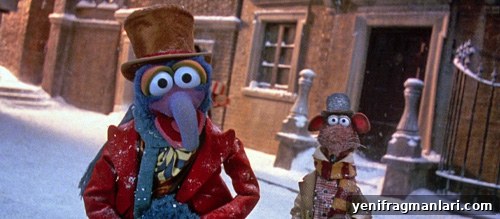
Gonzo serves as the film’s narrator, cast as a version of Charles Dickens. Paired with Rizzo the Rat as his companion, Gonzo’s storyteller role solves common adaptation problems: exposition is handled directly through narration, and much of Dickens’s original language is preserved. Gonzo and Rizzo provide comic commentary that lightens darker scenes while still allowing those scenes to breathe when necessary. Their presence also helps younger viewers follow the plot even when the film addresses weightier themes.
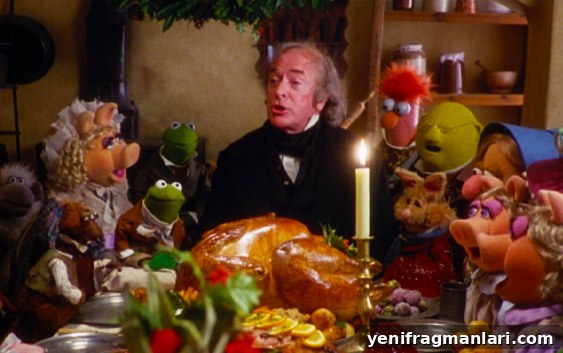
The Muppet ensemble supports the story in a way that feels true to The Muppet Show tradition: the puppets are an ensemble cast, backing up a central human star. Here, Michael Caine dominates as Ebenezer Scrooge, and the Muppets play lively, well-defined supporting roles. Fozzie Bear, Sam Eagle, Miss Piggy and others make memorable appearances, often brief but perfectly timed. The casting leverages the distinct personalities of familiar Muppet characters to enrich Dickens’s world rather than distract from it.
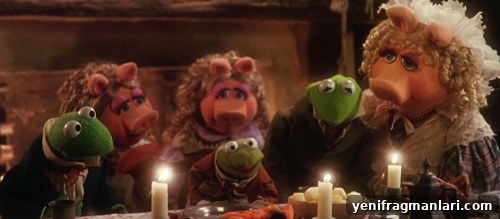
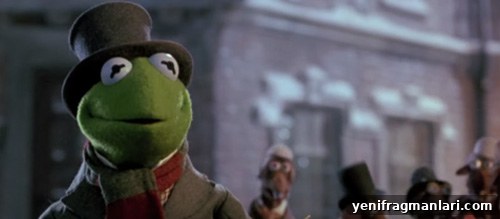
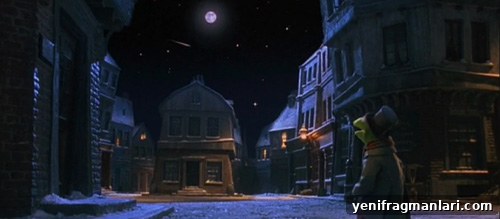
Kermit the Frog’s portrayal of Bob Cratchit is central to the film’s emotional core. Kermit embodies quiet dignity and parental warmth, and his scenes with his family—especially Tiny Tim—are deeply affecting. One iconic moment captures Kermit singing the closing notes of “One More Sleep ’til Christmas” while a shooting star arcs across the winter sky; it distills the film’s sense of hope amid hardship. Miss Piggy, as Mrs. Cratchit, balances comedic edge and domestic tenderness, and the casting of Robin as Tiny Tim brings genuine charm and innocence to the part.
Importantly, Tiny Tim is written and performed as genuinely ill, which shifts the adaptation away from sentimental clichés and toward Dickens’s original social critique. The film uses Tim’s vulnerability to highlight the consequences of poverty and social neglect: Scrooge’s stinginess has tangible effects on the health and wellbeing of the most vulnerable. This emphasis preserves Dickens’s moral urgency and grounds the Muppets’ whimsical elements in real-world stakes.
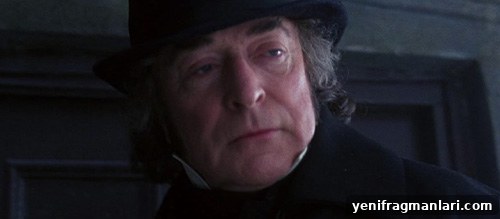
Sir Michael Caine’s performance as Scrooge is pivotal to the film’s emotional success. Caine approached the role with seriousness, insisting on fully committing to the dramatic demands even within a Muppet production. His Scrooge is not a two-dimensional curmudgeon; he is capable of cold cruelty, bitter remorse, and a stirring emotional turnaround. That range allows the audience to experience a believable transformation. The film’s most affecting moments—particularly those where Scrooge confronts his past and the consequences of his actions—rely on Caine’s ability to convey guilt, pain, and, ultimately, compassion.
The production choices consistently favor authenticity over easy sentiment. A notable example is a musical sequence featuring Caine and Meredith Braun, where Scrooge’s lost engagement is dramatized and sung. That scene was cut from some releases, causing frustration among fans who consider it important to Scrooge’s backstory. Restoring such sequences demonstrates how the film’s creators intended to reveal the personal causes behind Scrooge’s hardened heart, reinforcing the narrative’s emotional logic.
The Muppet Christmas Carol succeeds because it marries Dickens’s social conscience with the Muppets’ unique comic and emotional sensibilities. The film embraces humor without undermining depth, and it respects the original story’s critique of greed and neglect. In doing so, it becomes more than a novelty adaptation: it’s a heartfelt, well-crafted retelling that captures the spirit of Dickens while showcasing the Muppets at their best.
Score: 22/24