
Few questions spark as much disagreement among film lovers as “What is your favorite Christmas movie?” One answer that often provokes heated debate is John McTiernan’s Die Hard (1988). For fans of traditional holiday staples like White Christmas and It’s a Wonderful Life, or modern favourites such as Elf and Love Actually, the idea that a violent action film about a lone NYPD officer facing terrorists could qualify as a Christmas movie can feel outrageous.
Yet Die Hard is part of a long tradition of unconventional holiday films. There is a sizeable catalogue of Christmas-themed horrors, from Black Christmas (1974) to Krampus (2015), and other acclaimed films occasionally use the season as a backdrop—Terry Gilliam’s Brazil and William Friedkin’s The French Connection among them. Not all films set at Christmas qualify as Christmas movies, however: the holiday must mean more than a temporal setting. When Christmas serves only to highlight darkness or irony, most viewers rightly hesitate to call those films “Christmas movies.”
How Can a Film Be Considered a True Christmas Movie Beyond the Mere Inclusion of the Holiday?
If we move past festive commercialism, the core story of Christmas—the Nativity—emphasizes themes that many would argue define a genuine Christmas film: light in the darkness, reconciliation, hope and redemption. Natalie Hayes of BBC Culture suggested a practical checklist for a seasonal film to feel authentically “Christmas”: desire, a touch of magic, the value of family, and trials that lead to transformation. Viewed this way, some unexpected choices can qualify.
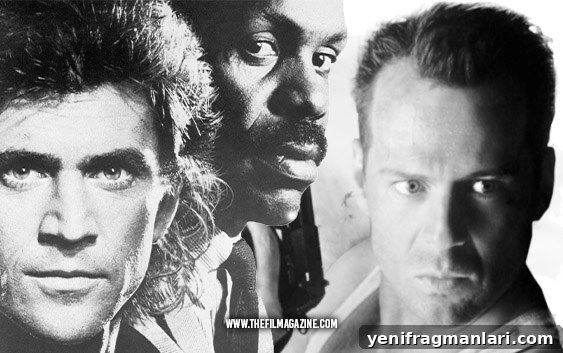
By those measures, both Die Hard and Richard Donner’s Lethal Weapon (released the year before) make strong cases. Each is an iconic 1980s action film that spawned major franchises, and both use Christmas as a meaningful backdrop. Which one better captures the spirit of Christmas—especially when judged on desire, magic and family? Let’s compare.
Desire
One of the common threads between Die Hard and Lethal Weapon is a central longing for restored normality.
In Die Hard, John McClane (Bruce Willis) flies from New York to Los Angeles on Christmas Eve to reconcile with his estranged wife, Holly Gennaro (Bonnie Bedelia), who works at the Nakatomi Plaza. Their separation—brought on, in part, by career moves and shifting family dynamics—leaves McClane desperate to restore a more traditional family life and to reconnect. That yearning for reunion and repair is a classic holiday theme: the desire to heal damaged relationships and to belong.
Lethal Weapon grounds its desire in grief and the search for purpose. The film introduces two LAPD detectives: Roger Murtaugh (Danny Glover), a family man trying to enjoy life, and Martin Riggs (Mel Gibson), a loose cannon consumed by suicidal grief after losing his wife. Riggs’s behavior suggests he longs for reunion with his lost love and, more broadly, to find meaning again. That ache is raw and visceral—Riggs’s private moments of despair make his yearning intensely human. Like classics such as It’s a Wonderful Life, the film treats suicidal despair and the possibility of redemption as central emotional beats, linking it to traditional Christmas themes of salvation and renewal.
The desire in Lethal Weapon reads as more inward and psychological, while Die Hard stages desire as a public fight to reclaim a life and a relationship. Both satisfy the holiday trope of seeking restoration, but they do so in markedly different emotional registers.
Magic
The “magic” in these movies isn’t the literal kind—no angels, reindeer or stockings in view—but each film has a strain of cinematic wonder that functions like holiday magic.
In Lethal Weapon, the magic is Martin Riggs himself: an unpredictable, almost superhuman force driven by self-destructive impulses. Riggs’s willingness to risk everything turns him into a dangerous yet effective protector—his recklessness becomes uncanny efficacy. When he and Murtaugh are captured, the bond they form and Riggs’s brutal resourcefulness propel him to overcome their captors. The transformation from broken man to fierce defender feels almost miraculous in emotional terms.
Die Hard answers with a different kind of movie magic: the escalation of an ordinary man into an improbably effective action hero. John McClane’s wit, improvisation and sheer stubbornness turn him into a one-man army against Hans Gruber’s thieves. From taunting through a stolen walkie-talkie to engineering dramatic rescues, McClane repeatedly performs feats that border on the legendary. One of the film’s most iconic moments—McClane scrawling “Now I have a machine gun. Ho, ho, ho.”—blends dark humour with the holiday setting to create a memorable cinematic spell.
Where Die Hard offers spectacle and clever survival, Lethal Weapon delivers emotional metamorphosis. Both kinds of “magic” are satisfying in a holiday sense: one restores order through daring action, the other restores life through human connection.
The Value of Family
Family is the heart of most Christmas stories, and both films feature powerful arcs tied to belonging and redemption.
Die Hard is, in many respects, a marriage story disguised as an action thriller. McClane’s broken pride and fear of being sidelined by Holly’s success drive his initial insecurities. His willingness to suffer—literally walking barefoot over broken glass—and his changed behaviour by the film’s end signal a genuine attempt at reconciliation. When John and Holly finally act together against Gruber, their relationship shifts from fragile separation toward partnership and equality. That restoration provides the cosy emotional payoff we expect from a holiday tale.
Lethal Weapon, however, centers on a different family idea: found family. Riggs’s suicidal isolation gives way to life when Murtaugh invites him into his home and his circle. Their partnership—initially awkward, then deep and loyal—literally pulls Riggs back from the brink. Where Die Hard resolves a romantic rift, Lethal Weapon dramatizes how community and friendship can rescue a person from despair. The film culminates in a clear emotional victory: Riggs transformed, sharing Christmas dinner and purpose with his new family.
Both movies end with redemption and an emotional uplift typical of holiday storytelling. If you prioritise reconciliation within a romantic relationship, Die Hard feels especially festive. If you prize emotional recovery and the salvific power of chosen family, Lethal Weapon delivers the deeper Christmas spirit.
Fans of each film will defend their pick—and rightly so. Die Hard is an exhilarating, clever action movie that can evoke a warm holiday glow through its marriage redemption and irreverent humour. Lethal Weapon offers a grittier but profoundly moving tale of grief, healing and belonging. Viewed through the lens of Christmas themes—desire, a touch of magic, and the value of family—both films qualify as unconventional holiday favourites. Which one you prefer depends on whether you respond more to explosive cinematic fantasy or to a raw emotional rescue that feels like a true Christmas rebirth.
Recommended for you: I’m a 90s Kid and I Watched Die Hard for the First Time This Year
Recommended for you: 10 Excellent Non-Christmas Films Set at Christmas