
The Out-Laws (2023)
Director: Tyler Spindel
Screenwriters: Ben Zazove, Evan Turner
Starring: Adam DeVine, Nina Dobrev, Pierce Brosnan, Ellen Barkin, Lauren Lapkus, Poorna Jagannathan, Lil Rey Howery, Richard Kind, Julie Hagerty
When a movie begins with the Happy Madison Productions logo, it comes with a predictable tone and set of expectations. The studio has built a reputation for broad, crowd-pleasing comedies—films that often prioritize easy laughs and familiar beats over narrative risk. For viewers who enjoy that comfort-food style of filmmaking, there are occasional pleasant surprises. For others, that same formula can feel repetitive. The Out-Laws lands squarely in that familiar territory and, unfortunately, it rarely rises above it.
Adam DeVine plays Owen, an affable but hapless bank manager whose earnestness is meant to carry much of the film’s charm. The character is a type that fans of Happy Madison films will recognize instantly: lovable, prone to embarrassment, and thrust into situations beyond his competence. The script leans heavily on those traits, situating Owen in a position of responsibility—namely, managing a bank vault with a voice-activated security system that becomes the target of a recurring gag. These comic set pieces are serviceable but thin; they rarely build to anything unexpected or genuinely clever.
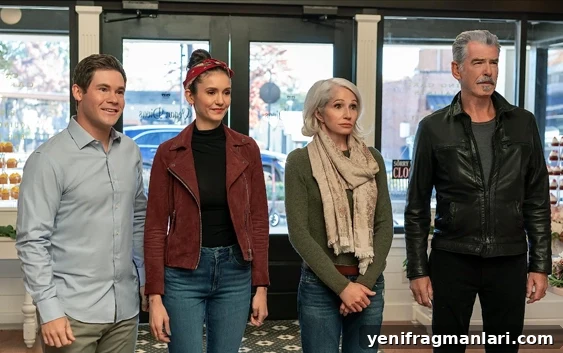
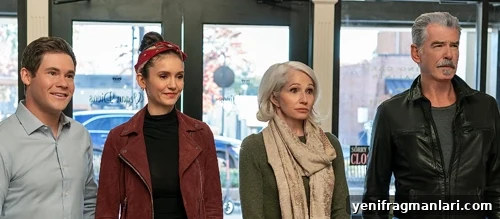
The story centers around Owen’s wedding weekend and the collision of two in-law clans. His parents, played by Richard Kind and Julie Hagerty, embody traditional disapproval, while Nina Dobrev’s Parker is presented as a calm, modern foil to Owen’s chaos. Opposite them are Parker’s parents, portrayed by Pierce Brosnan and Ellen Barkin, who are meant to inject mystery and danger into the proceedings. From the outset, the premise telegraphs its twist: the polite strangers in law are suspected of being criminals. The film spends a lot of time arranging social awkwardness and small-talk beats leading up to that reveal, which makes the payoff feel predetermined rather than surprising.
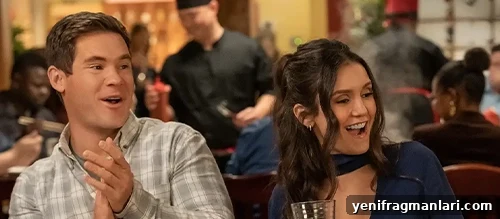
Casting Adam DeVine in a role that reads like an Adam Sandler archetype creates an odd tonal mismatch. DeVine brings energy and timing, and he can be charming when given space to breathe, but the screenplay and director’s choices often push him into forced broadness rather than allowing subtler character moments. The film feels like it was written for another star, then recast without fully reworking the tone. That disconnect prevents the lead from anchoring the movie in a way that feels wholly his own.
Pierce Brosnan and Richard Kind, as opposing patriarchs, provide the film’s strongest intermittent sparks. Brosnan’s smooth, enigmatic energy and Kind’s neurotic warmth could have produced richer comic friction, but the screenplay rarely gives them material that elevates their talents. Nina Dobrev, Ellen Barkin, and Julie Hagerty are serviceable in their roles, yet they often occupy the background of scenes that prioritize one-liners and sight gags over meaningful development. As a result, the supporting cast’s chemistry never coalesces into something consistently memorable.
Lil Rey Howery’s Tyree offers moments of relief. He excels at grounding comic scenes with a human center, injecting personality into sequences that otherwise drag. Still, his character echoes emotional beats he has played before, and the film leans on that familiar dynamic rather than finding fresh ways to use his talents. The reliance on previously established comic rhythms—rather than creating new ones—leaves the movie feeling derivative in places.
Pacing is a recurring issue. Much of the runtime is dedicated to set-up and repetition of the same jokes in slightly altered forms. The building blocks of a competent premise are present: a fish-out-of-water groom, two mysterious in-laws, and escalating tension that could plausibly lead to chaos. What’s missing is a through-line that connects those elements with sharper comic invention or emotional truth. Instead, the film cycles through predictable beats, arriving at conclusions the audience can foresee long before they unfold.
Visually and technically, the movie is competent. The direction, production design and editing all serve the straightforward needs of a mainstream comedy. But technical competence can’t substitute for originality. When jokes are repetitive and character choices feel predetermined, the end result is an easy-to-forget film that neither offends nor delights; it simply exists as one more entry in a crowded field of lightweight comedies.
Ultimately, The Out-Laws is watchable enough for viewers seeking distraction without emotional heft, but it offers little that lingers. It’s designed to be consumed and dismissed, and for many viewers that will be precisely what happens: an afternoon’s entertainment that quickly fades from memory.
Score: 5/24
Written by Rob Jones
You can support Rob Jones on his website: rbrtjones.com
Twitter: @rbrtjones