
Please Don’t Destroy: The Treasure of Foggy Mountain (2023)
Director: Paul Briganti
Screenwriters: Martin Herlihy, John Higgins, Ben Marshall
Starring: Martin Herlihy, John Higgins, Ben Marshall, Conan O’Brien, John Goodman, Bowen Yang
The sketch trio Please Don’t Destroy—Ben Marshall, John Higgins and Martin Herlihy—first won mainstream attention on October 9, 2021, with their debut short “Hard Seltzer” on Saturday Night Live’s forty-seventh season. In just a few years the New York-based comedians have become one of SNL’s most recognizable recurring acts. Their first feature film, Please Don’t Destroy: The Treasure of Foggy Mountain, arrives after three seasons on SNL and aims to expand their distinct comedic voice into a full-length adventure.
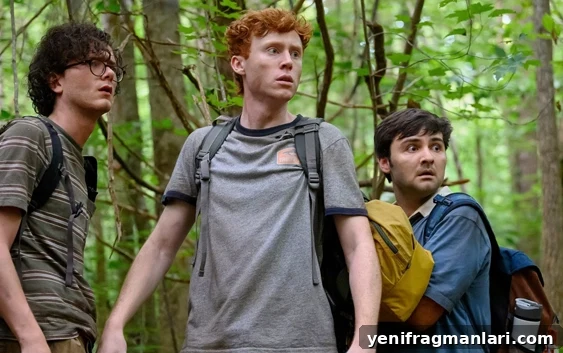
The film casts the trio as heightened versions of themselves: inseparable friends who work together and share a history. Discontent with their current lives and uncertain about the future, they set off in search of a legendary treasure hidden in nearby Foggy Mountain. The lore is introduced by a narration from John Goodman: a bust of Marie Antoinette, valued at one hundred million dollars, was buried by French explorer Jean Pierre La Roche, and the boys once found a golden compass as children—a key to the fortune. Fifteen years later, that childhood discovery is the catalyst for an absurd treasure hunt.
Like many SNL alumni who have transitioned from sketch to film—ranging from enormous hits to notable flops—Please Don’t Destroy faces the familiar question: can a fast, sketch-based sensibility stretch into a feature-length narrative? The movie answers by blending the troupe’s manic, sketchy energy with a conventional friends-on-a-quest structure. It’s a familiar arc: friendships tested, personal insecurities exposed, and a final reconciliation that reaffirms the bond. While predictable in outline, the story functions well as a framework that allows the group’s instincts and comedic rhythms to shine.

The supporting cast supplies memorable beats: Conan O’Brien plays Ben’s volatile father and store owner, a character who amplifies Ben’s need for approval; John Goodman provides the opening narration and a grounding presence; other cameos add texture and surprise. The trio’s comic strengths—deadpan delivery, rapid-fire sight gags, and a taste for escalating absurdity—remain front and center. Editing mirrors their sketch work: quick cuts, abrupt visual surprises, and short, intense sequences that keep momentum high and laughter frequent.
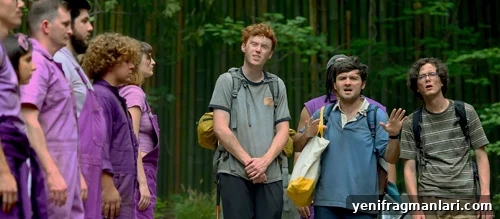
Stretching three-to-five-minute sketches into a cinematic runtime is not easy, and the film occasionally feels like a string of extended bits assembled around a familiar plot. Yet those bits are consistently funny and, crucially, they interlock into a cohesive whole. Subplots—ambitious park rangers who covet the treasure, a bizarre cult, John’s unexpected romance with an especially sassy hawk—serve both as set pieces and as connective tissue. In its structure and visual inventiveness, Foggy Mountain recalls elements of classic silent comedies like Harold Lloyd’s Safety Last: multiple comic vignettes woven into a larger narrative that progresses through mishap and physical humor.
This is emphatically a movie for existing fans. Please Don’t Destroy’s eccentric delivery—abrupt tonal shifts, oddball character choices, and an off-kilter sense of timing—won’t land for everyone. Viewers unfamiliar with the troupe or who prefer more conventional comedic pacing may find some sequences alienating. But for those who enjoy their SNL work, the film doubles down on the qualities that made the trio popular: boldness, unpredictability, and an evident camaraderie that translates well on screen.
Marshall, Higgins and Herlihy bring infectious chemistry to the leads. Playing themselves with heightened traits, they make their characters likable and distinct while keeping jokes coming at a rapid clip. The trio’s physicality and comic instincts make it easy to forgive narrative tropes; the pleasure of watching them together carries the film through slower structural moments. Supporting performers contribute solidly, but the film’s best moments arrive when all three leads share the frame and push each other toward more outrageous choices.
Although The Treasure of Foggy Mountain is unlikely to enter the same pantheon as iconic SNL-derived hits like The Blues Brothers or Wayne’s World, it succeeds at what it sets out to do: it packages Please Don’t Destroy’s brand of comedy into a feature that expands their voice and showcases their talents. The film confirms the troupe’s appeal and demonstrates that their style can anchor a longer form while still feeling like an authentic extension of their sketch work.
In sum, The Treasure of Foggy Mountain is a spirited, frequently hilarious debut that will best serve existing fans while offering curious newcomers a clear sense of what makes Please Don’t Destroy distinctive. It is an encouraging first feature that suggests the trio has the range and creative confidence to pursue further projects. If their follow-up maintains this balance of wild invention and heart, audiences have reason to stay excited.
Score: 18/24
Rating: 3 out of 5.