
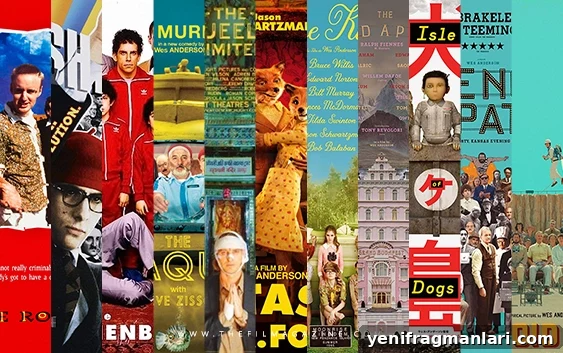
Wes Anderson’s films are instantly recognisable. Each carries a distinct colour palette, a precise rhythm and a world populated by odd, memorable characters. Across nearly thirty years of filmmaking he has created stories that feel both whimsical and deeply human.
Anderson repeatedly explores familiar themes—dysfunctional families, love, loss and grief—but his eccentric visual and narrative style makes these themes feel fresh. Entire websites and communities dissect his compositions, set design and colour choices, and his ability to capture the imagination of viewers shows no sign of weakening.
Having directed eleven features so far, Anderson’s filmography has earned critical praise and a devoted fanbase. In this ranked guide we evaluate each movie in terms of artistry, critical response and audience perception to present: Wes Anderson Movies Ranked.
11. Rushmore (1998)
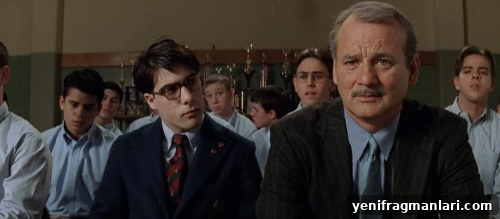
Max Fischer (Jason Schwartzman) is a passionate but misplaced student who pours himself into school activities to make sense of a life that doesn’t quite fit. He falls for a teacher (Olivia Williams) who, in turn, becomes romantically involved with Herman J. Blume (Bill Murray), an unlikely friend to Max. Hurt and humiliated, Max reacts in strange and comedic ways.
Rushmore feels more grounded than Anderson’s later, more stylised films, but early traces of his voice are present—quirky characters, precise framing and deadpan humour. As a formative work, it’s charming and funny, though it lacks the scope and ambition that would characterise his subsequent features.
10. Bottle Rocket (1996)
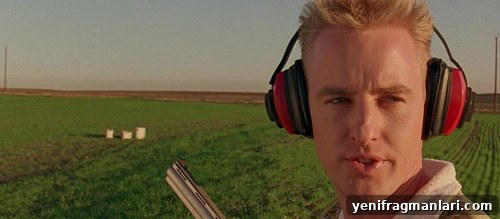
Anderson’s feature directorial debut stars Owen and Luke Wilson and follows a group of hapless friends attempting a small-time heist. Even at this early stage, Anderson’s trademarks are visible: an oddly motivated protagonist, an eccentric ensemble, brisk, witty dialogue and a slightly surreal reality built from small, specific details.
Bottle Rocket shows a confident director finding his footing. Its pleasures are clear, but his visual palette and narrative precision had not yet reached the fully formed style that would define his later films.
9. The Life Aquatic with Steve Zissou (2004)
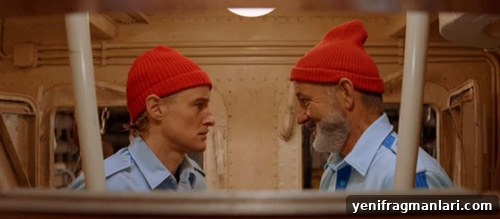
Bill Murray stars as oceanographer Steve Zissou, who assembles a motley crew to track down the shark that killed his partner. The film contains many quintessential Anderson elements: elaborate production design, eccentric characters, deadpan humour, stop-motion interludes and a distinct colour scheme.
Although The Life Aquatic divides opinion and underperformed at the box office, it now enjoys a loyal cult following. It’s richly imaginative but lacks some of the warmth and coherence of Anderson’s strongest work.
8. The Royal Tenenbaums (2001)
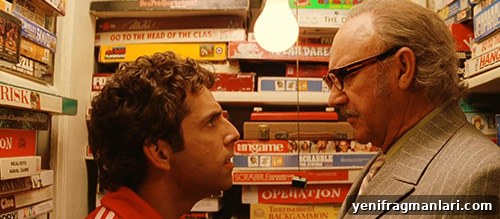
The Royal Tenenbaums centres on an eccentric patriarch, Royal (Gene Hackman), and his once-prodigious children—now troubled adults—who return to the family home after years apart. With a rich ensemble cast and distinct costume design, the film paints a vivid portrait of a broken family seeking reconciliation.
This movie was a turning point for Anderson, expanding his use of ensemble casts and quick-cut editing to assemble a complex family mosaic. While some characters feel less sympathetic than later creations, the film remains one of his most emotionally resonant depictions of familial dysfunction.
7. The French Dispatch (2021)
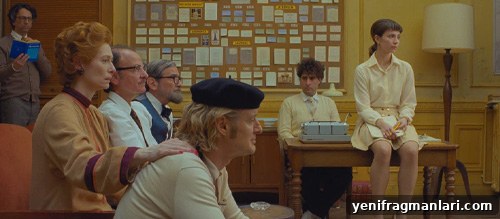
The French Dispatch is arguably Anderson distilled to its essence: a visually layered, detail-rich anthology that celebrates journalism and the small obsessions that animate creative work. Its anthology structure—several interlocking stories framed by a magazine editorial—allows Anderson to indulge in elaborate production design, playful typography and a parade of familiar collaborators.
Brilliant in its craft and unmistakably Andersonian, the film’s segmented nature means it never settles into a single, fully satisfying narrative. Some segments soar more than others, but overall it’s a feast of visual invention and bittersweet humour.
6. The Darjeeling Limited (2007)
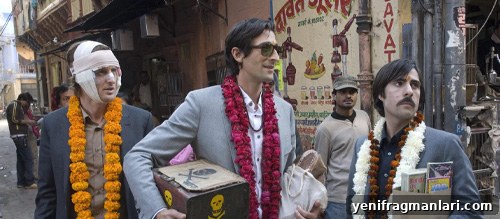
Three brothers (Owen Wilson, Adrien Brody and Jason Schwartzman) take a train journey across India in the wake of their father’s death, hoping to reconnect. The film balances a vibrant, large-scale setting with a tightly focused, intimate family story.
The Darjeeling Limited succeeds through its performances and small, revealing character moments. Its themes echo earlier Anderson work, and while moving and visually vivid, it doesn’t quite break new thematic ground compared with some of his top-tier films.
5. Asteroid City (2023)

Asteroid City assembles an ensemble of young prodigies, their families and an array of oddball adults for a weekend in the desert that mixes science, romance and grief. The film layers a play-within-a-film conceit that makes the narrative self-aware and highly stylised.
Its production design is immaculate—the bright artificial palette and theatrical sets enhance the film’s surreal tone. The movie is frequently funny and visually intoxicating, though some viewers may find the lack of a single, driving emotional throughline less satisfying. It rewards long-time Anderson fans with rich detail and meticulously crafted scenes.
4. Fantastic Mr. Fox (2008)

Adapted from Roald Dahl, Fantastic Mr. Fox is a stop-motion triumph that many consider superior to its source material. Anderson’s adaptation expands the book’s emotional range, adding layered family dynamics and memorable supporting characters.
The animation is exquisitely detailed and the voice performances are warm and witty. Anderson’s aesthetic suits stop-motion perfectly, producing a film that is both visually inventive and emotionally engaging—playful but never lightweight.
3. Isle of Dogs (2018)

Isle of Dogs is another stop-motion spectacle—set in a near-future Japan, it follows a young boy searching for his dog among an island of exiled canines. The film is achingly beautiful: every fur strand, every miniature backdrop and every gesture is carefully animated to produce a tactile, living world.
While the film has been praised for its craft and emotional weight—exploring loyalty, loss and community—it also prompted discussions about cultural representation and casting choices. Despite those debates, Isle of Dogs showcases Anderson’s capacity to blend technical ambition, satire and sincere feeling into an accomplished whole.
2. Moonrise Kingdom (2012)

Moonrise Kingdom is a tender, perfectly realised fable about young love. Sam and Suzy—twelve-year-olds played by Jared Gilman and Kara Hayward—run away together, prompting a search by a host of eccentric adults. The film balances a childlike sincerity with adult melancholy.
Its emotional clarity, meticulous period detail and perfectly pitched performances make Moonrise Kingdom one of Anderson’s most accessible and affecting films. The film’s warmth and restraint elevate it beyond mere whimsy into something genuinely moving.
1. The Grand Budapest Hotel (2016)
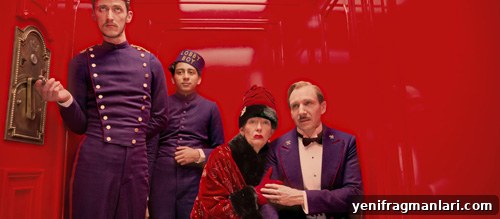
The Grand Budapest Hotel is Anderson at full throttle: visually opulent, narratively layered and packed with a stellar ensemble. The story follows Zero, a lobby boy, and his mentor Monsieur Gustave as they become embroiled in a murder, a disputed inheritance and a cross‑country chase set against the menacing backdrop of a Europe on the brink of war.
Combining sharp comedy with formal inventiveness, the film earned widespread awards recognition—including multiple Academy Awards—and remains a high point in Anderson’s career. Its nested storytelling, precise production design and bravura ensemble performances make it the director’s most celebrated and influential work to date.
Across his career, Wes Anderson has made a body of work defined by compassion for flawed characters, an eye for design and a willingness to marry melancholy with comedy. His films explore the messy realities of loss and connection while remaining thoroughly original in voice and vision. Which of his films do you return to most often—Rushmore’s early charm or the layered complexity of The Grand Budapest Hotel?
Article updated to include Asteroid City on 27 June 2023. Originally published 2 May 2023.