
The Prom (2020)
Director: Ryan Murphy
Screenwriters: Bob Martin, Chad Beguelin
Starring: Meryl Streep, James Corden, Nicole Kidman, Andrew Rannells, Jo Ellen Pellman, Ariana DeBose
The resurgence of the movie musical over recent years—boosted by popular titles such as La La Land and The Greatest Showman and smaller hits like Sing Street—made Netflix’s screen adaptation of the Broadway hit The Prom a promising prospect. With Glee creator Ryan Murphy directing and original writers Bob Martin and Chad Beguelin on the screenplay, the film arrives with a talented ensemble cast and high production values. Unfortunately, while The Prom delivers spectacle, catchy songs and strong moments, it struggles to translate its stage strengths into a fully satisfying feature film.
The Prom follows four self-absorbed Broadway actors—Dee Dee Allen (Meryl Streep), Barry Glickman (James Corden), Angie Dickinson (Nicole Kidman) and Trent Oliver (Andrew Rannells)—who head to the conservative town of Edgewater, Indiana, to support Emma Nolan (Jo Ellen Pellman), a high school student who has been banned from taking her girlfriend to prom. The premise sets up a collision between theatrical showmanship and small-town values, creating opportunities for humor, confrontation and heartfelt moments.
One recurring problem is the film’s reliance on stereotypes without offering incisive commentary. Small-town characters are shown as reflexively conservative and certain Broadway personalities are exaggerated, with Barry’s flamboyant “show queen” persona especially foregrounded. The movie hints at satire but rarely commits to deeper exploration, which leaves some portrayals feeling thin or unearned rather than meaningful critique.
Despite that, James Corden emerges as one of the film’s brighter surprises. He brings warmth and charisma to Barry, giving the character a genuine arc that becomes one of the movie’s most enjoyable through-lines. Meryl Streep provides a watchable Dee Dee Allen—appealing and commanding in musical sequences—while Nicole Kidman and Andrew Rannells are given showier, less grounded turns that do not always serve the story. Jo Ellen Pellman and Ariana DeBose, as the young couple at the center, are sincere and likable but are not afforded enough screen time or narrative depth to anchor the emotional core the film promises.
The screenplay, adapted by Martin and Beguelin from their stage work, reveals the challenge of moving from theater to film. Dramatic beats sometimes land as exposition-heavy exchanges, and transitions between comedy and genuine feeling can feel abrupt. Emma—the character around whom the conflict revolves—ends up underserved; much of the film’s attention is pulled away by the Broadway quartet, turning what should be Emma’s emotional journey into a secondary thread. That structural choice reduces the film’s emotional impact and weakens audience investment.
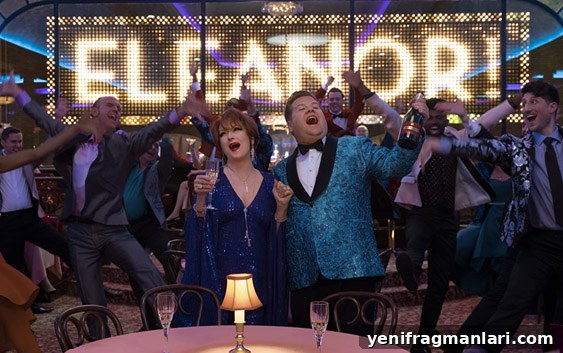
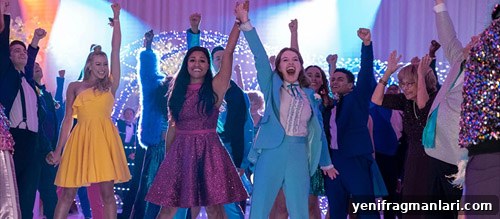
Ryan Murphy’s direction amplifies both strengths and weaknesses. He stages lavish song-and-dance numbers with energy and a strong visual sense, and the production and costume design consistently look polished and vibrant. The musical sequences deliver entertainment value, and several songs are memorable, likely to linger with viewers after the credits roll. However, Murphy’s approach to the film’s quieter character work feels uneven—some performances are under-directed, and tonal shifts can jar the viewer out of the story.
Where The Prom succeeds, it does so on spectacle and spirit. The choreography, production design and soundtrack create an infectious atmosphere that honors the stage musical’s celebratory tone. For viewers seeking an upbeat, large-scale musical with a contemporary message, the film offers plenty of lively moments and a visual sheen that makes it enjoyable to watch.
Yet those pleasures are balanced by narrative shortcomings. The Prom is energetic and well-crafted in parts, but its uneven script and inconsistent character focus prevent it from rising to the emotional heights achieved by the best modern movie musicals. It will likely appeal more to audiences looking for theatrical fun and catchy numbers than to critics or viewers seeking a deeply immersive, character-driven musical experience.
12/24