
Titanic (1997)
Director: James Cameron
Screenwriter: James Cameron
Starring: Kate Winslet, Leonardo DiCaprio, Billy Zane, Kathy Bates, Frances Fisher, Bernard Hill, Jonathan Hyde, Victor Garber, David Warner, Danny Nucci, Bill Paxton, Louis Abernathy, Gloria Stuart
In an era when anyone with internet access can shape public conversation in real time, opinions swing fast and broadly. Even in the early days of the web, cultural phenomena provoked intense debate and rapid shifts in taste. Few films in modern memory provoked as much immediate attention, praise, and backlash as James Cameron’s Titanic when it premiered in late 1997.
Prior to release Titanic carried an aura: a ballooning budget, a protracted shoot and high expectations meant audiences and critics alike wondered whether the film would deliver. When it did arrive, the reaction was dramatic. Titanic became a worldwide box office sensation, the first film to surpass one billion dollars globally, and held the record until 2009. It earned 14 Academy Award nominations at the 70th Oscars and won 11, including Best Picture. Celine Dion’s “My Heart Will Go On,” featured over the end credits, became an international hit and one of the best-selling singles of its time.
That success did not shield Titanic from criticism. Some dismissed it as a sentimental romance aimed primarily at female viewers; others faulted its dialogue, melodrama or the characterization of villains. Yet those objections never fully undermined the film’s cultural reach. Over the decades public opinion has continued to shift, with some publications and critics revising their assessments as the film aged. At the same time, many viewers found the movie emotionally resonant and technically groundbreaking.
Revisiting Titanic today can highlight why it remains significant. In a film landscape increasingly driven by safe corporate choices and algorithmic decision-making, Titanic stands out as an ambitious studio picture willing to take risk on scale, craft, and spectacle. Beyond spectacle, the film’s success lies in its emotional core: a powerful human story set against historical tragedy, rendered with precision and care.
James Cameron opens the film in 1997 with treasure hunter Brock Lovett (Bill Paxton) and his crew exploring the wreck of the RMS Titanic. Lovett’s pursuit of a legendary blue diamond—called the Heart of the Ocean—sets up the modern frame. Instead of the jewel, the crew discovers a drawing of a young woman wearing the necklace. That drawing prompts Rose Dawson Calvert (Gloria Stuart), now centenarian, to contact the team and recount her experiences aboard the Titanic in 1912. Her story becomes the film’s primary narrative, transporting the audience into the passenger experience and revealing the human cost behind the headlines.

Cameron’s obsession with the historical event is evident in the film’s attention to detail. Production design, costumes, and the staged sequence of events leading to the sinking create a convincing period world. While not every detail is strictly accurate, the film’s textures and physicality lend it authenticity and allow viewers to immerse themselves. Cameron translates a largely monochrome historical record into a vivid, color-saturated cinematic experience, from wardrobes to set dressing, making the past feel lived-in and immediate.
The film deliberately contrasts clinical curiosity and sensational spectacle with lived human suffering. Lovett’s initial detachment—treating the wreck as treasure-hunting fodder—stands against Rose’s intimate recollection of loss and survival. Cameron’s staging of the sinking does more than thrill; it confronts viewers with the horrors of the event, the chaos, and the painful inequities that shaped so many fates on board. The spectacle is used as a moral instrument rather than empty showmanship.
Titanic builds tension steadily and never lets the urgency fade. At nearly three hours, its length is earned by pacing and tonal control: quiet character moments balanced against large-scale disaster sequences. The film takes time to develop its leads so the stakes feel personal when catastrophe arrives.
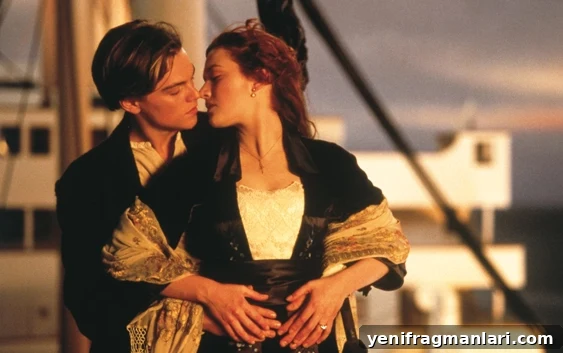
The central romance between Rose (Kate Winslet) and Jack Dawson (Leonardo DiCaprio) remains the emotional engine. Their chemistry convinces the audience of an urgent, transcendent connection, and their relationship humanizes the larger narrative. Rose’s journey—from a constrained society girl to a courageous survivor—anchors the film. Winslet’s performance, supported by DiCaprio’s earnest charm, carries much of the film’s emotional weight while a strong ensemble cast fills out the world of the ship.
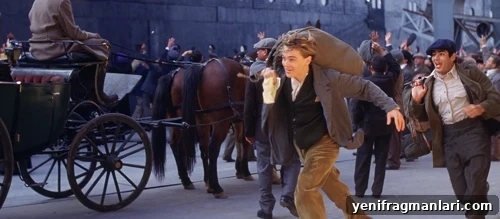
Technically, Titanic was revolutionary for its time. Cameron and his team combined miniature models, full-scale sets, blue-screen compositing and elaborate water tanks to realize the sinking sequence and large crowd scenes. Those effects, married to meticulous production design and costume work, give the film a craft-driven sheen that still compares favorably with many contemporary blockbusters.
A key source of the film’s power is its concern with class and hubris. By spending time among the ship’s opulent first-class spaces as well as the steerage areas, Cameron underscores the common human cost of the disaster. Small visual motifs—the china carefully set and then shattered, personal objects floating free—return throughout the film and convert moments of beauty into fragments of loss.
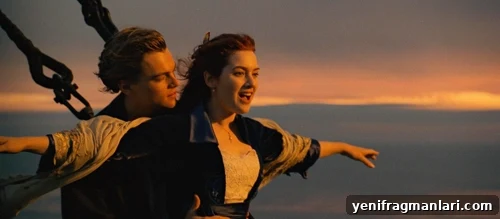
Cultural references and parody have kept Titanic alive in the public imagination. Iconic images and lines—Jack’s “I’m the king of the world,” the handprint on the car window, the duet of song and swelling strings—remain instantly recognizable. The film’s mixture of disaster, romance, and historical epic means it can be interpreted in many ways, which helps explain the enduring debates about its merits. Regardless of critical contention, Titanic’s emotional impact and technical accomplishments secure its place in cinema history.
Score: 24/24
Rating: 5 out of 5.