
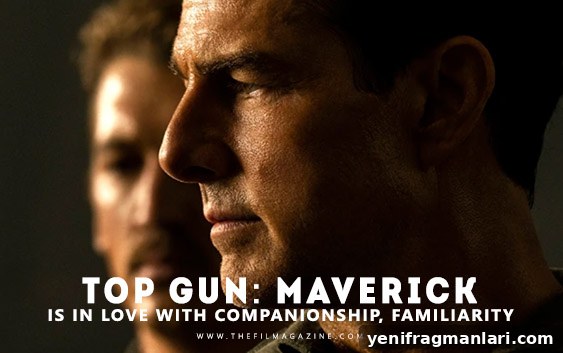
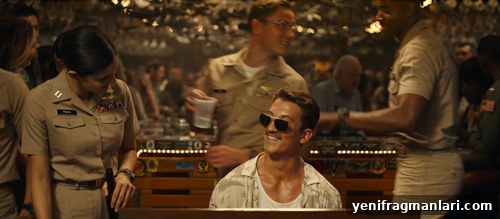
People are creatures of habit. From the coffee we choose to our daily exercise and how we build a sandwich, routines shape our lives—often without us noticing. That explains why returning to Top Gun: Maverick, whether for the first time or the tenth, feels so satisfying: familiarity is part of the pleasure. Tom Cruise understands that instinctively. He may take every opportunity to run on screen (four times in this film), but Top Gun: Maverick is more than an excuse for physical exertion. It’s a romance with cinema itself, a celebration of themes we recognize and love again and again.
At its heart, the film revels in a comforting formula. It functions as a sequel that echoes the original, bookended by a cyclical opening and closing—both set in a blood-streaked hangar with tools in hand—and finishes with a sunset departure that feels deliberately literal. The structure is straightforward and intentionally linear, filled with detours that operate as affectionate tributes rather than narrative distractions. That repetition serves a purpose: to keep the audience focused on tone and relationships, and to rekindle the simple joy of watching characters care for one another. Each scene is constructed to feel like a distinct emotional memory, a compact unit of feeling that builds the movie’s larger warmth.
The filmmakers’ choices are transparent by design, and often inspired. Notably, the movie avoids naming a specific enemy or nation as its target. This isn’t political caution so much as a signal that the identity of an opponent is irrelevant to the story. Top Gun: Maverick uses its military setting as context, not as the film’s primary concern. What matters here are the human connections—the loyalties, rivalries and vulnerabilities that drive the characters.
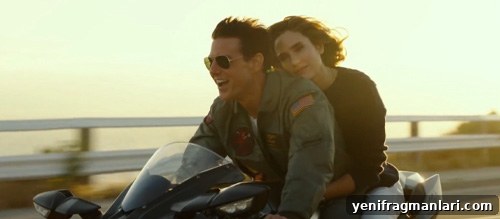
The sequence choices reinforce that focus. A sailing scene exists not for plot mechanics but to show Maverick’s tenderness toward Penny Benjamin, played by Jennifer Connelly. The improbable obstacles in the film’s climax are deliberately excessive because the film is more interested in watching how Miles Teller’s Rooster and Cruise’s Maverick will react to protect one another. Nostalgic callbacks and self-references are abundant—so much so that their sheer frequency forces you to accept the cheese. But for fans, that cheesiness is a feature; it’s the kind of large, wing-shaped slab audiences eagerly devour.
On the technical side, the movie winks at viewers early and often. Kenny Loggins’ “Highway to the Danger Zone” appears almost as a signature, a reassuring signal that sets the mood and confirms the kind of exhilarating fun to expect. The recurring musical motifs act like a steady hand guiding the emotion, and the dialogue includes repeated aviation phrases that make audiences feel included—knowing just enough to participate in the film’s camaraderie. Lines like “fifth-generation fighters” and “turn and burn” become part of the film’s rhythmic thrills; they sound mundane on paper but are charged with excitement in context.

More importantly, the film portrays male relationships with genuine emotional depth, pushing beyond the easy expectations of “bromance.” What starts as textbook masculinity evolves into displays of compassion, empathy and mutual support. Maverick’s workshop—filled with toys, tools, and comfortable solitude—initially presents him as a lone archetype. But the story quickly subverts that image, revealing that what he, and others, truly crave is companionship and connection.
The character arc of Glen Powell’s Hangman is central to this theme. Introduced as self-centered and occasionally antagonistic, his nickname underscores an attitude that must be challenged for growth. Through setbacks and gradual social learning, Hangman softens, which reinforces the film’s larger lesson about humility and personal development. Maverick himself shows progress: his attempts to mentor younger pilots reflect a maturing empathy, a desire to guide others rather than simply chase glory.
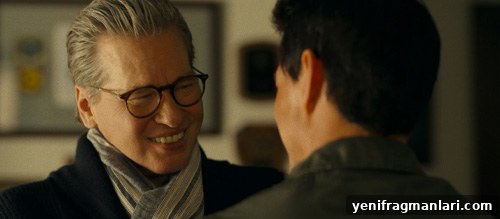
Another meaningful thread is Maverick’s relationship with Val Kilmer’s Ice Man. Brief, well-placed scenes and gentle exposition reveal Ice Man as a stabilizing presence—an older figure who has quietly helped Maverick through past mistakes. Their bond underlines the film’s focus on growth, reconciliation and mutual respect. It’s a tender counterpoint to the testosterone-fueled sequences, adding warmth and emotional balance to the action.
Top Gun: Maverick isn’t aiming to be a philosophical masterpiece; its messages are straightforward. Yet that simplicity is part of its power. The film constantly reinforces values: human connection over machinery, emotion over pure efficiency, and loyalty over individual bravado. Those themes are repeated often enough to feel intimate, as if they are being shared directly with the viewer.
Ultimately, the film’s success comes from capturing the essence of a classic blockbuster experience. It’s designed for the cinema, delivering soaring aerial sequences and immersive sound but also the quieter reward of walking out with a grin. Top Gun: Maverick understands how to balance spectacle with heart, offering the communal thrill of a shared moviegoing moment—one that leaves you both exhilarated and oddly comforted by its familiar rhythms.
Written by Callum McGuigan