
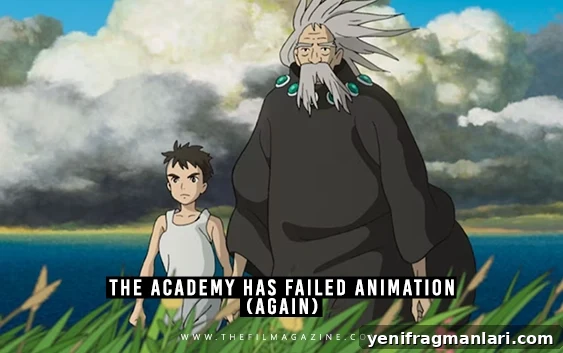
The nominations for the 96th Academy Awards were officially announced on 23 January 2024, sparking a wave of controversy. Much of the debate focused on perceived snubs involving Greta Gerwig’s Barbie — most notably the absence of a Best Actress nomination for Margot Robbie and the omission of Gerwig in Best Director. While Barbie did receive recognition in Adapted Screenplay and Margot Robbie is listed as a producer on the Best Picture slate, many viewers and commentators reacted angrily, accusing the Academy of bias. Less widely discussed but equally significant is a recurring issue that affects an entire industry: animation’s persistent marginalization at the Oscars.
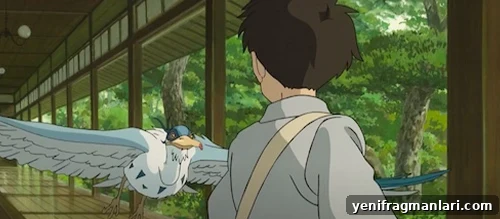
Animation has long struggled to receive the same esteem granted to live-action filmmaking. Industry insiders and some Academy members openly admit they rarely watch animated features, sometimes delegating their viewing to children or overlooking them entirely. Yet 2023 delivered two high-profile animated films that combined critical acclaim, substantial box office returns, and bold artistic ambition: Sony Pictures Animation’s Spider-Man: Across the Spider-Verse and Studio Ghibli’s The Boy and the Heron.
Across the Spider-Verse, directed by Joaquim Dos Santos, Justin K. Thompson, and Kemp Powers, pushed visual storytelling and animation technique forward while expanding on the original film’s groundbreaking style. It successfully navigated the difficult task of following an Oscar-winning predecessor and, in many critics’ eyes, surpassed it in both narrative scope and technical daring. The Boy and the Heron marked a triumphant return for Hayao Miyazaki after a decade away from feature filmmaking. Miyazaki’s film is a melancholic, richly textured fantasy that examines life, memory, and choice against the fraught backdrop of wartime Japan. Both films illustrate how animation can achieve the emotional and aesthetic power expected of any Best Picture contender.
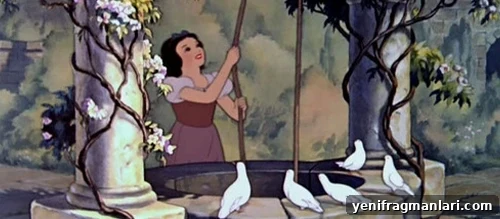
The Academy’s uneasy relationship with animation stretches back to the medium’s earliest days. Snow White and the Seven Dwarfs (1937) was a watershed moment for cinema: a full-length animated feature that demonstrated the medium’s emotional range and commercial potential, becoming one of the highest-grossing films of its era. Instead of a Best Picture nomination, the film received a special achievement award — an acknowledgment that felt like praise short of true recognition. That decision set a precedent that echoed for decades.
Occasional breakthroughs have occurred. Beauty and the Beast became the first animated film nominated for Best Picture in 1992, signaling a possible shift in perception. Yet that momentum stalled; it took until 2009–2010, after the Best Picture category expanded from five to as many as ten nominees, for another animated film (Up) to secure a nod — followed by Toy Story 3 the next year. The expansion was intended to broaden the field and invite greater diversity, but animated features have rarely converted that opportunity into sustained Best Picture recognition.
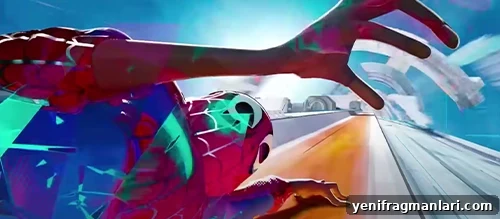
Across the past decade, numerous animated films that met or exceeded the artistic standards of many Best Picture nominees received limited acknowledgment. Spider-Man: Into the Spider-Verse (2018), celebrated for its innovative design and storytelling, was constrained to a single animated-category nomination despite its cultural and technical impact. Flee (2021), an animated documentary of exceptional emotional weight, earned nominations across multiple categories — Best Animated Feature, Best Documentary Feature, and Best International Film — yet was not considered for Best Picture. These examples underline a pattern: when animation excels, the Academy frequently contains its recognition within the animation-specific category rather than allowing it to compete on the same footing as live-action films for the top awards.
This separation has consequences beyond trophies. Oscar nominations and wins elevate films in the public eye, boosting visibility, streaming and theatrical interest, and professional recognition for the creative teams involved. When animation is consistently sidelined, those who devote their skills to the medium — animators, designers, voice actors, composers, lighting artists, and countless craftspeople — miss opportunities for broader acknowledgement. Many of these professionals already face precarious working conditions, job insecurity, and organizational pressures in pursuit of their art. Institutional recognition can lend legitimacy to their work and, while not a cure-all, can be a meaningful step toward improved industry standards.
The Academy has, at times, shown it can evolve: international films have recently gained more attention, with titles like Parasite achieving historic success. That progress demonstrates the Oscars’ capacity to broaden their perspective. Yet animation remains an area where the Academy’s inclusivity falters. At the 96th Academy Awards, Spider-Man: Across the Spider-Verse and The Boy and the Heron were not afforded Best Picture nominations, nor did they secure recognition across categories such as score, production design, visual effects, and sound that would reflect their wide-ranging achievements.
The Oscars offer a powerful platform to celebrate cinema’s diverse forms. Recognizing animation as a medium capable of delivering the same artistic depth, cultural resonance, and technical mastery as live-action filmmaking would not erase all the industry’s problems, but it would be a significant and overdue affirmation. Each awards season presents the Academy with an opportunity to acknowledge animation’s contributions more fully. After nearly a century of mixed signals, the case for consistent, meaningful recognition of animated filmmaking remains as strong as ever. Let’s hope future ceremonies reflect that reality.
Written by Munir Abedrabbo C.
You can support Munir Abedrabbo C. on X (Twitter) @maac027 and Instagram @maac027.